 English
 русский
 Português
 عربى

Industrial Couplings: The Definitive Technical Encyclopedia – Classification, Sizing, Failure Prevention, and Lifecycle...
READ MORE
UL Type Tyre Coupling for Reliable Industrial Shaft Transmission
Admin 2026-10-21Content
- 1 What Is a UL Type Tyre Coupling?
- 2 Operating Principle and Elastic Transmission
- 3 Main Performance Advantages
- 4 Comparison with Other Coupling Types
- 5 Structural Design of the UL Type Tyre Coupling
- 6 Advanced Manufacturing and Quality Control
- 7 Manufacturing Strengths and Supplier Capabilities
- 8 Application Areas
- 9 Selection Guidelines for Engineers and Purchasing Teams
- 10 Installation Recommendations
- 11 Maintenance and Service Life
- 12 Why the UL Design Is a Competitive Industrial Solution
- 13 Frequently Asked Questions
- 13.1 What is the main function of a UL type tyre coupling?
- 13.2 How much impact energy can the coupling absorb?
- 13.3 What types of misalignment can it compensate for?
- 13.4 Does the UL tyre coupling require lubrication?
- 13.5 Is it suitable for frequent forward and reverse rotation?
- 13.6 How does it compare with a gear coupling?
- 13.7 Can the coupling be customized?
- 13.8 What should be checked before ordering?
- 13.9 What are the common causes of premature tyre failure?
- 13.10 Which industries use this type of coupling?
- 14 Conclusion
- 15 References
- 16 Product: UL Type Tyre Coupling
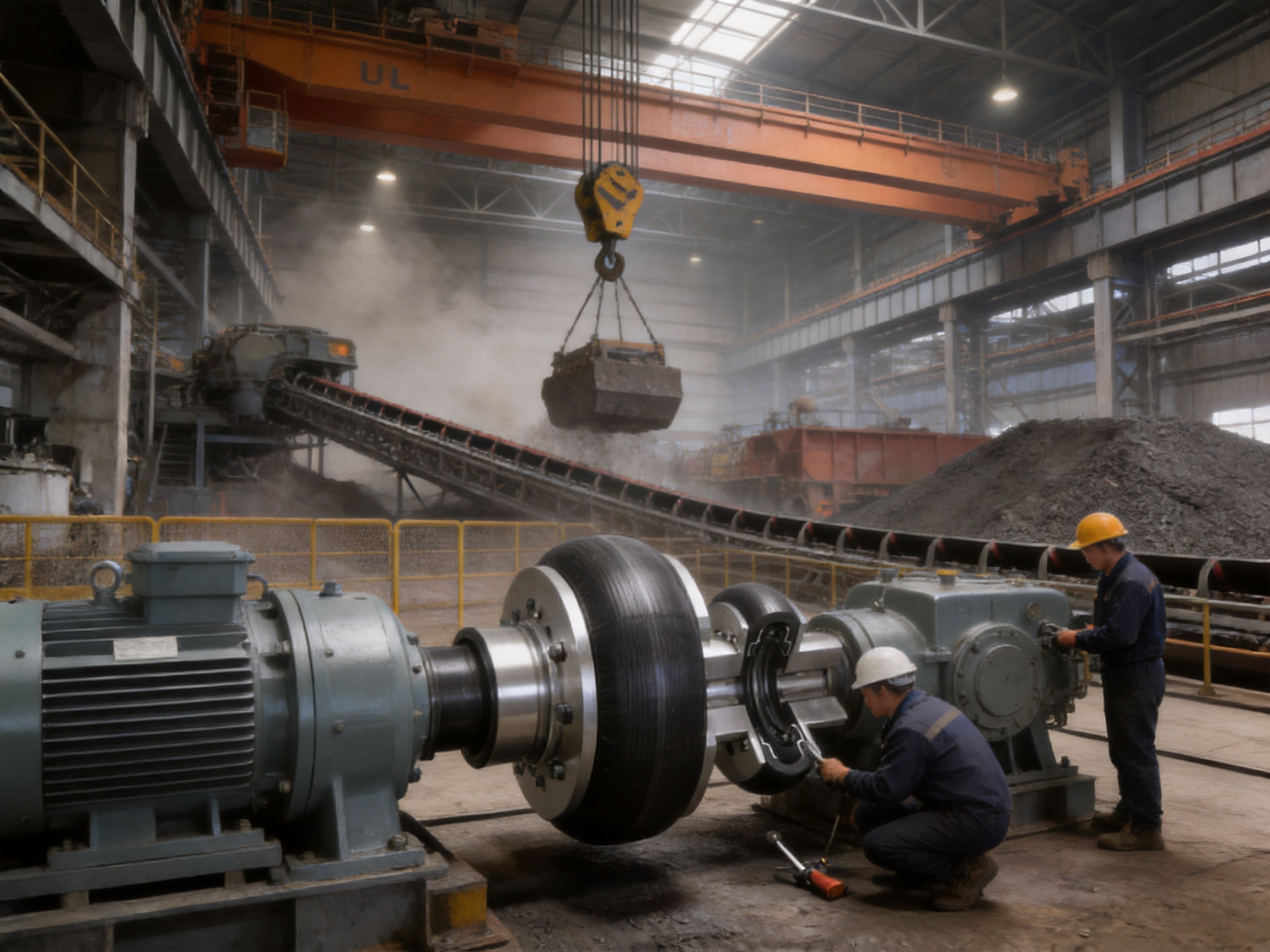
Industrial transmission systems operate under demanding conditions. Heavy machinery may need to start and stop repeatedly, reverse direction without delay, transmit fluctuating torque, and continue operating while exposed to vibration, shock loads, dust, and alignment changes. In these applications, the coupling between the driving shaft and driven shaft is much more than a simple mechanical connector. It is a critical element that influences power transmission, equipment protection, operating noise, maintenance frequency, and overall service life.
The UL type tyre coupling is designed for precisely these demanding operating requirements. It uses a resilient rubber tyre as the primary elastic element, combining the flexibility of an elastomer with a robust metal connection structure. This design enables the coupling to transmit torque while absorbing impact energy and compensating for axial, radial, and angular shaft misalignment. It is particularly suitable for equipment subject to frequent impact, vibration, forward and reverse rotation, and repeated starting cycles.
Unlike rigid couplings, the UL type tyre coupling does not require perfectly aligned shafts to operate effectively. Unlike many highly engineered metallic flexible couplings, it does not require lubrication and is comparatively simple to assemble, inspect, and replace. Its combination of flexibility, shock absorption, installation tolerance, and low maintenance makes it a practical solution for cranes, conveyors, hoisting equipment, mining machinery, metallurgical systems, construction equipment, transportation machinery, and other industrial applications.
What Is a UL Type Tyre Coupling?
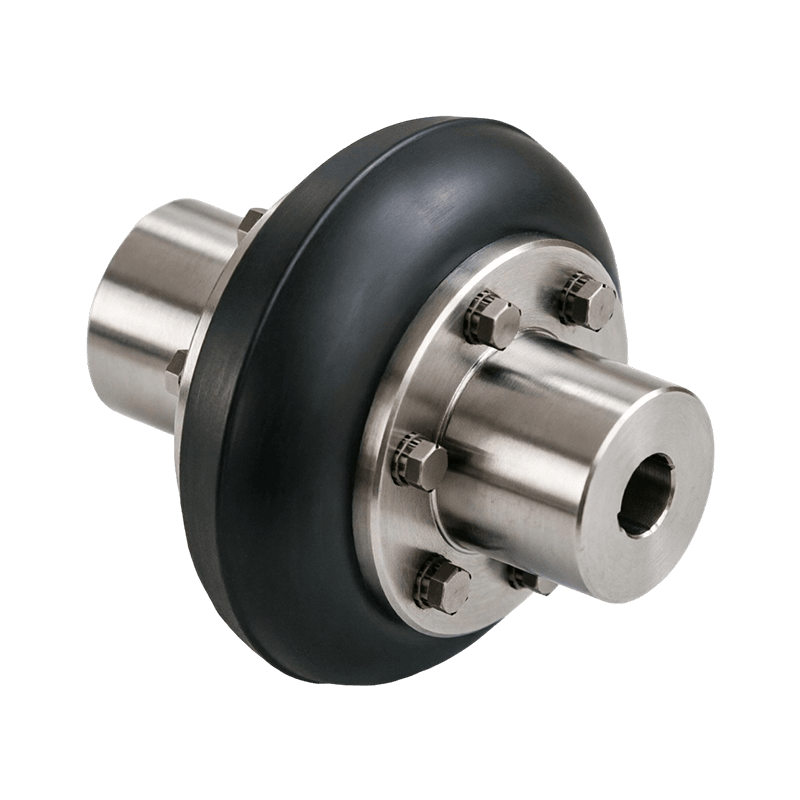
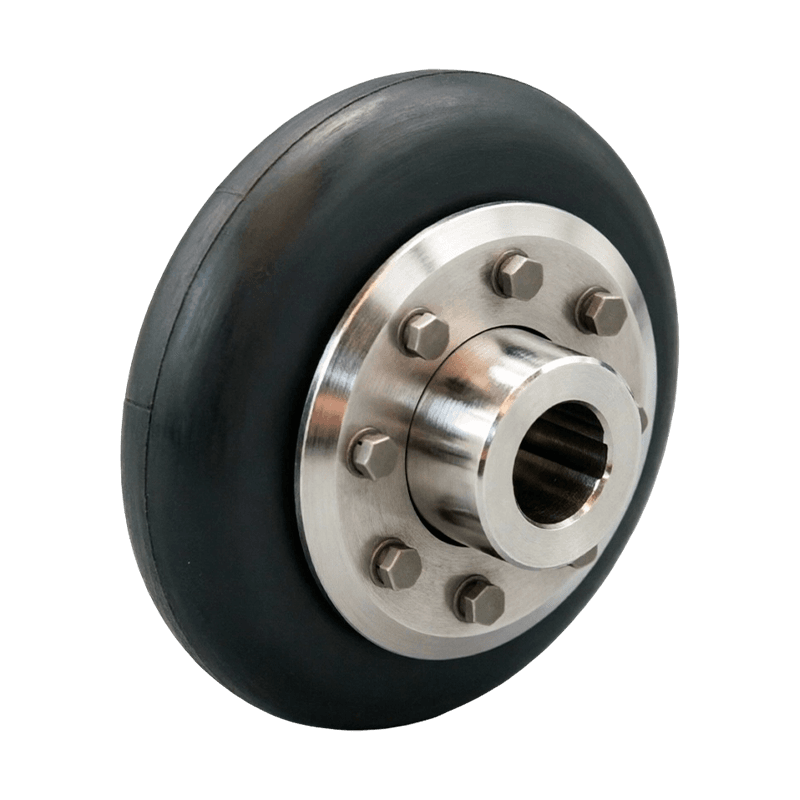
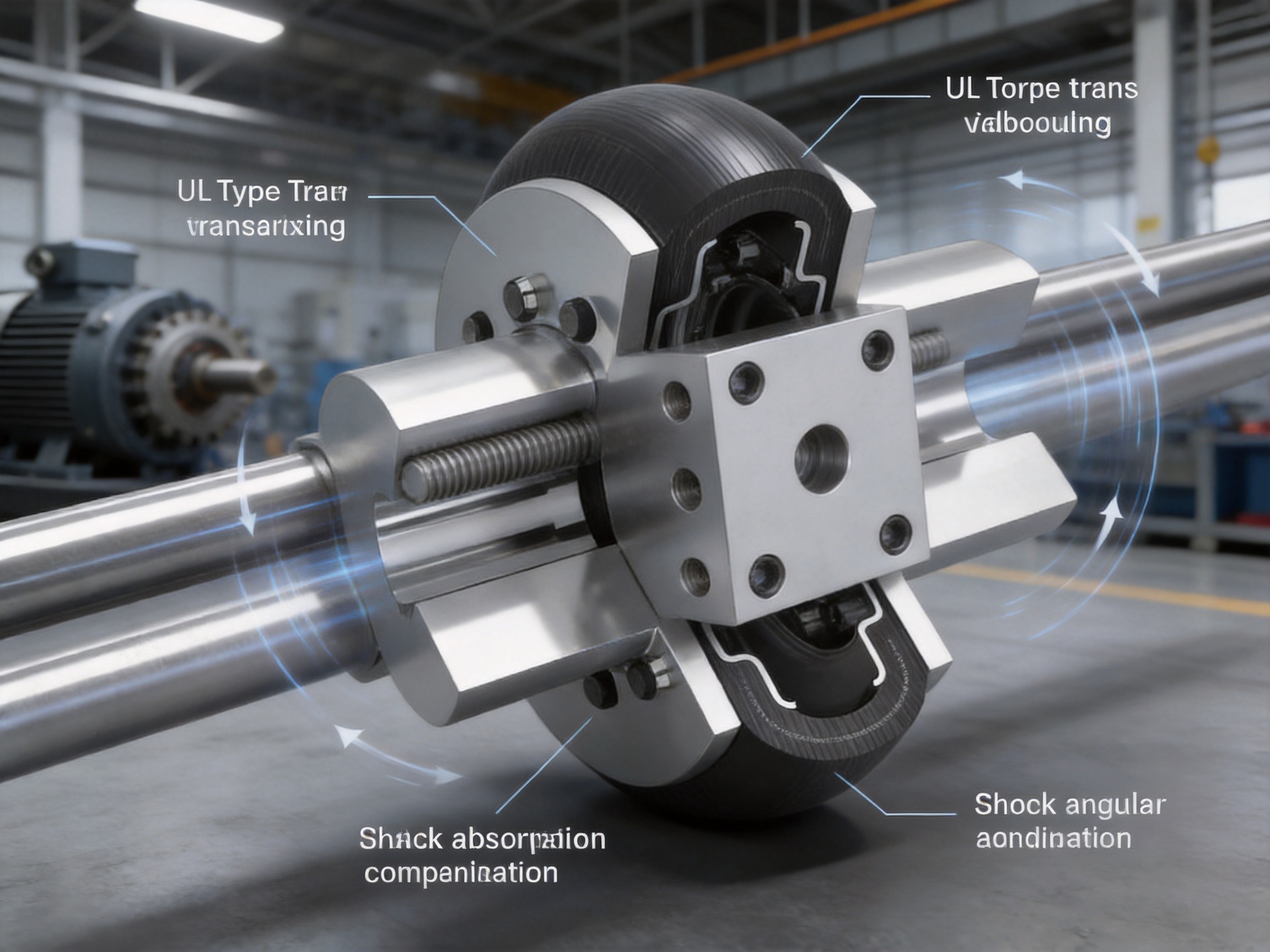
A UL type tyre coupling is an elastic shaft coupling that uses a rubber tyre body to connect two coupling halves. The tyre is vulcanized and bonded to a metal connecting plate containing threaded holes. This creates an integrated elastic assembly that can be fastened directly to the two coupling halves with bolts.
During operation, torque is transmitted from one shaft to the other through the coupling halves, bolts, metal connecting plate, and rubber tyre body. The rubber element deforms elastically as the shafts rotate and as the connected machines experience misalignment or fluctuating loads. This controlled deformation enables the coupling to absorb shock and accommodate displacement without interrupting torque transmission.
The tyre element is the defining feature of the design. It provides flexibility in multiple directions and also acts as a damping medium. When a motor starts, a load changes suddenly, or a machine reverses rotation, the rubber tyre can absorb part of the resulting energy rather than allowing the full impact to pass directly into the shafts, bearings, gearboxes, and connected equipment.
The UL structure is also designed with service practicality in mind. The tyre and connecting components can be accessed for inspection and replacement, while the coupling arrangement avoids the need for an oil or grease lubrication system. This helps simplify routine maintenance and reduces the possibility of lubricant contamination in industrial work areas.
Operating Principle and Elastic Transmission
In a conventional rigid connection, even a small difference in shaft alignment can create additional forces. These forces may be transferred to bearings, seals, gears, and other machine components. Over time, misalignment can produce overheating, noise, vibration, fatigue, and premature failure.
The UL type tyre coupling works differently. The rubber tyre is intentionally flexible, allowing it to deform as the connected shafts rotate. This deformation accommodates movement between the shafts while maintaining a continuous mechanical connection. The result is a more forgiving transmission path that can protect the machinery from certain alignment errors and transient loads.
When torque is applied, the rubber tyre is subjected primarily to elastic deformation. The material stores and releases energy during each operating cycle. When the machine encounters a shock load, the tyre reduces the suddenness of the torque transfer. This helps limit torque peaks and lowers the severity of impact transmitted through the drivetrain.
The coupling can also damp torsional vibration. Torsional vibration occurs when torque varies periodically or when a system experiences sudden acceleration and deceleration. If not controlled, it can cause rattling, fatigue, gear tooth loading, and fluctuating bearing forces. The elastic tyre helps smooth these variations by introducing a flexible and damping element between the driver and driven machine.
For industrial equipment with frequent starting, stopping, or reversing, this behavior is especially valuable. Each start and reversal can generate a transient torque event. By moderating the event, the coupling can support smoother operation and reduce stress on the wider transmission system.
Main Performance Advantages
Impact and Shock Absorption
One of the most important advantages of the UL type tyre coupling is its ability to absorb impact energy. The product information indicates that the coupling can absorb up to 30% of impact energy under relevant test conditions. This capability helps reduce the mechanical shock transferred to the connected shafts and equipment.
Shock absorption is important in applications where the load does not increase gradually. Examples include crane lifting mechanisms, conveyors carrying irregular loads, crushers, mixers, rolling equipment, and machinery that frequently changes direction. In these systems, sudden torque changes can produce high stress even when the average transmitted power is within normal limits.
By absorbing part of the impact, the rubber tyre helps protect gearboxes, motors, shafts, bearings, and machine frames. It can also reduce the likelihood of secondary damage caused by vibration and repeated stress concentration. The coupling therefore contributes not only to shaft connection but also to the protection of the complete transmission system.
Multi-Directional Misalignment Compensation
The UL tyre coupling is capable of compensating for three principal types of shaft displacement: axial, radial, and angular misalignment. This is a major advantage in practical installation and operation because industrial machines rarely remain in exactly the same alignment throughout their entire service life.
Axial movement may occur because of thermal expansion, bearing movement, installation tolerances, or changes in machine position. The stated axial compensation capacity can reach 5 mm, subject to the selected coupling size and operating conditions.
Radial misalignment occurs when the two shaft centerlines are parallel but offset. The allowable radial deviation is stated as not more than 2 mm. This flexibility helps accommodate unavoidable differences during installation and small changes caused by foundation movement, bearing wear, or equipment vibration.
Angular misalignment occurs when the two shaft centerlines intersect at an angle. The UL type tyre coupling can accommodate angular deflection within 1°, provided that the application remains within the relevant engineering limits. Angular compensation is particularly useful where connected machines are mounted on separate bases or where shaft positions change slightly under load.
These values should be treated as application guidance rather than a substitute for product-specific design verification. Actual allowable displacement depends on coupling size, transmitted torque, speed, operating temperature, duty cycle, installation quality, and the condition of the rubber element. Correct alignment remains important even when a flexible coupling is used.
Reduced Vibration and Noise
Rubber is naturally suited to vibration damping. The tyre element reduces the direct transmission of high-frequency vibration and helps smooth fluctuating torque. This can contribute to lower operating noise and a more stable mechanical environment.
Reduced vibration benefits both operators and machinery. Lower vibration can improve working conditions, reduce the risk of fastener loosening, and decrease dynamic loads on bearings and foundations. It may also help equipment maintain more consistent operation when connected to sensitive or vibration-prone mechanisms.
Compared with rigid shaft connections, an elastic tyre coupling provides a clear advantage in systems where vibration isolation and damping are important. Compared with some rigidly assembled metallic couplings, the rubber element can provide a softer and more effective buffer against sudden mechanical disturbances.
Suitability for Repeated Starting and Reversing
Many industrial machines do not operate at a constant speed in one direction. Cranes, hoists, reversing conveyors, positioning systems, and certain material-handling machines may start and stop dozens or hundreds of times during a working shift. Some applications also require frequent forward and reverse rotation.
Repeated starting and reversing generate cyclic loads that can accelerate fatigue in rigid drivetrain components. The UL tyre coupling is designed for this kind of demanding duty because its elastic element moderates changes in torque and rotational direction. It reduces the abruptness of load transfer and supports a smoother transition between operating states.
This capability does not eliminate the need to select the correct coupling size. A coupling must be evaluated based on rated torque, peak torque, speed, starting frequency, duty cycle, shaft dimensions, and environmental conditions. However, the tyre design provides an effective foundation for applications where transient loading is a central operating characteristic.
Simple Assembly and Maintenance
The UL type tyre coupling uses a bolted connection between the elastic assembly and the coupling halves. This arrangement supports practical installation and removal without requiring a complex lubrication system. When inspection identifies wear or damage in the tyre element, maintenance personnel can plan replacement work without replacing the entire transmission assembly.
The absence of lubrication requirements is a major operating advantage. Lubricated couplings may require scheduled grease replenishment, sealing checks, and attention to contamination. A non-lubricated tyre coupling reduces these tasks and avoids the risk of lubricant leakage near brakes, motors, production areas, or material-handling equipment.
Maintenance should still include regular visual inspection. Operators should check for cracks, hardening, excessive wear, separation between rubber and metal components, loose bolts, abnormal noise, unusual temperature, and signs of overloading. Preventive inspection helps identify problems before they develop into an unplanned shutdown.
Comparison with Other Coupling Types
Industrial users can choose from many coupling designs, including gear couplings, diaphragm couplings, pin couplings, plum couplings, cross universal couplings, and other elastomeric products. Each design has specific strengths. The best selection depends on the mechanical requirements of the application rather than on a single general ranking.
| Coupling type | Primary characteristic | Typical advantage | Potential consideration |
|---|---|---|---|
| UL type tyre coupling | Rubber tyre with bolted metal connection | Strong shock absorption, multi-directional compensation, no lubrication | Rubber performance depends on temperature, environment, and duty cycle |
| Gear coupling | Toothed metallic engagement | High torque density and compact transmission | Usually requires lubrication and closer maintenance control |
| Diaphragm coupling | Flexible metallic diaphragm pack | High-speed precision and low backlash | May be less suitable for severe impact and frequent shock loading |
| Elastic sleeve pin coupling | Flexible sleeve and pin arrangement | Simple construction and moderate flexibility | Elastic elements may need periodic replacement under heavy duty |
| Plum elastic coupling | Spider-shaped elastomer insert | Compact construction and easy insert replacement | Capacity and shock performance depend strongly on insert material and size |
| Cross universal coupling | Cross-joint angular transmission | Useful for shaft angle changes and certain articulated layouts | May require more components and regular wear inspection |
Compared with a gear coupling, the UL type tyre coupling offers the practical benefits of non-lubricated operation and strong elastic damping. Gear couplings can be highly effective for high-torque applications, but their teeth and lubrication systems require appropriate maintenance. When the application involves frequent shock, vibration, and starting, the tyre design may offer a simpler and more forgiving solution.
Compared with a diaphragm coupling, the UL tyre coupling is generally more oriented toward impact absorption and flexible industrial service than toward extremely precise, high-speed motion control. Diaphragm couplings are often selected for applications requiring low backlash, high torsional stiffness, and carefully controlled alignment. The UL design is especially attractive where cushioning and tolerance to operating disturbances are more important.
Compared with a plum elastic coupling or an elastomeric pin coupling, the tyre configuration provides a broad rubber element capable of compensating for movement in several directions. The final choice still depends on torque, speed, space limitations, temperature, and maintenance preferences. The UL model is particularly competitive when the customer requires a combination of shock absorption, displacement compensation, and straightforward servicing.
Structural Design of the UL Type Tyre Coupling
Rubber Tyre Element
The rubber tyre is the working elastic component. Its function is to transmit torque while allowing controlled deformation. The material must provide an appropriate balance of elasticity, tensile strength, fatigue resistance, and damping performance.
The tyre must also retain its properties during repeated loading. A coupling used in a crane or conveyor may experience thousands of acceleration and deceleration events. The rubber element must therefore be selected and manufactured with attention to fatigue behavior, operating temperature, environmental exposure, and the expected duty cycle.
Vulcanized and Bonded Construction
The tyre body is vulcanized and bonded to a metal connecting plate. Vulcanization creates a durable rubber structure, while bonding joins the elastic material to the metal support. The quality of this interface is essential because torque and deformation are transferred through the bonded assembly.
A properly controlled bonding process helps prevent separation, uneven stress distribution, and premature deterioration. Surface preparation, bonding-agent application, curing conditions, pressure, temperature, and inspection all influence the reliability of the finished tyre element.
Metal Connecting Plate and Threaded Holes
The metal connecting plate provides a firm interface for the bolts that connect the tyre assembly to the coupling halves. The threaded-hole arrangement supports direct fastening and simplifies installation. The plate must be manufactured with accurate dimensions and sufficient strength to withstand the transmitted torque and cyclic loading.
Thread quality, hole location, plate flatness, and surface condition affect the final coupling assembly. Accurate machining helps ensure that the tyre is evenly loaded and that the coupling rotates smoothly after installation.
Bolted Coupling Halves
The coupling halves connect the elastic tyre assembly to the driving and driven shafts. They are designed to suit the relevant shaft ends, keyways, bores, and fastening requirements. Depending on the application, the coupling halves may be produced in different sizes and configurations to accommodate various shaft diameters and torque levels.
Bolted assembly offers a practical balance between secure torque transmission and maintainability. Correct bolt grade, tightening method, and installation torque are essential. Loose or improperly tightened bolts can create vibration, uneven load distribution, and progressive damage to the tyre assembly.
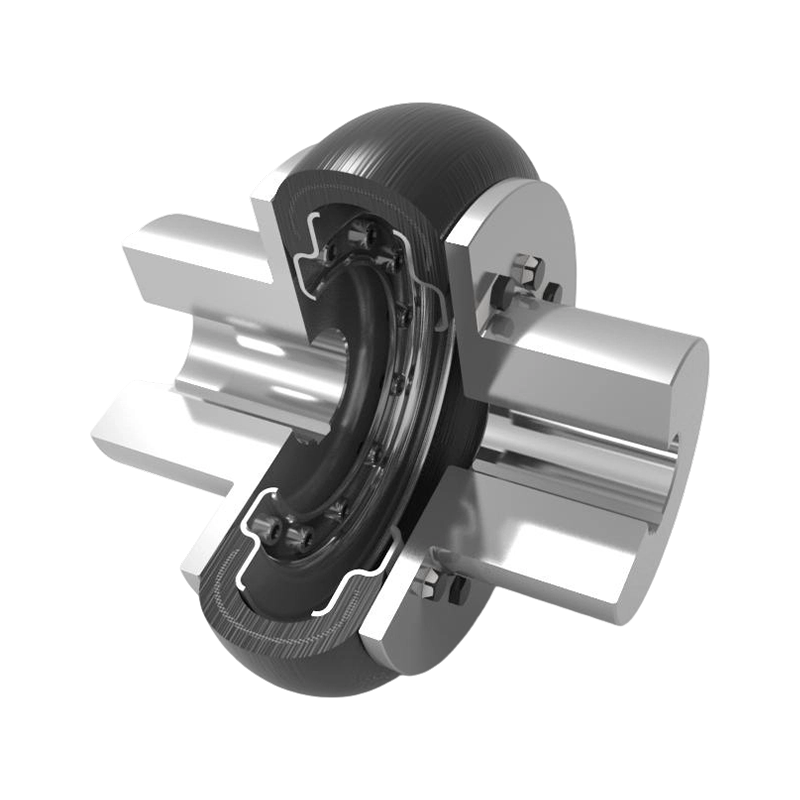
UL Type Tyre Coupling
Advanced Manufacturing and Quality Control
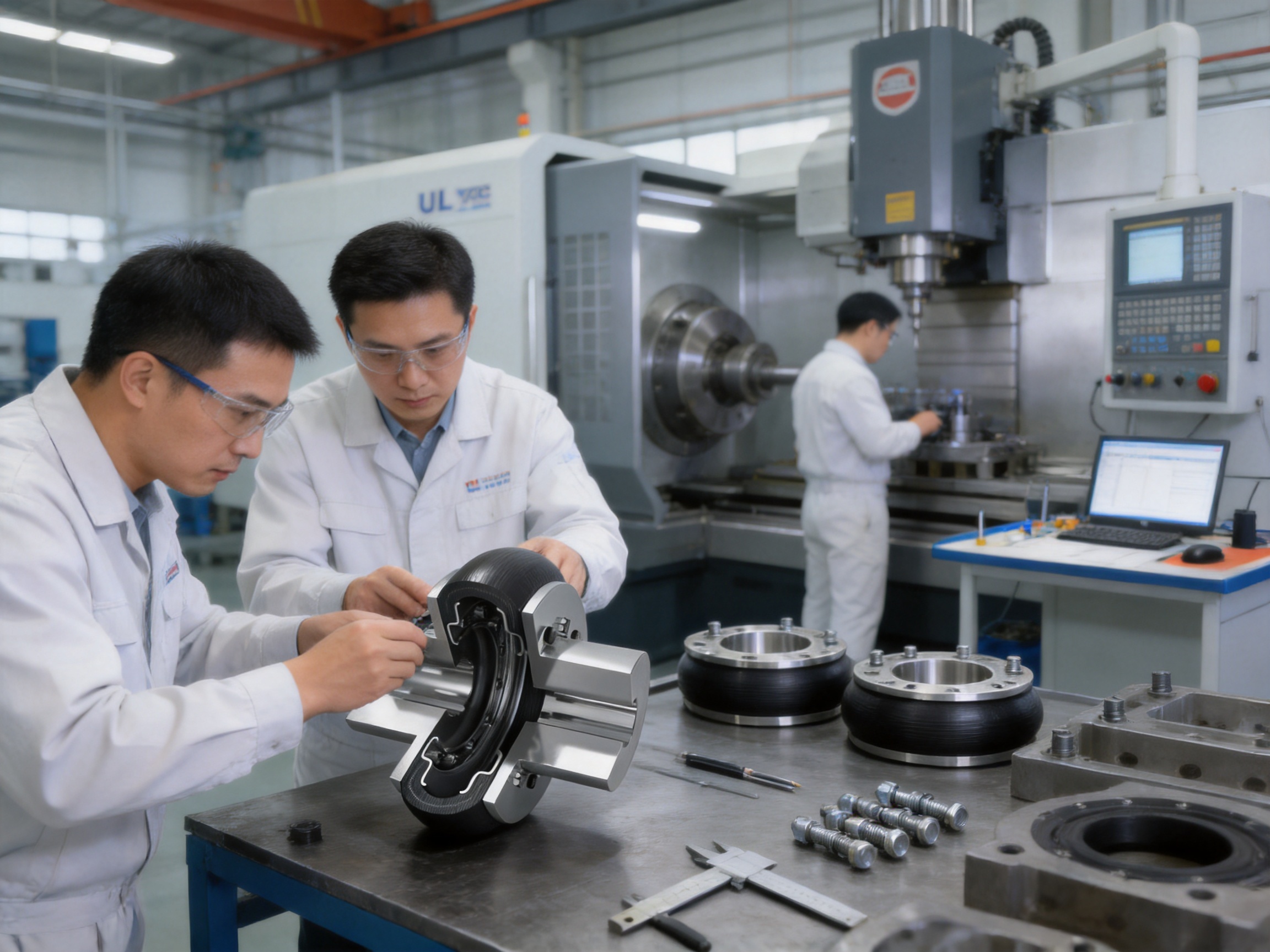
The performance of an elastic coupling depends not only on the design concept but also on manufacturing consistency. Rubber properties, bonding quality, metal machining accuracy, assembly precision, and final testing must work together. Zhenjiang Orienthold Machinery Co., Ltd. integrates design, production, and service in its coupling manufacturing activities, supporting a controlled process from engineering evaluation through delivery and after-sales assistance.
Engineering and Product Design
Manufacturing begins with an understanding of the customer’s operating conditions. Engineers need to consider transmitted power, nominal and peak torque, rotational speed, shaft dimensions, starting frequency, reversing frequency, radial and angular misalignment, ambient temperature, exposure to oil or chemicals, and installation space.
This information supports the selection of an appropriate coupling size and configuration. It also helps determine whether the UL tyre design is suitable or whether another coupling family would provide a better technical match. A responsible supplier should not select a coupling based only on motor power. Service factor and transient loading are equally important in heavy industrial machinery.
Design integration also enables the supplier to support customized shaft bores, keyways, mounting arrangements, and other application-related requirements. Customization is especially useful when replacing an existing coupling or adapting the product to equipment with non-standard shaft dimensions.
Metal Component Manufacturing
The metal components require stable machining processes to maintain dimensional accuracy. Bores, keyways, bolt holes, threaded holes, and seating surfaces must be produced according to engineering drawings and controlled tolerances. Inaccurate machining can create eccentricity, imbalance, uneven tyre loading, or installation difficulty.
Advanced production equipment supports repeatable machining and helps maintain consistency between batches. Process control should include incoming material verification, dimensional inspection during machining, and final checks after surface treatment or assembly.
Metal components may also require finishing operations to protect against corrosion and improve service durability. The suitable finish depends on the installation environment and the customer’s requirements. In applications with moisture, dust, or outdoor exposure, material and surface protection should be evaluated as part of the complete coupling selection.
Rubber Compound and Vulcanization Control
The rubber compound influences flexibility, damping, wear resistance, and temperature performance. Different operating environments may require different material considerations. A coupling installed indoors in a stable factory environment may experience very different conditions from one operating outdoors on a crane, in a mining area, or near chemicals.
Vulcanization must be carefully controlled to achieve consistent physical properties. Temperature, pressure, curing time, mold condition, and compound preparation all contribute to the final performance of the tyre. Stable process parameters help reduce variations in hardness, elasticity, dimensional accuracy, and bonding strength.
Quality control of the rubber element should include visual checks and, where applicable, physical or dimensional testing. The inspection process is intended to identify surface defects, incomplete curing, dimensional deviations, bonding irregularities, and other conditions that could affect service life.
Bonding and Interface Inspection
The bond between the rubber tyre and metal connecting plate is a critical part of the product. Before bonding, the metal surface must be properly cleaned and prepared. The bonding system must be applied consistently, and the curing process must be completed under controlled conditions.
Inspection may include checking the appearance of the bond line, confirming the position of the rubber element, and evaluating adhesion quality through appropriate production tests. Attention to the interface helps ensure that the elastic tyre behaves as an integrated component rather than as separate rubber and metal parts.
Assembly and Dynamic Verification
After individual components pass inspection, the coupling is assembled according to controlled procedures. Bolt installation, component orientation, tyre seating, and alignment of the coupling halves must be checked. Where required, rotational and dynamic tests can help identify eccentricity, imbalance, abnormal noise, or assembly errors.
Comprehensive inspection and testing equipment gives the manufacturer the ability to verify products before shipment. This is particularly important for couplings used in cranes, hoisting systems, transportation equipment, metallurgy, mining, and construction, where a coupling failure may interrupt production or create a safety risk.
Manufacturing Strengths and Supplier Capabilities
Zhenjiang Orienthold Machinery Co., Ltd. is a medium-sized enterprise specializing in couplings and papermaking machinery. Its activities integrate product design, manufacturing, inspection, and service. This integrated structure can provide practical advantages for industrial customers who require more than a standard catalog product.
The company has technical capabilities, production equipment, and comprehensive testing methods for coupling manufacturing. Its products are used in transportation, metallurgy, chemical engineering, mining, construction, and hoisting industries, where reliable transmission and robust product support are important.
The company operates under a quality supervision system with inspection and testing equipment. Its coupling products comply with applicable national standards, while its broader manufacturing experience supports the production of equipment for demanding industrial environments.
One important strength is the ability to combine technical consultation with production. Customers can discuss operating conditions, shaft dimensions, load characteristics, and installation constraints before selecting a coupling. This reduces the risk of choosing a product solely from a nominal torque value without considering real operating conditions.
Another advantage is the availability of customization support. Industrial machines often have existing shaft arrangements, restricted installation spaces, unusual mounting dimensions, or replacement requirements. A manufacturer that can coordinate design, machining, assembly, inspection, and service is better positioned to respond to such requirements efficiently.
The supplier also provides one-stop service that includes pre-sales consultation, customization, logistics and payment coordination, and maintenance support. For international industrial customers, this service structure can simplify communication and reduce the number of separate parties involved in a project.
Application Areas
Cranes and Hoisting Machinery
Cranes and hoists frequently start, stop, accelerate, decelerate, and reverse direction. The lifted load may also vary considerably during operation. These characteristics create repeated transient torque and vibration. The UL tyre coupling is well suited to this environment because it can absorb shock and accommodate small alignment changes between the motor, reducer, drum, and other transmission components.
The crane drum coupling is often evaluated together with the drive system to ensure that the coupling’s torque capacity, speed, bore dimensions, and installation arrangement are suitable. Proper inspection is essential because crane equipment operates under demanding duty cycles and may have significant safety implications.
Transportation and Conveying Equipment
Conveyors may handle bulk materials, packages, minerals, or production components. Starting a loaded conveyor can create a high initial torque demand. Material accumulation, uneven loading, and changes in friction can also produce fluctuating loads.
A tyre coupling can help moderate these conditions and protect the motor and reducer from abrupt load transfer. Its ability to accommodate radial and angular displacement is also useful where conveyor components are installed over long distances or on foundations subject to movement.
Mining Machinery
Mining environments expose equipment to dust, vibration, heavy loads, and irregular operating conditions. Crushers, screens, feeders, conveyors, pumps, and other machines may experience high impact and frequent load changes.
The UL type tyre coupling offers a non-lubricated design that can simplify maintenance in dusty environments. Its elastic damping can help reduce the transmission of impact from rugged machinery into the motor and gearbox. Environmental compatibility should nevertheless be verified, particularly where the rubber may be exposed to oils, chemicals, extreme temperatures, or abrasive materials.
Metallurgical Equipment
Metallurgical equipment often operates continuously and may be subject to high temperatures, heavy loads, and vibration. Rolling, conveying, lifting, and processing systems require dependable transmission components that can support production continuity.
For these applications, coupling selection should consider ambient and radiated heat, operating speed, peak torque, and the frequency of starts and stops. Where the temperature is within the rubber element’s allowable range, the UL coupling can provide effective shock absorption and alignment compensation.
Construction Equipment
Construction machinery is frequently exposed to changing loads, mobile foundations, vibration, and harsh outdoor conditions. Equipment may also be transported, reassembled, or operated on uneven surfaces. These conditions can create alignment changes and impact loads.
The flexible tyre element helps the transmission adapt to operational disturbance. The coupling’s relatively straightforward assembly and lack of lubrication requirement can also be useful where maintenance resources are limited or equipment access is difficult.
Chemical and General Industrial Machinery
Pumps, mixers, fans, compressors, and processing equipment may require flexible coupling solutions to reduce vibration and accommodate installation tolerances. In chemical plants, the compatibility of the rubber element with the surrounding environment must be confirmed before ordering.
Where chemical exposure, high temperature, or special cleanliness requirements exist, the customer should provide detailed operating information. A suitable elastomer compound, protective arrangement, or alternative coupling design may be required.
Selection Guidelines for Engineers and Purchasing Teams
Choosing the correct UL type tyre coupling requires more than matching the motor power. A complete selection should consider the following parameters.
Torque
Determine the nominal torque and peak torque transmitted by the system. The calculation should consider motor output, operating speed, service factor, starting conditions, braking, reversing, and load fluctuations. Applications with frequent shock or high inertia should use an appropriate margin.
Speed
Confirm the operating speed and any speed variation. The coupling must operate within its allowable rotational speed and dynamic balance limits. Higher-speed systems may require additional balancing or a different coupling configuration.
Starting and Reversing Frequency
Record how often the machine starts, stops, brakes, and reverses during a normal shift. A coupling used for occasional operation has a different duty requirement from one used in repetitive crane or hoist service.
Shaft and Installation Dimensions
Provide shaft diameters, keyway dimensions, shaft extension length, distance between shaft ends, available radial space, and axial installation clearance. The coupling halves must fit the shafts securely, and there must be enough room for assembly and future maintenance.
Misalignment
Estimate expected axial, radial, and angular displacement. Do not intentionally use misalignment compensation as a substitute for proper installation. Excessive or continuous misalignment can shorten tyre life and increase bearing loads even when the coupling is designed to accommodate movement.
Environment
Identify temperature range, humidity, water exposure, dust, oil, chemicals, ultraviolet exposure, and nearby heat sources. Rubber performance can change when exposed to unsuitable environmental conditions. The manufacturer should receive complete environmental information before confirming the material and configuration.
Safety and Standards
Confirm the applicable national, industry, and site standards. The product should be selected and installed according to the requirements of the complete machine. Guards should be provided where necessary to protect personnel from rotating components, and the equipment should be isolated before inspection or maintenance.
Installation Recommendations
Before installation, inspect the coupling halves, tyre assembly, bolts, keys, shafts, and mounting surfaces. Confirm that components have not been damaged during transport and that the rubber element shows no cracks, cuts, deformation, or separation.
Clean the shaft surfaces and remove burrs, rust, oil, and foreign matter. Verify shaft diameter and key dimensions against the coupling drawing. The coupling should slide or fit onto the shaft in the intended manner without excessive force that could damage the bore or keyway.
Align the two shafts as accurately as practical. Measure radial and angular alignment using suitable tools. Although the UL tyre coupling compensates for displacement, good initial alignment reduces stress on the rubber element and connected bearings.
Install the coupling halves and tyre assembly in the specified order. Tighten bolts evenly and use the recommended tightening torque. Uneven tightening can distort the assembly and create localized stress. After assembly, rotate the system manually where possible to check for interference, binding, or abnormal resistance.
Install appropriate guards before commissioning. During the initial run, observe vibration, noise, temperature, and bolt security. If abnormal behavior occurs, stop the equipment and investigate alignment, fastening, load conditions, and possible component damage.
Maintenance and Service Life
The service life of a UL tyre coupling depends on load, speed, temperature, environment, alignment, installation quality, and operating frequency. A coupling that is correctly selected and maintained can provide reliable service for demanding industrial applications, but no elastic component is completely free from wear or aging.
Routine inspection should look for surface cracking, cuts, swelling, hardening, softening, abrasion, exposed reinforcement, separation from the metal plate, and deformation. Any significant change in the rubber appearance should be evaluated before continued operation.
Check bolts and coupling halves for looseness, fretting, corrosion, or unusual wear. Listen for rattling, knocking, or cyclic noise during operation. Monitor vibration and temperature trends where condition-monitoring equipment is available.
Replacement should be considered when the tyre has reached the manufacturer’s service limit, when visible damage is present, or when the coupling has experienced an overload or abnormal event. Replacing the elastic element before catastrophic failure can reduce downtime and protect the connected machinery.
When a replacement is installed, investigate the reason for the original failure. Premature damage may result from excessive torque, poor alignment, incompatible chemicals, high temperature, incorrect bolt tightening, shaft movement, or an undersized coupling. Correcting the underlying condition is essential for achieving reliable service from the replacement.
Why the UL Design Is a Competitive Industrial Solution
The UL type tyre coupling occupies an important position between simple flexible connectors and highly specialized precision couplings. Its main competitive advantage is the balance it provides. It combines shock absorption, vibration damping, multi-directional displacement compensation, practical bolted assembly, and no-lubrication operation in one structure.
For applications with impact and frequent operating cycles, its rubber tyre can reduce the severity of transient loads. For installations where alignment may change over time, its flexible structure can compensate for axial, radial, and angular movement. For maintenance teams, its straightforward construction can reduce service complexity.
The product is also adaptable to a broad range of industrial equipment. It can be considered for transportation, metallurgy, mining, construction, hoisting, cranes, conveyors, and other transmission systems where durability and operating tolerance are important.
The strongest results are achieved when the coupling is selected as part of a complete engineering process. Product quality, accurate machining, controlled rubber vulcanization, reliable bonding, correct assembly, and technical support all contribute to the final outcome. A supplier with integrated design, manufacturing, inspection, and service capabilities can help customers address these factors more effectively.
Frequently Asked Questions
What is the main function of a UL type tyre coupling?
Its main function is to connect a driving shaft and a driven shaft while transmitting torque, absorbing impact, damping vibration, and compensating for axial, radial, and angular misalignment.
How much impact energy can the coupling absorb?
Product information indicates that the UL type tyre coupling can absorb up to 30% of impact energy under relevant test conditions. The actual result depends on the coupling size, rubber material, torque, speed, load profile, and operating environment.
What types of misalignment can it compensate for?
It can compensate for axial, radial, and angular displacement. The stated reference capabilities include axial compensation of up to 5 mm, radial deviation of not more than 2 mm, and angular deflection within 1°. These values must be verified for the selected model and application.
Does the UL tyre coupling require lubrication?
No. The coupling is designed for non-lubricated operation. This simplifies maintenance and eliminates routine grease replenishment, although regular inspection of the tyre, bolts, shafts, and coupling halves remains necessary.
Is it suitable for frequent forward and reverse rotation?
Yes. Its elastic tyre is designed to moderate torque changes associated with frequent starting, stopping, impact, and forward or reverse rotation. The coupling must still be correctly sized for the peak torque and operating duty.
How does it compare with a gear coupling?
A gear coupling generally provides high torque density through metallic teeth, while the UL tyre coupling emphasizes shock absorption, vibration damping, displacement compensation, and low maintenance. A gear coupling may be preferable for certain high-torque or compact applications, while the UL design can be advantageous in impact-prone and frequently reversing machinery.
Can the coupling be customized?
Customization may be available for shaft bores, keyways, mounting dimensions, coupling size, and other engineering requirements. Customers should provide complete shaft, torque, speed, alignment, and environmental data so the manufacturer can evaluate the application accurately.
What should be checked before ordering?
Important information includes motor power, operating speed, nominal and peak torque, shaft diameters, keyway dimensions, distance between shaft ends, starting and reversing frequency, expected misalignment, ambient temperature, chemical exposure, and installation space.
What are the common causes of premature tyre failure?
Common causes include overload, excessive misalignment, unsuitable temperature, chemical exposure, incorrect bolt tightening, poor shaft fit, repeated operation beyond the rated duty, and natural aging of the rubber element.
Which industries use this type of coupling?
Typical applications include transportation, metallurgy, chemical engineering, mining, construction, hoisting, crane systems, conveyors, and other industrial transmission equipment requiring cushioning and displacement compensation.
Conclusion
The UL type tyre coupling is a practical and versatile solution for industrial shaft transmission systems exposed to impact, vibration, frequent starting, and variable rotation. Its rubber tyre structure provides elastic torque transmission, shock absorption, vibration damping, and compensation for axial, radial, and angular displacement. With stated reference capabilities of up to 5 mm axial compensation, no more than 2 mm radial deviation, and angular deflection within 1°, it can accommodate many of the alignment challenges encountered in real industrial installations.
Its non-lubricated construction and bolted assembly simplify installation and maintenance, while the integrated rubber and metal structure supports dependable torque transmission. Compared with rigid couplings, it provides much greater flexibility and damping. Compared with some lubricated metallic couplings, it can reduce maintenance complexity. Its strongest application advantage is the combination of shock absorption and multi-directional compensation in machinery that starts, stops, reverses, or experiences fluctuating loads.
Zhenjiang Orienthold Machinery Co., Ltd. supports this product category through integrated design, production, inspection, customization, and service capabilities. Its technical resources, manufacturing equipment, testing methods, quality supervision system, and experience serving transportation, metallurgy, chemical engineering, mining, construction, and hoisting industries provide a foundation for supplying coupling solutions to industrial customers worldwide.
For the best result, the UL type tyre coupling should be selected using complete operating data and installed according to controlled procedures. When the coupling size, rubber material, shaft arrangement, alignment, and environment are properly matched, the product can help protect transmission equipment, reduce vibration and noise, simplify maintenance, and improve the reliability of continuous industrial operation.
References
1. Industrial Coupling Design Principles, technical reference for torque transmission, shaft alignment, and flexible coupling selection.
2. Elastomeric Coupling Engineering Practice, reference material covering rubber damping, fatigue, temperature effects, and service inspection.
3. Mechanical Power Transmission Standards, guidance on coupling installation, shaft tolerances, keyways, guards, and rotating equipment safety.
4. Industrial Rubber Vulcanization and Bonding Technology, reference material on elastomer processing, metal bonding, curing control, and interface inspection.
5. Machinery Alignment and Maintenance Procedures, technical guidance for axial, radial, and angular alignment measurement and corrective maintenance.
6. Manufacturer product information for UL type tyre couplings, including structural design, displacement compensation, impact absorption, application areas, and service considerations.
Product: UL Type Tyre Coupling
Be the First to Know
For exclusive deals and latest offers, sign up by entering your email address below.
News
-
-
Your compressor train is running at 9,800 rpm when the vibration monitor triggers an alarm. The first component your ma...
READ MORE -
Two quotes land for the same replacement gear coupling: $1,850 from one shop and $2,600 from another. Both promise stan...
READ MORE -
A coupling fails at 2:10 a.m. on a continuous production line. The drive train stops, alarms sound, and every idle minu...
READ MORE -
China's coupling industry is at a critical historical juncture of transformation from scale expansion to quality and eff...
READ MORE -
A rotating equipment engineer at a steel finishing mill recently described a flexible coupling that had failed twice in...
READ MORE


ABOUT US
PRODUCTS
INDUSTRIES
CONTACT US
- Phone: +86-18652865511
- Email: sales@ohmach.com
- Address: No.1, Minying Developing Zone, Zhenjiang, Jiangsu, China
Copyright Zhenjiang Orienthold Machinery Co., Ltd. All Rights Reserved.
 Custom Industrial Shaft Coupling Manufacturers