 English
 русский
 Português
 عربى

Consider a 250 kW crane hoist that begins to vibrate only when the load is lifted. The drum gear coupling is inspected ...
READ MORE
LLB Type Tyre Coupling: Design, Performance, Manufacturing Quality, and Industrial Applications
Admin 2026-09-11Content
- 1 What Is an LLB Type Tyre Coupling?
- 2 Core Construction and Component Functions
- 3 Working Principle of the LLB Type Tyre Coupling
- 4 Principal Technical Advantages
- 5 Comparison with Other Coupling Types
- 6 Material Selection and Manufacturing Process
- 7 Manufacturing Strengths of the Supplier
- 8 Application Areas
- 9 Selection Guidelines
- 10 Installation Recommendations
- 11 Maintenance and Inspection
- 12 Common Causes of Premature Failure
- 13 Why Choose This Coupling for Competitive Industrial Applications?
- 14 Frequently Asked Questions
- 14.1 What is the normal operating temperature range?
- 14.2 What torque range can the LLB type coupling transmit?
- 14.3 Does the coupling require lubrication?
- 14.4 Can the coupling compensate for shaft misalignment?
- 14.5 How often should the tyre body be inspected?
- 14.6 What materials are used for the tyre body?
- 14.7 Can the LLB coupling be customized?
- 14.8 Is the coupling suitable for cranes and hoisting equipment?
- 14.9 What should be done if cracks appear in the tyre body?
- 14.10 Why is supplier manufacturing capability important?
- 15 Conclusion
- 16 References
- 17 Product: LLB Type Tyre Coupling
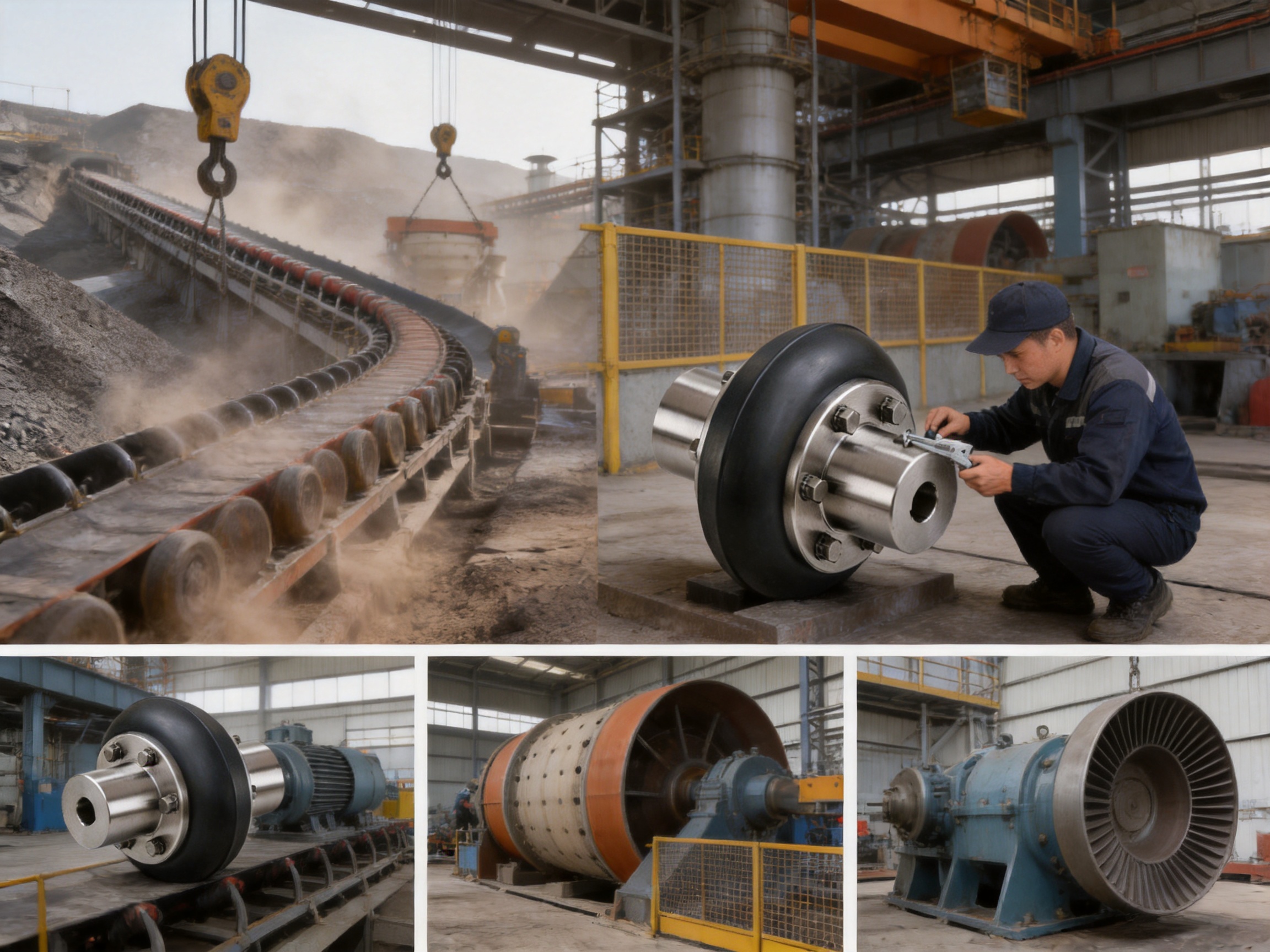
The LLB type tyre coupling is a highly elastic shaft coupling developed for industrial transmission systems that require reliable torque transfer, effective vibration control, and compensation for shaft misalignment. With an operating temperature range of approximately -20°C to 80°C and a torque transmission range of 10 to 20,000 N·m, it is suitable for both general-purpose machinery and demanding heavy-duty applications.
Unlike rigid couplings, the LLB type tyre coupling uses an integral elastic tyre body to connect two metal coupling halves. This flexible element allows the coupling to absorb shock loads, reduce torsional vibration, compensate for angular and parallel misalignment, and protect connected equipment from sudden changes in operating conditions. At the same time, its simple construction makes installation, removal, and routine maintenance comparatively convenient.
The coupling is widely applicable to transportation machinery, metallurgy, mining equipment, construction machinery, hoisting systems, pumps, fans, compressors, conveyors, and other industrial drive systems. Its combination of high elasticity, durable materials, non-lubricated operation, and strong environmental adaptability makes it a practical alternative to many conventional gear, pin, and rigid shaft couplings.
What Is an LLB Type Tyre Coupling?
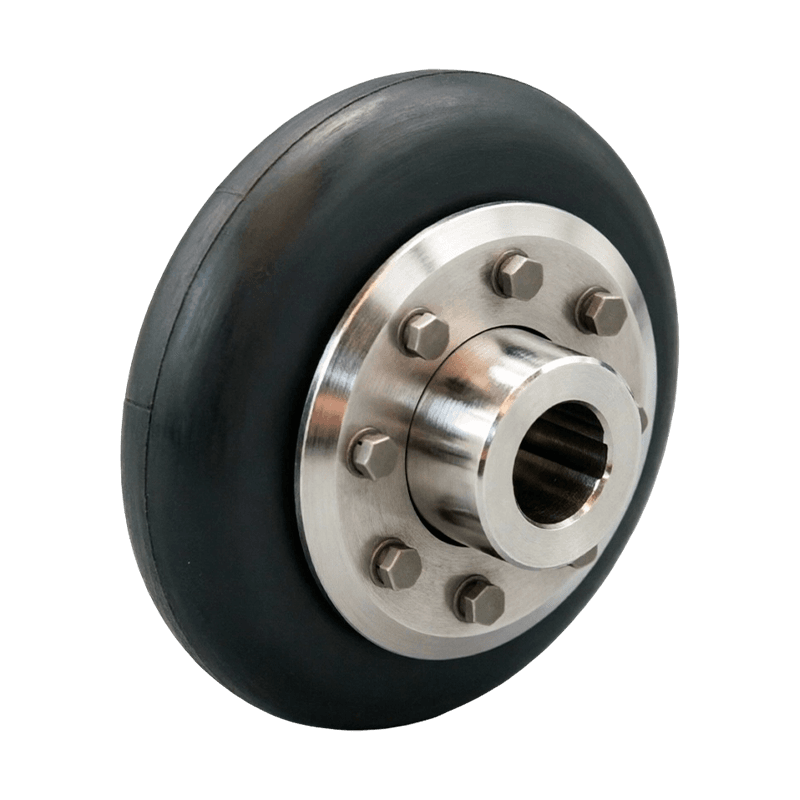
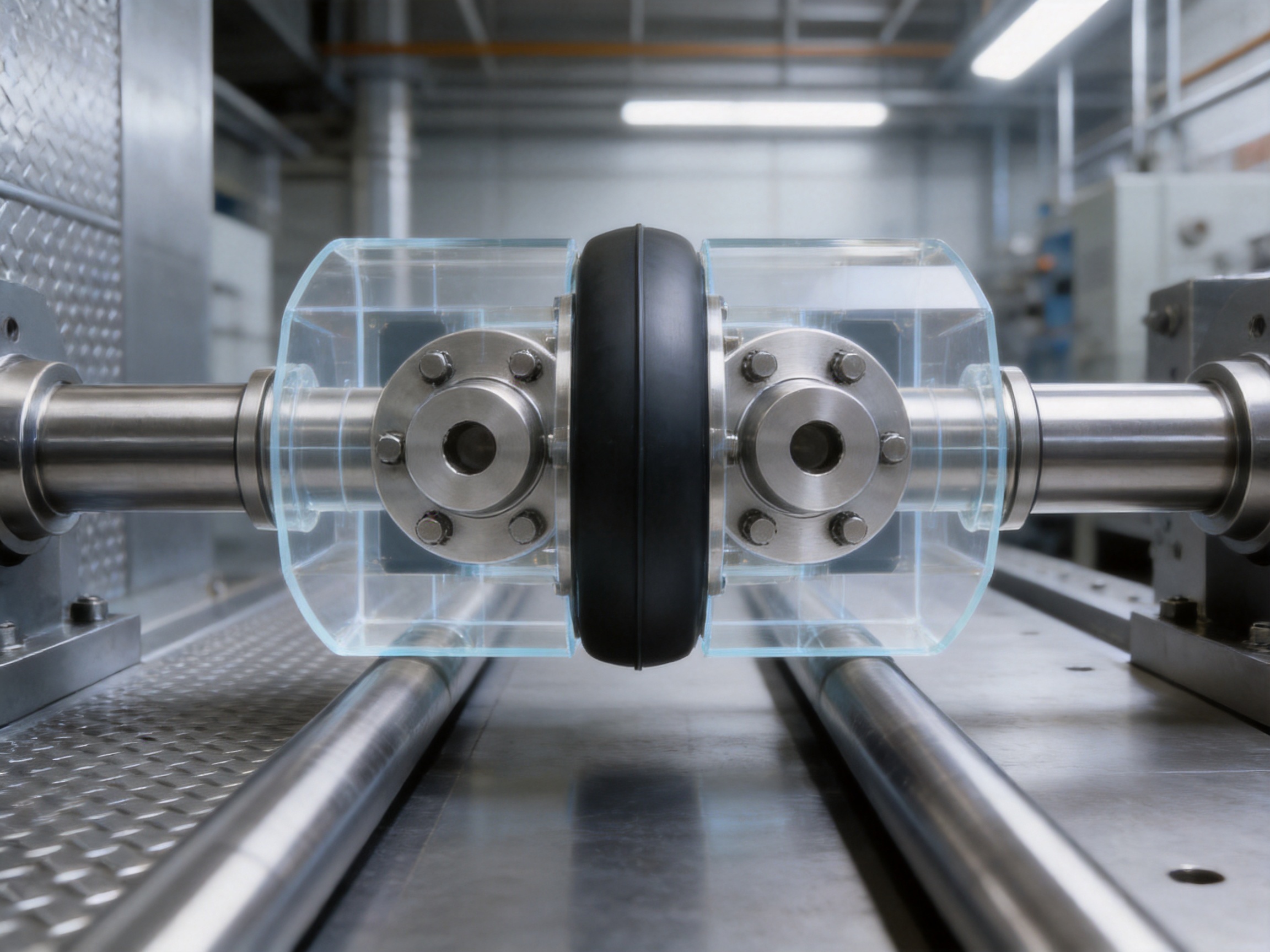
An LLB type tyre coupling is an elastomeric coupling that transmits torque through a flexible ring-shaped tyre body positioned between two metallic coupling halves. The coupling halves are connected to the driving and driven shafts, while the tyre body forms the flexible transmission interface between them.
The tyre body is generally manufactured from specially formulated rubber reinforced with skeleton materials such as nylon cord. During production, the rubber and reinforcement are bonded to the metal support structure through vulcanization. This process creates an integral elastic element with controlled flexibility, high tear resistance, and stable dynamic performance.
The coupling’s flexible tyre body is designed to deform within a controlled range during operation. When the shafts are slightly offset, the tyre body absorbs the resulting movement instead of transferring excessive forces directly to the bearings, shafts, gearboxes, or motor. This deformation also helps isolate vibration and reduce the transmission of impact loads throughout the drive train.
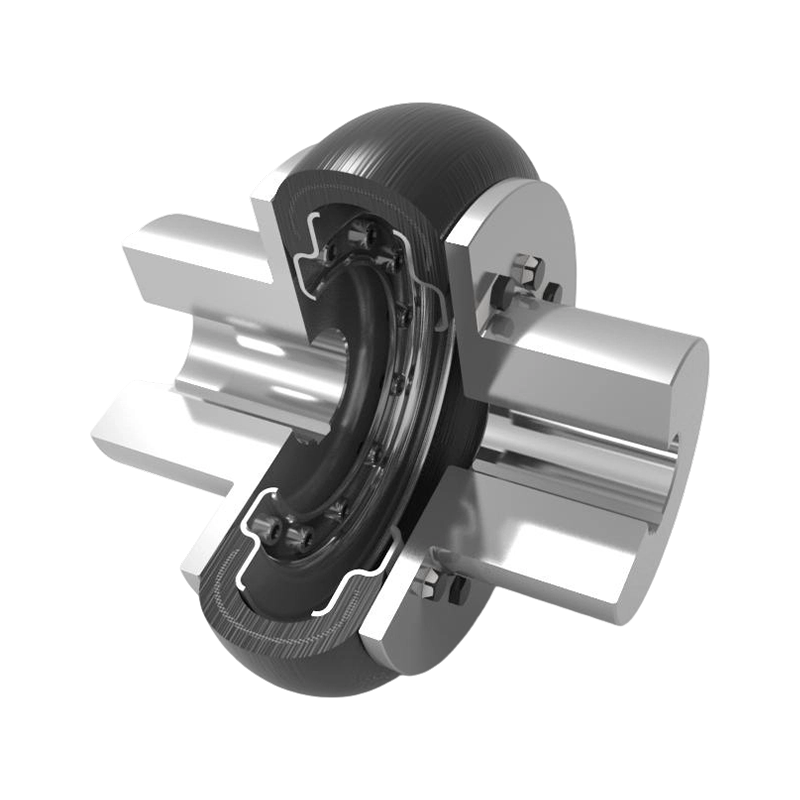
The basic construction typically includes two metal coupling halves, one integral tyre body, and a set of connecting bolts. Because the construction is relatively simple, the number of wearing or adjustment components is limited. The coupling does not require internal gears, sliding teeth, or continuous grease lubrication, which can simplify maintenance and reduce operating costs.
Core Construction and Component Functions
Metal Coupling Halves
The two coupling halves provide the mechanical connection to the driving and driven shafts. They are commonly produced from high-strength cast iron or cast steel. For larger or heavily loaded models, forged steel may be selected to provide higher structural strength and improved resistance to fatigue and impact loading.
The coupling halves are machined through multiple production processes to achieve accurate bore dimensions, proper concentricity, and reliable bolt-hole alignment. The quality of these components directly influences the coupling’s balance, load distribution, and service life.
Depending on the shaft arrangement and customer requirements, the coupling halves may be supplied with different bore configurations, keyways, clamping arrangements, or other connection details. This makes the LLB type coupling adaptable to a broad range of industrial shafts and equipment layouts.
Integral Tyre Body
The integral tyre body is the central performance element of the coupling. It is made from a rubber compound reinforced with high-strength skeleton materials, commonly including nylon cord. The rubber provides elasticity and damping, while the reinforcement controls deformation and improves the ability of the tyre body to withstand repeated cyclic loading.
Vulcanization is used to bond the rubber compound and reinforcement materials into a stable, integrated structure. A properly controlled vulcanization process helps ensure uniform hardness, strong adhesion, consistent elasticity, and resistance to tearing or fatigue. The finished tyre must provide enough flexibility to compensate for misalignment, but sufficient stiffness to transmit the required torque without excessive deformation.
Rubber formulation can be adjusted according to the expected environment. Standard compounds are designed for common industrial temperature ranges. Improved formulations may offer enhanced resistance to weathering, aging, ozone, and temperature changes. Certain special configurations can extend the working range to approximately -30°C to 85°C when the application requires additional environmental adaptability.
Connecting Bolts
The connecting bolts secure the tyre body and coupling halves into a complete transmission assembly. Correct bolt grade, tightening torque, alignment, and installation sequence are important for achieving uniform loading. The bolts must maintain the required clamping force while tolerating the dynamic forces generated during operation.
Because the LLB design uses a relatively small number of major components, inspection and replacement are straightforward. During maintenance, the bolts can be checked for loosening, corrosion, thread damage, or abnormal wear. Any damaged fastener should be replaced with a suitable specification rather than reused.
Working Principle of the LLB Type Tyre Coupling
When the driving shaft rotates, torque is transferred through the first metal coupling half into the flexible tyre body. The tyre body then transfers the torque to the second coupling half and the driven shaft. The rubber element remains under controlled elastic deformation throughout this process.
In a perfectly aligned drive system, the tyre body primarily transmits torque while experiencing limited additional deformation. In a real industrial installation, however, shafts may have angular, parallel, or axial displacement due to manufacturing tolerances, thermal expansion, foundation movement, bearing wear, or equipment settlement. The flexible tyre body accommodates these movements by flexing rather than forcing the connected shafts to remain perfectly aligned.
During acceleration, braking, load changes, or intermittent operation, the coupling also acts as a torsional cushion. It absorbs part of the shock energy and reduces the sudden transmission of torque peaks. This characteristic can help reduce stress on motors, reducers, shafts, bearings, and other drive components.
The damping effect of the rubber element reduces the propagation of vibration through the shaft line. This is particularly beneficial in systems containing reciprocating machinery, crushers, conveyors with variable loads, hoists, fans, pumps, and equipment subject to frequent starting and stopping.
Principal Technical Advantages
High Elasticity and Vibration Damping
The most important advantage of the LLB type tyre coupling is its high elasticity. The tyre body can deform repeatedly under normal operating conditions while maintaining the basic integrity of the torque path. This elasticity helps isolate mechanical vibration and reduces the transmission of torsional disturbances between connected machines.
Compared with rigid shaft connections, the LLB coupling is more tolerant of dynamic operating conditions. Compared with many metal-to-metal couplings, its rubber element provides a stronger damping effect and a softer response to impact loads. This can contribute to quieter operation, reduced mechanical stress, and improved comfort in machinery systems where vibration is a concern.
Compensation for Shaft Misalignment
Misalignment compensation is another major advantage. The coupling can accommodate a practical degree of angular and parallel misalignment while maintaining torque transmission. It may also accommodate limited axial movement depending on the specific installation and operating conditions.
This feature is valuable because complete shaft alignment is difficult to preserve throughout the full service life of industrial machinery. Thermal expansion, foundation vibration, bearing clearance, and assembly tolerance can all affect shaft position. A flexible coupling provides a degree of protection against these inevitable changes.
Misalignment compensation does not eliminate the need for correct installation. Excessive misalignment will increase tyre deformation, heat generation, and fatigue, potentially shortening service life. The coupling should therefore be installed with the best practical shaft alignment, using the manufacturer’s technical data and recommended tolerances.
Wide Torque Capacity
The LLB type range can transmit torque from approximately 10 to 20,000 N·m. This broad range allows the same general coupling concept to be used in small auxiliary drives as well as larger industrial transmission systems.
Correct selection depends on more than nominal motor power. The application assessment should consider rated torque, starting torque, peak torque, operating speed, duty cycle, reversing frequency, ambient temperature, shaft dimensions, and the severity of vibration or shock loading. A coupling selected only on the basis of average torque may be undersized for a machine with frequent starts or impact loads.
Non-Lubricated Operation
The LLB tyre coupling does not require regular internal lubrication. This is a significant practical advantage over gear couplings and other designs that depend on grease or oil to protect sliding or meshing surfaces.
Eliminating lubrication reduces routine maintenance requirements and avoids the possibility of grease leakage contaminating nearby equipment. It also makes the coupling more convenient for applications where access is limited or where contamination must be carefully controlled.
Although the coupling is non-lubricated, it is not maintenance-free. Operators should still inspect the tyre body, bolts, hubs, guards, shaft connections, and overall alignment. A non-lubricated design simply removes the need for a specific lubrication task; it does not eliminate the need for general mechanical inspection.
Simple Axial Assembly
The LLB coupling is assembled in an axial manner. This construction can simplify installation and removal, especially in machinery layouts where the coupling can be moved along the shaft axis after the relevant guards or fasteners have been removed.
A simple assembly process can shorten planned maintenance time. It may also reduce the risk of incorrect component orientation or complicated adjustment. For factories operating multiple machines, the resulting reduction in downtime can be commercially important.
Sealed Tyre Body Design
The closed tyre body provides good sealing performance around the flexible transmission element. It helps limit the entry of dust, moisture, and other contaminants that could accelerate deterioration. It also avoids the grease leakage associated with some lubricated coupling designs.
This characteristic is especially useful in mining, construction, metallurgy, material handling, and outdoor equipment, where airborne particles and changing weather conditions may affect exposed mechanical components.
Durability Under Dynamic Loading
The combination of high-strength metal components, reinforced rubber, and controlled vulcanization allows the coupling to tolerate repeated loading cycles. The reinforced tyre body is designed to resist tearing and fatigue, while the metal halves provide the structural foundation required for torque transmission.
Durability depends on correct selection and operating conditions. Excessive temperature, chemical exposure, overloading, severe misalignment, or operation beyond the recommended speed can damage the elastic element. Nevertheless, under suitable conditions, the LLB design offers a reliable service life with relatively simple maintenance.
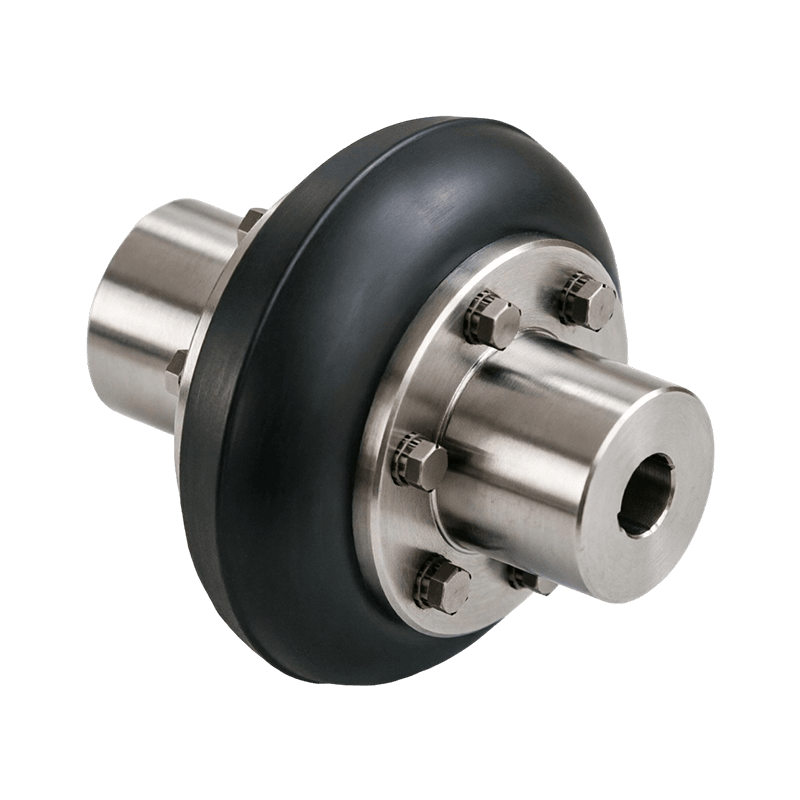
LLB Type Tyre Coupling
Comparison with Other Coupling Types
Industrial users have many coupling options, including rigid couplings, gear couplings, diaphragm couplings, elastomeric pin couplings, plum couplings, cross universal couplings, and other tyre couplings. Each design has specific strengths. The LLB type should be selected when the application benefits from high elasticity, vibration damping, and uncomplicated maintenance.
| Coupling type | Typical strength | Possible limitation compared with an LLB tyre coupling | LLB type advantage |
| Rigid coupling | High positional accuracy and simple torque transmission | Limited misalignment compensation and little vibration damping | Greater flexibility and better shock absorption |
| Gear coupling | High torque density and compact metal construction | Requires lubrication and may need more detailed maintenance | Non-lubricated operation and simpler servicing |
| Diaphragm coupling | High-speed operation and precise torsional transmission | More sensitive to installation conditions and overloads | Strong cushioning effect and better tolerance of impact loads |
| Elastomeric pin coupling | Flexible torque transmission and replaceable elastic elements | Exposed pins or elements may be vulnerable in contaminated environments | Closed tyre body and effective environmental protection |
| Plum elastic coupling | Compact construction and convenient element replacement | Usually suited to lower or moderate torque ranges | Broader heavy-duty capability and higher shock absorption |
| Cross universal coupling | Large angular movement and special shaft arrangements | More components and greater maintenance complexity | Simpler structure for conventional shaft alignment applications |
The comparison does not mean that the LLB coupling is universally superior to every other coupling. Instead, its advantage lies in the balance it provides. It combines meaningful misalignment compensation, strong damping, a wide torque range, straightforward assembly, and no lubrication requirement. For many general industrial drives, this balance is more useful than optimizing for only one characteristic such as extreme speed, minimum size, or maximum torsional rigidity.
Material Selection and Manufacturing Process
Engineering and Application Assessment
Manufacturing quality begins before machining or rubber processing. A suitable coupling must first be matched to the actual equipment. Engineers evaluate the required torque, speed, shaft diameter, operating temperature, load pattern, start-stop frequency, environmental conditions, and expected misalignment.
For customized products, the technical review may also include the available installation space, shaft extension length, keyway dimensions, bore tolerances, coupling guard arrangement, and customer-specific standards. This preliminary assessment helps prevent the common mistake of selecting a coupling solely according to motor power.
Metal Material Preparation
Metal coupling halves may be made from high-strength cast iron, cast steel, or forged steel, depending on model size and loading conditions. Material selection balances strength, machinability, impact resistance, production efficiency, and cost.
Cast iron can provide efficient production and suitable performance for many standard applications. Cast steel offers improved strength and toughness for more demanding conditions. Forged steel is appropriate for heavy-duty models where high fatigue resistance and structural reliability are especially important.
Incoming material inspection is an important part of quality control. Material certificates, chemical composition, mechanical properties, casting or forging condition, and visible defects should be reviewed according to the applicable production requirements.
Machining of Coupling Halves
After casting or forging, the metal blanks are machined to produce the final hub geometry, shaft bore, keyway, bolt holes, flange faces, and other features. Turning, milling, drilling, boring, and finishing operations may be used according to the design.
Accurate machining is essential because dimensional errors can produce eccentricity, uneven loading, or installation difficulty. Bore accuracy influences the shaft connection, while flange and bolt-hole accuracy influence the concentricity of the complete coupling assembly.
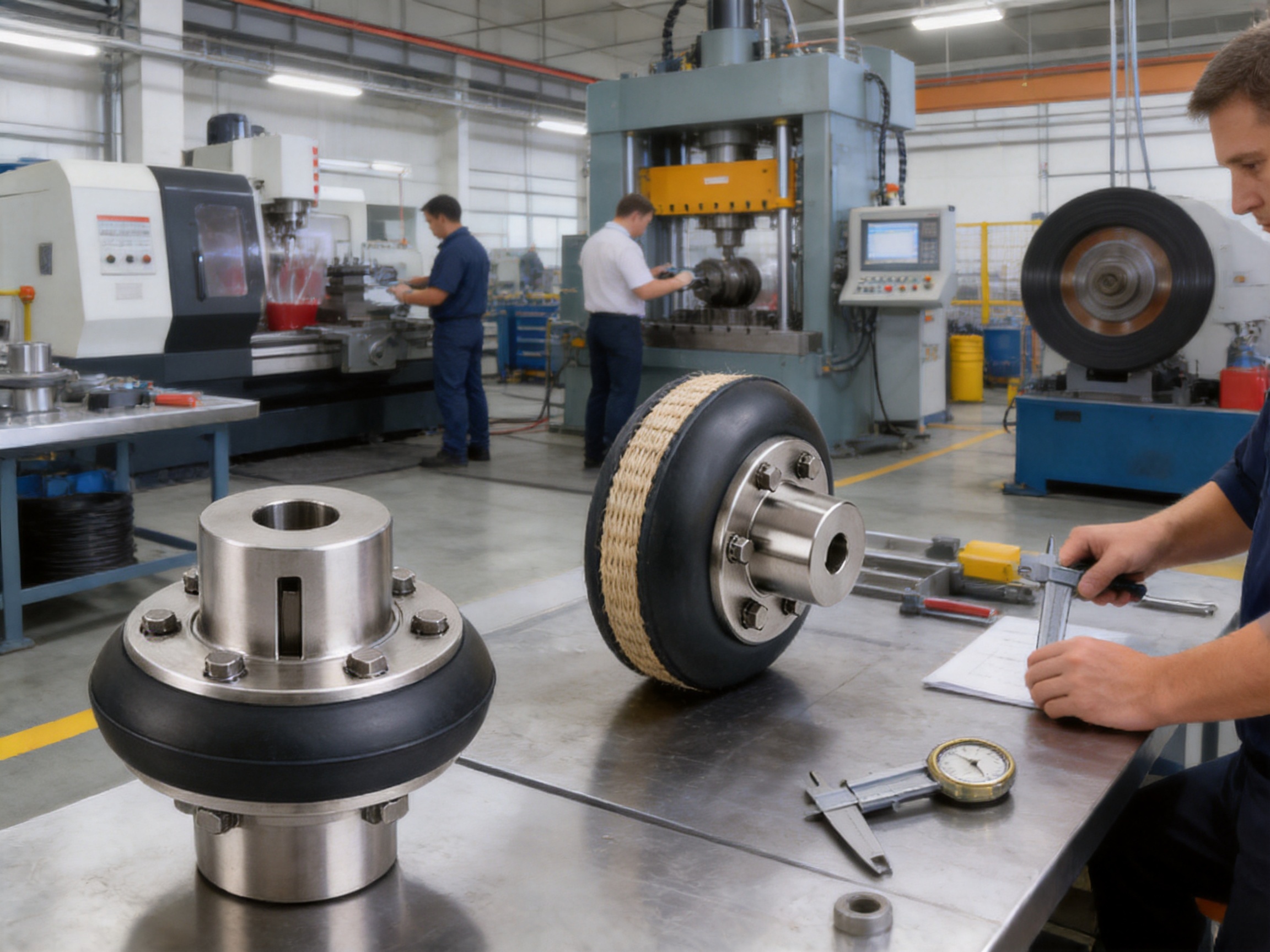
Modern production equipment can improve repeatability and reduce variation between batches. Computer-controlled machining, dedicated fixtures, inspection gauges, and process documentation help maintain consistent dimensions across different coupling sizes.
Rubber Compound Preparation
The tyre body requires a rubber compound with a carefully controlled balance of elasticity, tear strength, fatigue resistance, hardness, and environmental stability. The compound must remain flexible across the intended temperature range while resisting excessive heat buildup during repeated deformation.
Compounding may involve the controlled mixing of rubber, reinforcing materials, curing agents, stabilizers, and other additives. Mixing time, temperature, material sequence, and batch uniformity influence the final properties of the elastic element.
For special applications, the compound can be adjusted for improved weather resistance or an expanded temperature range. The selected material should also be reviewed against exposure to oil, chemicals, ozone, ultraviolet radiation, moisture, and abrasive dust when these conditions are present.
Reinforcement and Vulcanization
Nylon cord or comparable skeleton material provides the tyre body with structural reinforcement. The reinforcement limits uncontrolled stretching and helps the element transmit torque repeatedly without rapid fatigue.
During vulcanization, heat and pressure are applied according to a controlled process. The rubber flows around and bonds to the reinforcing material and metal skeleton. Proper vulcanization is critical for achieving strong adhesion and uniform performance throughout the tyre body.
Insufficient vulcanization may result in poor bonding, unstable hardness, or reduced fatigue resistance. Excessive vulcanization may make the rubber too hard or brittle. For this reason, process parameters must be controlled and documented.
Inspection and Testing
A professional coupling manufacturer uses inspection at multiple stages rather than relying only on final visual examination. Typical quality activities include raw material inspection, dimensional measurement, hardness testing, visual inspection, balancing checks, bolt inspection, and elastic element evaluation.
Depending on the product specification, testing may also include torque-related assessment, fatigue testing, adhesion evaluation, temperature performance, and dynamic operation trials. These tests help verify that the finished coupling performs consistently under representative conditions.
Complete testing equipment is particularly valuable for custom products because standard catalog dimensions may not fully represent the customer’s application. Testing and documentation provide greater confidence that the selected materials and dimensions satisfy the intended service conditions.
Manufacturing Strengths of the Supplier
Zhenjiang Orienthold Machinery Co., Ltd. is a medium-sized enterprise specializing in couplings and papermaking machinery. Its operations integrate product design, production, inspection, and customer service. This integrated structure allows technical requirements to be reviewed across the complete product cycle instead of being separated between unrelated suppliers.
The company has experience serving transportation, metallurgy, chemical engineering, mining, construction, and hoisting industries. These sectors often require equipment that can operate under heavy loads, vibration, dust, variable temperatures, and demanding duty cycles. Such application exposure supports practical product development and helps engineers understand the conditions that influence coupling performance in the field.
Advanced equipment supports the machining and production of coupling components. Precision equipment can improve the consistency of shaft bores, flange faces, bolt patterns, and overall concentricity. For customers requiring special dimensions or customized connection details, this manufacturing capability can shorten the path from technical drawing to finished product.
The company also maintains comprehensive inspection and testing methods. A strict quality supervision system is intended to control material selection, process execution, dimensional accuracy, and final product performance. Products are manufactured in accordance with applicable national standards, while the company’s broader machinery production capabilities have reached international levels in relevant areas.
Another important strength is the ability to provide one-stop support. The service process may include pre-sales consultation, model selection, customized design, production coordination, flexible logistics, payment arrangements, and maintenance support. For industrial buyers, this reduces the need to coordinate multiple vendors for engineering and after-sales issues.
Customization Capability
Standard couplings are suitable for many applications, but industrial machinery frequently has special shaft diameters, unusual mounting dimensions, limited installation space, or nonstandard environmental requirements. A manufacturer with design and production capability can adapt the coupling to these conditions.
Customization may involve bore diameter, keyway dimensions, hub length, flange arrangement, bolt specification, rubber compound, temperature range, protective requirements, or surface treatment. The final design should be confirmed through technical drawings and application data before production.
Customization should not be limited to changing dimensions. The manufacturer should also consider the effect of any modification on balance, stress concentration, tyre deformation, bolt loading, and service life. A responsible engineering review ensures that the customized coupling remains mechanically coherent.
Quality and Service Integration
A coupling is a relatively small component compared with a complete production line, but its failure can stop the entire drive system. For this reason, product quality and technical support are closely related. A reliable supplier should help customers choose the correct size, understand installation requirements, and identify the causes of abnormal wear or vibration.
Orienthold Machinery’s integrated service approach is designed to support customers before and after delivery. Consultation can help clarify torque, speed, shaft data, and environmental conditions. After delivery, maintenance guidance can assist users with inspection, alignment, replacement, and troubleshooting.
Application Areas
Transportation and Conveyor Systems
Conveyor systems often experience starting torque, variable loads, and occasional material blockages. The LLB tyre coupling can cushion these disturbances and reduce shock transfer to the motor and reducer. Its closed flexible body is also useful where dust and material particles are present.
Applications may include belt conveyors, bucket elevators, roller conveyors, transfer systems, and other bulk material handling equipment. Proper coupling selection should account for the conveyor’s starting method, loaded starting condition, reversing requirements, and duty cycle.
Metallurgy
Metallurgical equipment may operate near heat sources, under heavy loads, and in environments containing dust or scale. Roll drives, auxiliary drives, cooling equipment, and material transfer machinery can benefit from a flexible coupling that dampens vibration and tolerates moderate alignment changes.
Where ambient temperatures exceed the standard range, a special rubber compound or a protective arrangement may be required. The coupling should be positioned and guarded to avoid direct exposure to radiant heat or hot material whenever possible.
Mining Equipment
Mining machinery is commonly subject to impact loading, abrasive dust, uneven foundations, and demanding operating cycles. Crushers, feeders, screens, conveyors, pumps, and auxiliary equipment can generate substantial vibration and torque fluctuation.
The LLB coupling’s elastic tyre body helps absorb shock and isolate vibration. Its non-lubricated construction also reduces the need for grease maintenance in locations where access can be difficult. Nevertheless, regular inspection remains necessary because abrasive dust and severe misalignment can accelerate external and internal deterioration.
Construction Machinery
Construction equipment often operates outdoors and may be exposed to changing weather, dirt, intermittent loading, and frequent transportation between job sites. The tyre coupling’s weather-resistant material options and sealed design can support reliable service in these conditions.
Equipment such as mixers, pumps, winches, compressors, and material handling systems may use flexible couplings to reduce the effects of shock and alignment variation. The correct choice should reflect the machine’s actual load pattern rather than only its average operating power.
Hoisting and Crane Systems
Hoisting equipment frequently undergoes acceleration, deceleration, reversing, and sudden load changes. These conditions can generate high dynamic torque. A highly elastic coupling can soften the transmission of these changes and reduce stress on the motor, reducer, drum, and shaft system.
Crane and hoisting applications require careful attention to safety factors, braking conditions, emergency stops, and duty classification. The coupling must be properly guarded, inspected, and selected according to the complete hoisting system rather than treated as an isolated component.
Pumps, Fans, and Compressors
Pumps and fans may be sensitive to vibration, shaft alignment, and bearing loads. An LLB coupling can help isolate torsional and mechanical disturbances while accommodating small alignment changes between the driver and driven machine.
Compressors and other rotating machines may require additional attention to balance and operating speed. In these applications, coupling selection should consider rotational speed, torsional vibration characteristics, starting method, and the possibility of resonance.
Selection Guidelines
Calculate the Required Torque
The starting point is the required transmitted torque. A basic torque estimate can be obtained from power and rotational speed, but the result should be adjusted using an appropriate service factor. The service factor reflects the severity of operation, including shock loads, intermittent duty, reversing, starts per hour, and driven-machine characteristics.
For applications with crushers, hoists, mixers, reciprocating machines, or frequent starts, a higher service factor is normally appropriate. The selected coupling should have sufficient rated torque and peak torque capacity to handle both continuous and transient loads.
Check Speed and Dynamic Conditions
Operating speed must be compared with the coupling’s allowable speed. At higher speeds, balance quality, eccentricity, tyre deformation, and heat generation become increasingly important. A coupling that is satisfactory at low speed may not be suitable for high-speed operation.
Dynamic conditions should also be reviewed. If the drive system has a known torsional vibration problem, the coupling’s stiffness and damping characteristics should be analyzed with the motor, gearbox, shafts, and driven machine as one system.
Confirm Shaft and Bore Dimensions
The coupling bore must match the shaft diameter and connection method. Keyway dimensions, shaft tolerance, hub length, and available shaft extension should be confirmed before ordering. Incorrect bore or keyway dimensions can delay installation and may compromise the shaft connection.
For customized couplings, the supplier should receive accurate shaft drawings or a complete dimensional schedule. Measurements should identify shaft diameter, keyway width and depth, shoulder locations, axial spacing, and any interference from adjacent components.
Evaluate the Environment
Ambient temperature, dust, moisture, oil, chemical vapors, ultraviolet radiation, and ozone can influence rubber performance. The standard temperature range is approximately -20°C to 80°C. If the application is outside this range, a special material or design review should be requested.
The presence of oils or solvents should be specifically reported because not all rubber compounds have the same resistance. Likewise, outdoor applications may require improved weathering resistance, while metallurgical installations may require protection from radiant heat.
Consider Alignment and Installation Space
The coupling can compensate for a certain degree of misalignment, but it should not be used to correct poor installation. The driver and driven shafts should be aligned as accurately as practical before the coupling is installed.
The available axial and radial space should also be reviewed. The axial assembly design is convenient when the coupling can be moved along the shaft, but nearby guards, bearings, flanges, or machine housings may affect the actual installation procedure.
Installation Recommendations
Before installation, inspect the coupling halves, tyre body, bolts, shaft surfaces, keyways, and mounting areas. Confirm that all parts correspond to the approved drawing or order specification. Remove burrs, rust, dirt, and foreign material from the shaft and bore.
Install the coupling halves on the appropriate shafts using suitable tools. Avoid striking the rubber tyre body or applying uncontrolled force to the flanges. If heating is required for a particular interference fit, the procedure should be approved by the equipment designer or supplier.
Align the shafts within the recommended limits before tightening the coupling. Check angular alignment, parallel offset, axial position, and any required gap between the coupling halves. Use precision measuring equipment where the application is sensitive to alignment.
Tighten the connecting bolts in a controlled sequence. Apply the recommended torque evenly so that the tyre body is clamped uniformly. Uneven bolt tightening can create localized stress, vibration, and premature wear.
After installation, rotate the system manually if possible to confirm that there is no interference. Replace all protective guards before operation. Conduct a controlled test run and observe vibration, noise, temperature, and bolt stability.
Maintenance and Inspection
Routine maintenance should focus on the condition of the tyre body, coupling halves, bolts, shafts, and guards. Inspect the tyre for cracks, cuts, surface hardening, swelling, separation, exposed reinforcement, abnormal wear, or deformation.
Small surface marks do not always indicate immediate failure, but any deep crack, visible separation, serious abrasion, or exposed skeleton material requires prompt technical evaluation. Rubber deterioration can progress quickly once the reinforcement is exposed.
Check for loose or damaged bolts. A loose bolt may cause uneven loading and progressive damage to the tyre body. Bolts showing thread deformation, corrosion, stretching, or damaged heads should be replaced.
Monitor the coupling for unusual vibration, noise, heat, or movement during operation. These symptoms may indicate excessive misalignment, overloading, incorrect assembly, deteriorated rubber, shaft bearing problems, or a problem elsewhere in the drive system.
Do not apply grease or oil to the tyre body unless specifically required by an approved special design. The standard LLB type coupling is intended for non-lubricated operation, and unapproved substances may affect the rubber compound.
The inspection interval should be based on duty severity. Heavy-load, high-cycle, outdoor, dusty, or high-temperature applications generally require more frequent checks than lightly loaded indoor machinery.
Common Causes of Premature Failure
Excessive Misalignment
Misalignment beyond the recommended limit causes excessive cyclic deformation. This increases heat generation and fatigue in the rubber. Correcting the underlying shaft or bearing problem is more effective than simply replacing the coupling.
Overloading and Repeated Shock
Peak torque caused by blockage, sudden braking, jammed machinery, or repeated impact can exceed the coupling’s design capacity. Selecting a higher service factor and reviewing the starting system can reduce this risk.
Incorrect Bolt Tightening
Under-tightened bolts may loosen during operation, while over-tightened bolts can damage the tyre body or distort the flange. The correct tightening procedure is therefore essential.
Excessive Temperature or Chemical Exposure
Heat accelerates rubber aging, while oils, solvents, and chemicals can cause swelling, softening, or loss of elasticity. The material specification should be matched to the actual environment.
Poor Shaft or Bore Fit
An incorrect shaft fit can cause fretting, movement, keyway damage, or uneven torque transfer. Proper dimensional control and inspection before assembly help prevent these problems.
Why Choose This Coupling for Competitive Industrial Applications?
The LLB type tyre coupling competes effectively because it combines several useful characteristics in one relatively simple design. Some coupling types may provide greater torsional rigidity, higher speed capability, or more compact dimensions, but they may also require more precise alignment, lubrication, or specialized maintenance.
The LLB design is particularly attractive when vibration damping and shock absorption are more important than maximum torsional rigidity. Its elastic tyre body helps protect connected machinery from dynamic loads, while its closed structure helps limit contamination and grease-related maintenance problems.
Its broad torque range provides flexibility for equipment designers and maintenance departments. A consistent coupling concept can be applied across different machine sizes, reducing the number of coupling designs that need to be stocked or learned by maintenance personnel.
The combination of standard products and customization support further improves its competitiveness. Buyers can request a suitable bore, hub dimension, rubber compound, or structural detail instead of redesigning the entire shaft system around an inflexible catalog item.
Finally, manufacturing capability matters as much as the nominal coupling design. Accurate machining, controlled rubber vulcanization, complete inspection, and technical consultation contribute directly to reliability. A well-produced coupling with appropriate application support is more valuable than a theoretically suitable product without dependable quality control.
Frequently Asked Questions
What is the normal operating temperature range?
The standard working temperature range is approximately -20°C to 80°C. Special rubber compounds and configurations may extend the range to about -30°C to 85°C. The actual temperature should include both ambient conditions and heat generated during operation.
What torque range can the LLB type coupling transmit?
The available range is approximately 10 to 20,000 N·m. The correct model depends on rated torque, peak torque, operating speed, service factor, shaft dimensions, and the severity of the application.
Does the coupling require lubrication?
No. The standard LLB type tyre coupling is designed for non-lubricated operation. This reduces routine maintenance and eliminates grease leakage from the flexible element. General inspection and alignment checks are still necessary.
Can the coupling compensate for shaft misalignment?
Yes. Its elastic tyre body can compensate for a practical degree of angular, parallel, and limited axial misalignment. However, the coupling should not be used to compensate for excessive installation errors or defective bearings.
How often should the tyre body be inspected?
Inspection frequency depends on the application. Heavy-duty, high-cycle, dusty, outdoor, or high-temperature systems should be checked more frequently. Inspection should also be performed after abnormal vibration, overload, sudden stoppage, or equipment modification.
What materials are used for the tyre body?
The tyre body is generally made from rubber reinforced with skeleton materials such as nylon cord. The rubber compound and reinforcement are bonded to the metal skeleton through vulcanization. Material options can be adjusted for temperature and environmental requirements.
Can the LLB coupling be customized?
Yes. Possible customization may include shaft bore, keyway, hub length, flange dimensions, bolt arrangement, rubber compound, and other connection details. A technical drawing and complete application information should be provided for confirmation.
Is the coupling suitable for cranes and hoisting equipment?
It can be suitable for crane and hoisting applications because its elastic tyre body absorbs shock and torsional fluctuation. However, hoisting systems require careful safety-factor selection and should be evaluated according to load class, braking conditions, start-stop frequency, and emergency operating conditions.
What should be done if cracks appear in the tyre body?
The coupling should be stopped and inspected if deep cracks, separation, exposed reinforcement, serious abrasion, or abnormal deformation is found. The tyre body should normally be replaced when damage affects its structural integrity. The cause of the damage should also be corrected.
Why is supplier manufacturing capability important?
Coupling performance depends on dimensional accuracy, material quality, rubber formulation, vulcanization, bolt quality, and inspection. A supplier with design, machining, testing, and service capabilities can provide better control over these factors and offer more effective support for standard or customized applications.
Conclusion
The LLB type tyre coupling is a practical and versatile solution for industrial shaft transmission systems that require flexibility, vibration damping, shock absorption, and misalignment compensation. Its construction consists of two metal coupling halves, an integral reinforced rubber tyre body, and connecting bolts, resulting in a compact and serviceable assembly.
Its principal advantages include a broad torque range of approximately 10 to 20,000 N·m, operation in temperatures from about -20°C to 80°C, optional adaptation to more demanding temperature conditions, non-lubricated operation, axial assembly, strong sealing performance, and effective protection against vibration and impact loads.
Compared with more rigid or maintenance-intensive coupling designs, it offers an attractive balance between performance and simplicity. Its competitive value is especially clear in conveyors, mining equipment, metallurgical machinery, construction equipment, cranes, pumps, fans, compressors, and other systems subject to variable loads and complex vibration.
Reliable performance depends on correct selection, accurate installation, appropriate material specification, and regular inspection. Zhenjiang Orienthold Machinery Co., Ltd. supports these requirements through integrated design, manufacturing, testing, customization, logistics, and technical service capabilities. With suitable engineering evaluation and quality control, the LLB type tyre coupling can provide stable and durable service in a wide range of industrial transmission applications.
References
1. General principles of industrial shaft coupling selection and torque calculation.
2. Rubber compound design and elastomer fatigue considerations for flexible couplings.
3. Industrial machinery alignment, installation, and maintenance practices.
4. General requirements for mechanical power transmission components and rotating machinery safety.
5. Manufacturer technical information for LLB type tyre couplings and related industrial coupling products.
6. Quality control practices for cast, forged, and machined steel coupling components.
Product: LLB Type Tyre Coupling
PREV: WGZ Type Crowned-Gear Coupling with Brake Wheel: Integrated Power Transmission and Braking for Heavy-Duty MachineryNEXT: WGT Type Crowned-Gear Coupling with Intermediate Spacer: Reliable Long-Shaft Power Transmission
Be the First to Know
For exclusive deals and latest offers, sign up by entering your email address below.
Related products
News
-
-
China's coupling industry is at a critical historical juncture of transformation from scale expansion to quality and eff...
READ MORE -
A mill drive rarely fails without warning. It knocks at speed, throws a smear of dark grease around the sleeve flange, ...
READ MORE -
Industrial Couplings: The Definitive Technical Encyclopedia – Classification, Sizing, Failure Prevention, and Lifecycle...
READ MORE -
During a routine vibration survey on a high-speed compressor train, engineers found a 4.5 mm/s velocity spike at the mo...
READ MORE -
Your compressor train is running at 9,800 rpm when the vibration monitor triggers an alarm. The first component your ma...
READ MORE


ABOUT US
PRODUCTS
INDUSTRIES
CONTACT US
- Phone: +86-18652865511
- Email: sales@ohmach.com
- Address: No.1, Minying Developing Zone, Zhenjiang, Jiangsu, China
Copyright Zhenjiang Orienthold Machinery Co., Ltd. All Rights Reserved.
 Custom Industrial Shaft Coupling Manufacturers