 English
 русский
 Português
 عربى
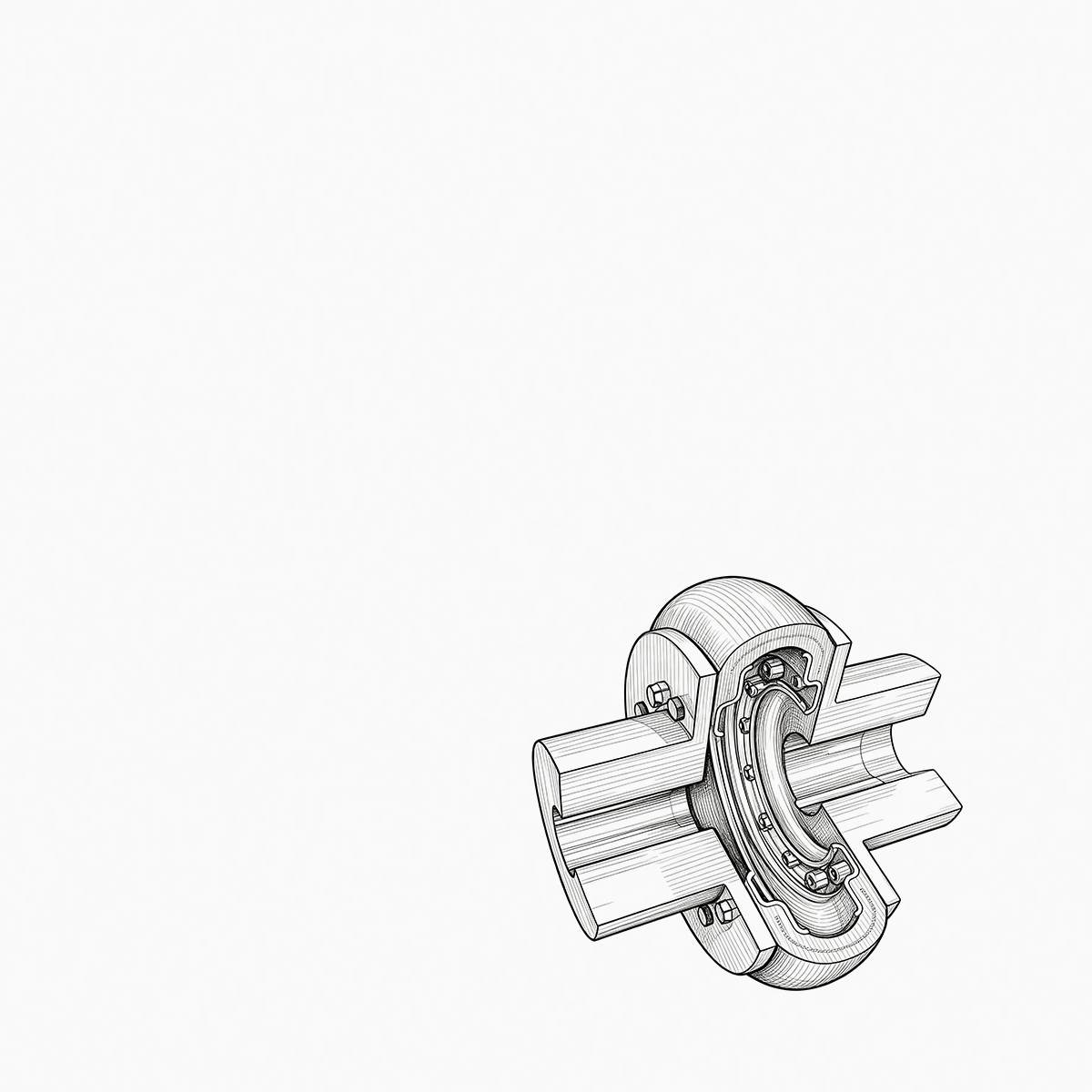

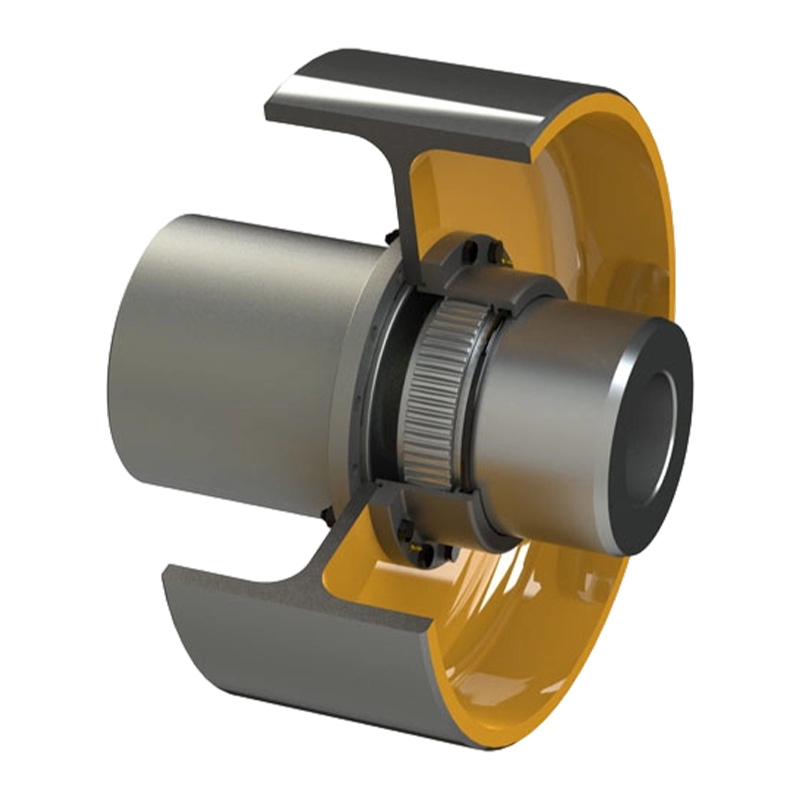
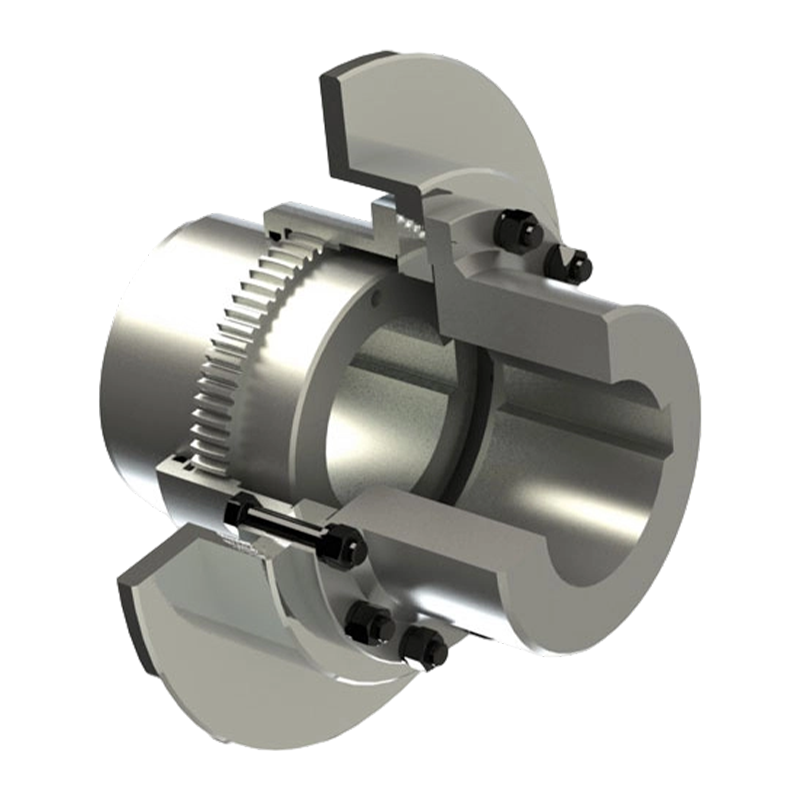
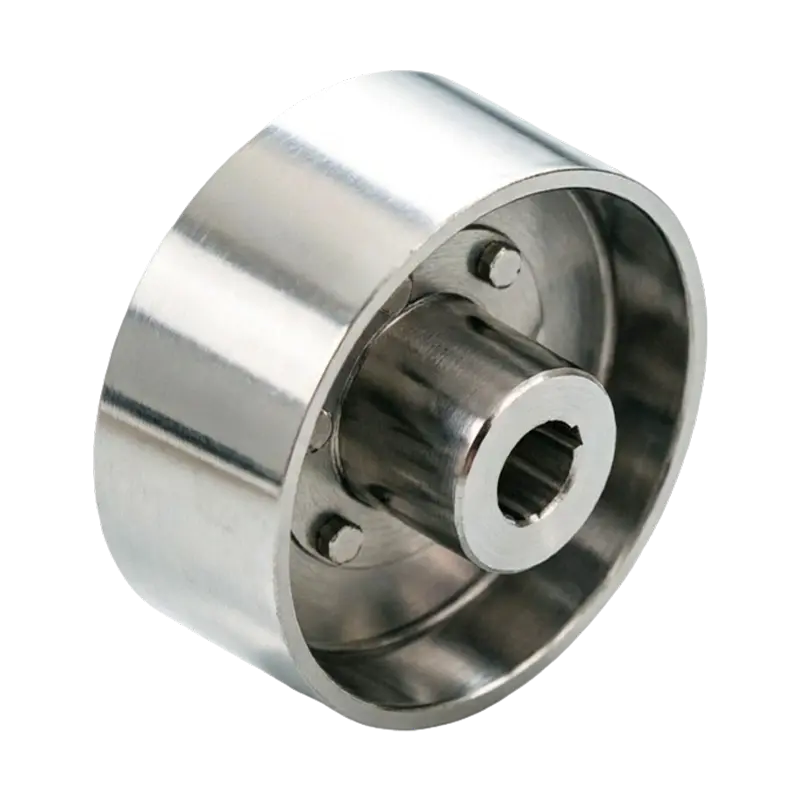
A mill drive rarely fails without warning. It knocks at speed, throws a smear of dark grease around the sleeve flange, ...
READ MORE
WGZ Type Crowned-Gear Coupling with Brake Wheel: Integrated Power Transmission and Braking for Heavy-Duty Machinery
Admin 2026-09-17Content
- 1 1. Why Integrated Coupling and Braking Matter
- 2 2. Product Overview
- 3 3. Crowned-Gear Transmission Principle
- 4 4. Integrated Brake Drum Design
- 5 5. Main Advantages Compared with Conventional Arrangements
- 6 6. Type I and Type II Sealing Configurations
- 7 7. Typical Applications
- 8 8. Manufacturing Strengths and Quality Approach
- 9 9. How the Product Supports Total Cost of Ownership
- 10 10. Installation Considerations
- 11 11. Lubrication, Sealing, and Maintenance
- 12 12. Selection Checklist for Engineers and Purchasers
- 13 13. Customization and Service Support
- 14 14. Safety and Reliability Considerations
- 15 15. Competitive Position in Industrial Couplings
- 16 16. Questions and Answers
- 16.1 Q1: What is the primary function of the WGZ coupling?
- 16.2 Q2: What makes the gear teeth crowned?
- 16.3 Q3: Can the coupling compensate for unlimited misalignment?
- 16.4 Q4: How does the integrated brake drum operate?
- 16.5 Q5: What is the difference between Type I and Type II?
- 16.6 Q6: Which industries commonly use this product?
- 16.7 Q7: What should be considered when choosing the brake?
- 16.8 Q8: Why is sealing important in a gear coupling?
- 16.9 Q9: Does the integrated design eliminate maintenance?
- 16.10 Q10: Can Orienthold Machinery support customized requirements?
- 16.11 Q11: What symptoms may indicate a coupling problem?
- 16.12 Q12: What information should be supplied for product selection?
- 17 17. Conclusion
- 18 References
- 19 Product: WGZ Type Crowned-Gear Coupling with Brake Wheel
Heavy-duty machinery requires more than a component that simply transfers torque. In hoisting equipment, mining machinery, metallurgical installations, conveying systems, and large rotating assemblies, the coupling must transmit power reliably while accommodating shaft displacement, resisting shock loads, supporting frequent starts and stops, and contributing to safe shutdown. When braking is also required, the arrangement of the transmission and braking components becomes equally important. A poorly integrated system can consume valuable installation space, increase rotational inertia, complicate maintenance, and create additional alignment requirements.
The WGZ Type Crowned-Gear Coupling with Brake Wheel is designed to address these combined requirements. It integrates the transmission function of a crowned-gear coupling with a brake drum intended for shoe-type braking systems. This arrangement creates a compact mechanical solution for equipment in which power transmission and controlled braking must work together. The coupling provides high torque capacity, compensation for radial, axial, and angular shaft displacement, and a reliable braking interface within one coordinated assembly.
Manufactured by Zhenjiang Orienthold Machinery Co., Ltd., the WGZ coupling is part of a broader range of industrial coupling products developed for transportation, metallurgy, chemical engineering, mining, construction, and hoisting applications. The company combines product design, machining, assembly, inspection, and technical service to support demanding industrial users. Its manufacturing approach emphasizes adherence to national standards, controlled production procedures, comprehensive testing, and the ability to provide customized solutions.
This article examines the structure, operating principle, performance advantages, sealing configurations, manufacturing considerations, application value, installation requirements, and maintenance practices associated with the WGZ Type Crowned-Gear Coupling with Brake Wheel.
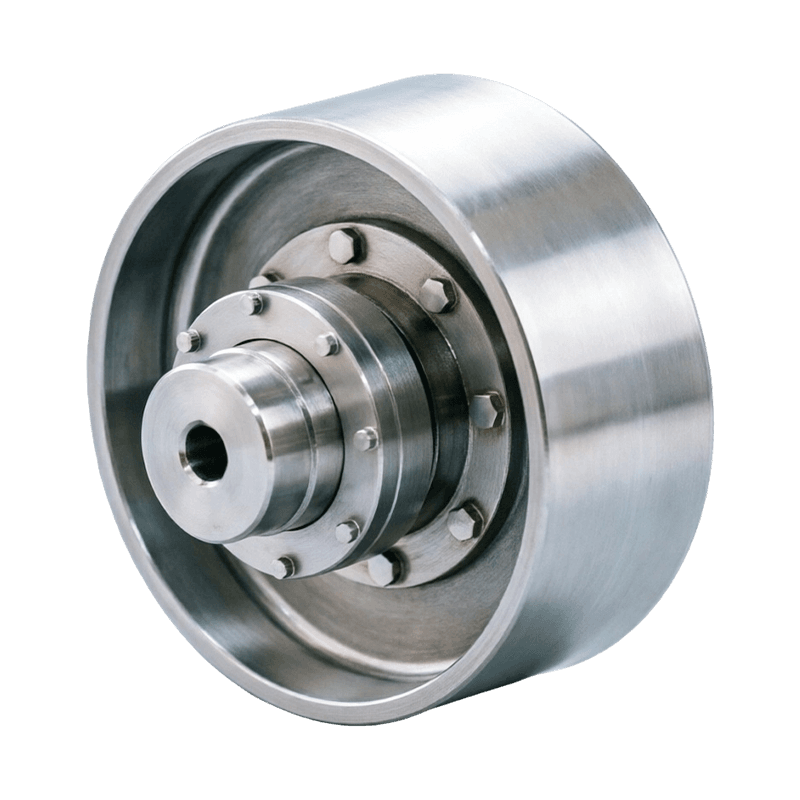
WGZ Type Crowned-Gear Coupling with Brake Wheel
1. Why Integrated Coupling and Braking Matter
In many industrial drives, a motor and gearbox deliver torque to a rotating shaft, while a separate brake is used to stop or hold the driven mechanism. This conventional arrangement can function effectively, but it may require additional support structures, a larger installation envelope, more shaft extensions, and independent alignment of several components. Each additional component introduces another interface that must be checked during design, installation, and maintenance.
A coupling with an integrated brake wheel reduces the number of separate mechanical elements in the drive train. The transmission coupling remains responsible for transferring torque between connected shafts, while the brake drum provides a controlled surface for brake shoes. Because these functions are combined into one engineered assembly, the drive can be arranged more rationally and with fewer separate mounting requirements.
This integration is especially valuable in lifting and conveying equipment. A hoist may need to accelerate a load smoothly, transmit high torque during lifting, and stop rapidly when the operator releases a control or when an emergency condition occurs. The coupling must therefore remain dependable during normal operation and must also cooperate with the braking system during shutdown. A brake wheel that is rigidly connected to the coupling body can help transfer braking torque directly into the drive train without requiring a separate brake disc or drum mounted elsewhere.
The integrated concept also helps reduce layout complexity. A more compact arrangement can be beneficial where machinery frames, protective guards, platforms, or adjacent components limit available space. Lower system complexity can simplify inspection and reduce the number of alignment points. Nevertheless, the coupling must still be properly selected, installed, lubricated, and maintained. Integration improves the system architecture, but it does not remove the need for disciplined engineering practice.
2. Product Overview
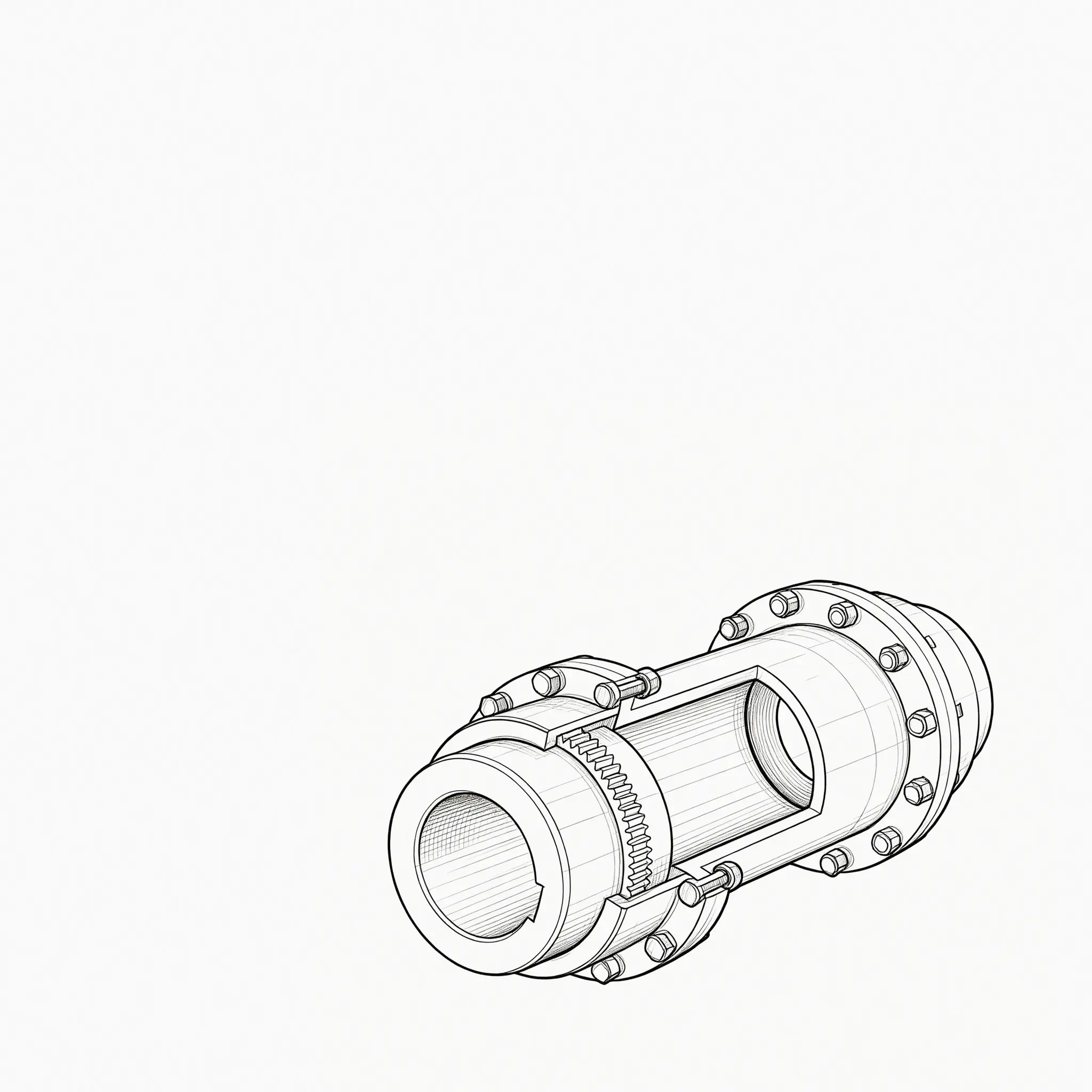
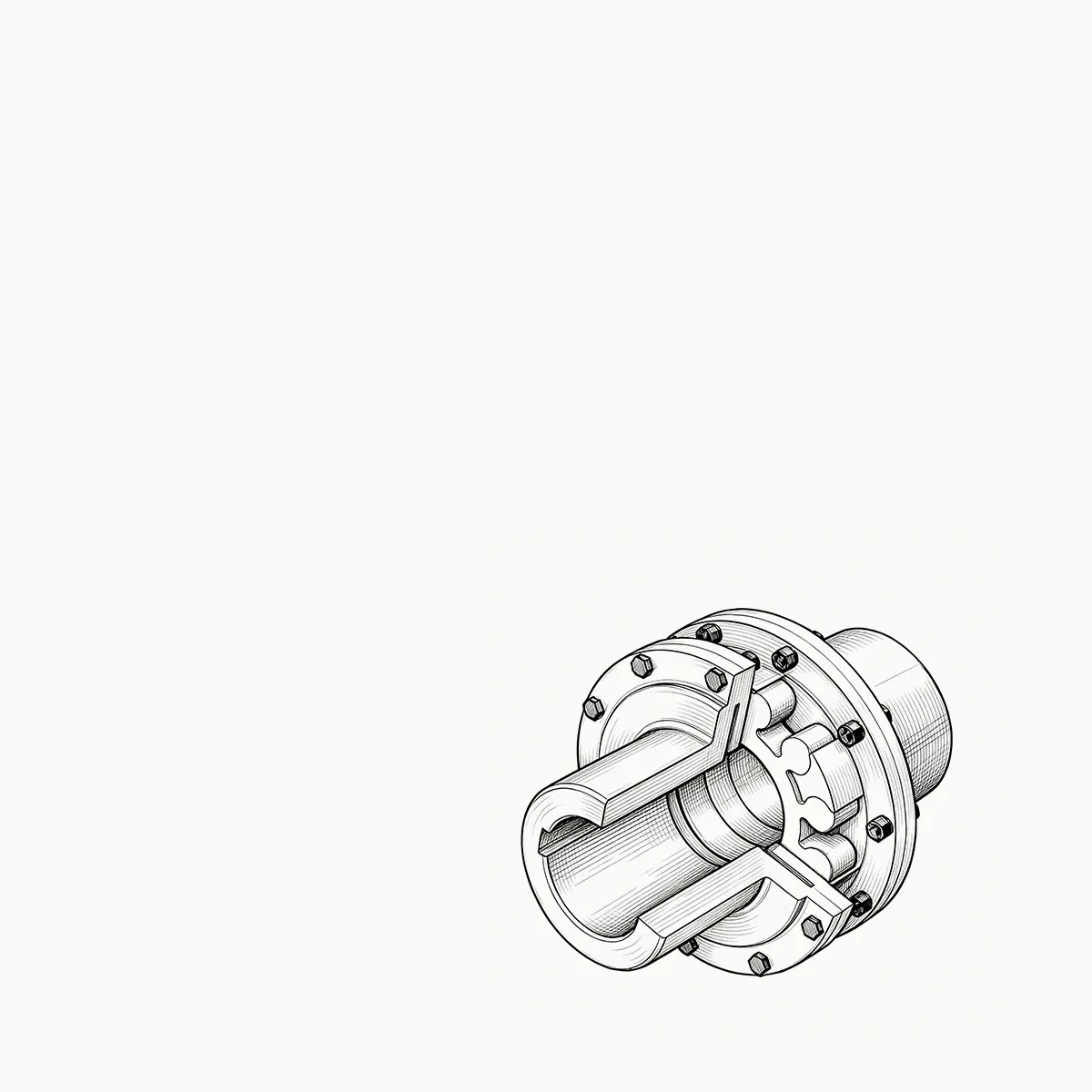
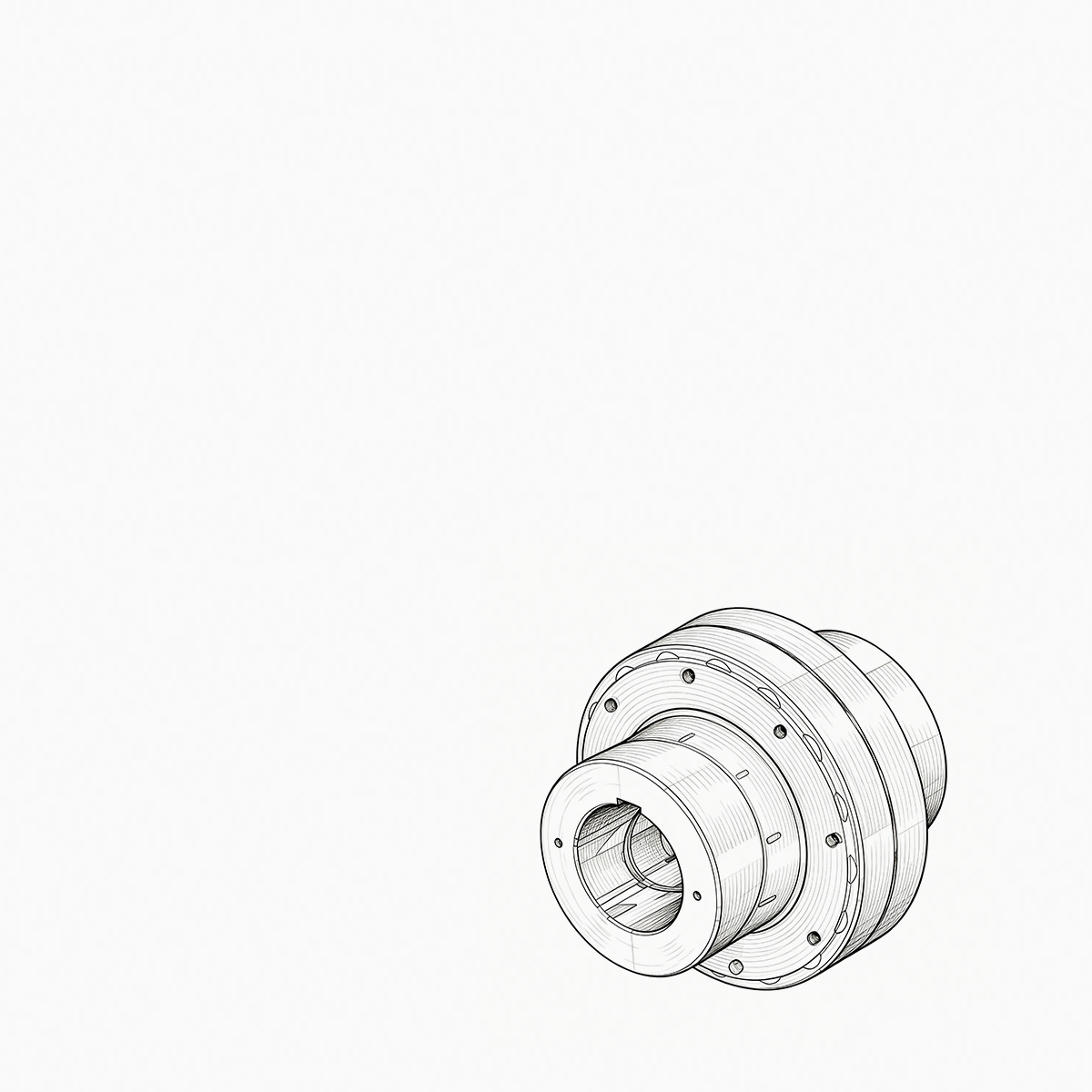
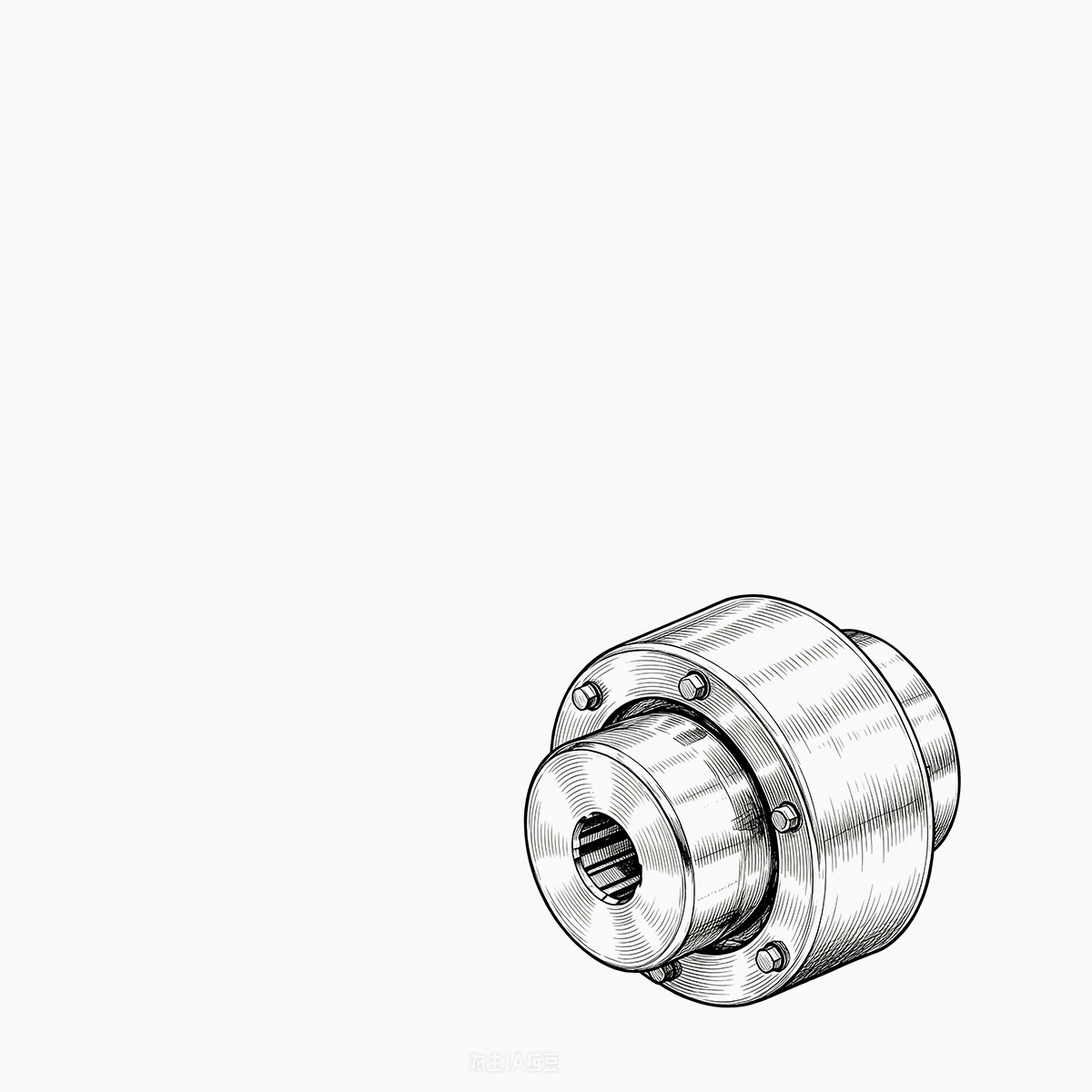
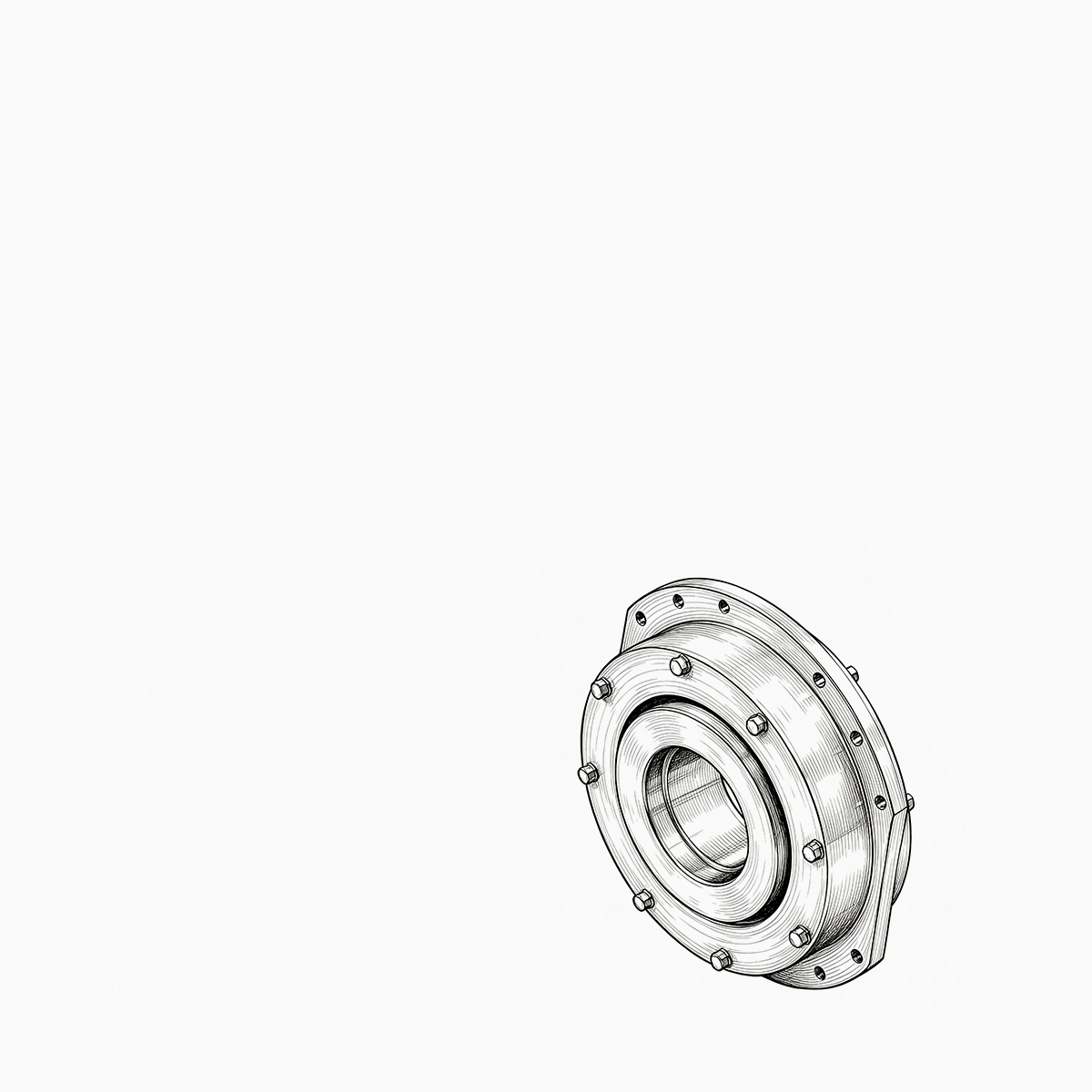
The WGZ Type Crowned-Gear Coupling with Brake Wheel is a heavy-duty gear coupling equipped with an integrated brake drum. Its main structural elements include an external gear sleeve, an internal gear ring, a brake drum, and sealing assemblies. Together, these parts form a compact transmission and braking unit intended for demanding industrial service.
The principal torque-transmitting interface is formed by the external and internal gear teeth. The external gear teeth are crowned rather than straight across their working length. This crowned profile allows the coupling to accommodate certain shaft misalignment conditions while maintaining a more favorable tooth contact pattern. The design is particularly useful where connected shafts may experience radial displacement, axial movement, or angular deflection during operation.
The brake drum is rigidly connected to the coupling body. It is intended to work with shoe-type braking equipment. When the brake is applied, the shoes press against the outer surface of the drum and generate braking torque. The torque is transmitted through the coupling body and into the connected rotating system, allowing the power transmission path to be interrupted or controlled during stopping.
Two sealing configurations are available. Type I uses a split sealing end and provides larger tooth spacing, which supports greater radial displacement compensation. Type II uses an integral sealing end and offers a more compact structure with lower rotational inertia. The two configurations allow engineers to select a design according to the available installation space, required displacement compensation, and desired dynamic response.
| Item | WGZ Coupling Feature | Primary Engineering Value |
|---|---|---|
| Transmission principle | Crowned external and internal gear engagement | High torque transmission with improved misalignment accommodation |
| Braking element | Brake drum rigidly connected to the coupling body | Direct interface with shoe-type braking systems |
| Misalignment capability | Compensation for radial, axial, and angular displacement | Improved tolerance of real operating conditions |
| Sealing option | Type I split sealing end or Type II integral sealing end | Choice between displacement capacity and compact dynamic design |
| Typical applications | Hoisting, conveying, mining, metallurgy, and large rotating machinery | Adaptation to high-load industrial environments |
3. Crowned-Gear Transmission Principle
The most important feature of the WGZ coupling is its crowned-tooth design. In a conventional straight-tooth gear coupling, the tooth flanks can be more sensitive to angular or radial displacement. When the connected shafts are not perfectly aligned, the load may concentrate near the edge of the tooth. Edge loading increases local contact stress and can accelerate wear, surface damage, and fatigue failure.
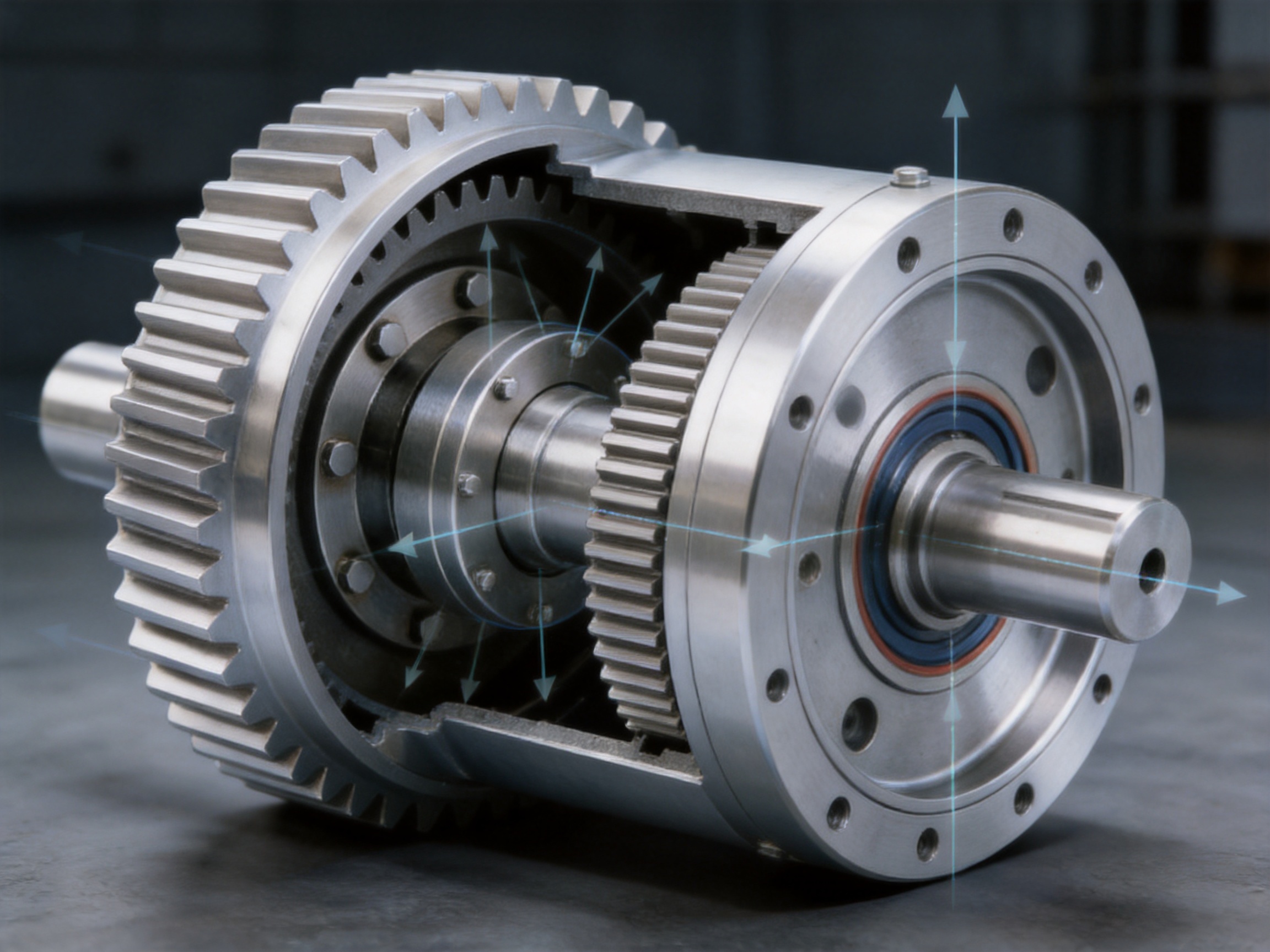
In the WGZ design, the external teeth are machined on a spherical surface whose center coincides with the shaft axis. This geometry permits the external gear sleeve and internal gear ring to maintain effective engagement when the connected shafts move relative to one another within the permitted range. The crowned tooth form helps the contact area adjust as displacement occurs, reducing the likelihood that the entire transmitted load will be carried by a narrow tooth edge.
In operation, radial displacement can occur when two shaft centerlines are offset. Angular displacement can arise when the shaft axes intersect at a small angle rather than remaining perfectly collinear. Axial displacement occurs when the shafts move along their common or near-common axis because of thermal expansion, bearing movement, assembly tolerance, or operating conditions. A flexible gear coupling must accommodate these movements while continuing to transmit torque.
The crowned profile does not mean that unlimited misalignment is acceptable. Every coupling has defined operating limits, and exceeding those limits can cause excessive tooth pressure, heat generation, lubricant loss, seal damage, vibration, and premature failure. The value of the crowned design is that it provides a more suitable mechanical response to permitted displacement than a basic straight-tooth arrangement.
Increased tooth side clearance further supports displacement compensation. The clearance allows the mating gear elements to move relative to one another without binding when the shafts experience small changes in position. Type I, with its larger tooth spacing, is particularly suitable where radial displacement compensation is a major consideration. Type II is more compact and can be advantageous when installation dimensions and dynamic response are more important.
Load Distribution and Tooth Durability
Uniform load distribution is essential in a coupling used for heavy machinery. If load is concentrated at the tooth edge, the effective contact stress becomes significantly higher than the nominal average stress. Repeated cycles can then produce pitting, scuffing, plastic deformation, or tooth breakage. By helping the contact area adjust under displacement, the crowned form reduces the tendency toward severe edge loading.
This improved contact behavior can contribute to longer tooth surface durability and more stable operation. It can also make the coupling less sensitive to ordinary installation tolerances and operating movement, provided that the displacement remains within the designed range. The result is a transmission element that is better suited to machinery where alignment may change under load.
For users, the practical benefit is not limited to tooth life. A more stable contact pattern can help reduce vibration and irregular torque transmission. It may also reduce the frequency of corrective alignment work caused by normal shaft movement. These advantages are particularly relevant in large industrial installations where access is difficult and downtime is expensive.
4. Integrated Brake Drum Design
The WGZ coupling incorporates a brake drum that is rigidly connected to the coupling body. The drum is designed to match shoe-type braking systems, in which brake shoes move toward the cylindrical drum surface and create frictional resistance. When the shoes are released, the coupling can rotate with low interference from the braking assembly. When the shoes are applied, friction between the shoes and drum generates braking torque.
During a planned shutdown, the brake can bring the rotating equipment to a controlled stop. During an emergency, it can rapidly interrupt the transmission of power and help prevent continued movement. In lifting machinery, braking performance is closely related to load control and operational safety. The brake drum must therefore be manufactured and installed with appropriate attention to roundness, surface condition, concentricity, and dimensional compatibility with the selected brake shoes.
Because the drum is integrated with the coupling, braking torque is introduced directly into the coupling body. This avoids the need to install a separate brake component on another shaft location. The arrangement can reduce the number of couplings, hubs, supports, and guards required in the drive system. It can also make the mechanical layout more compact and rational.
Integration offers advantages over a separate brake arrangement in several areas. First, it can save axial space. Second, it can reduce the number of independently aligned rotating parts. Third, it can simplify the transmission path between the brake and the driven equipment. Fourth, it can support a cleaner machine layout, making the relationship between the drive coupling and the braking system easier to understand during inspection.
However, brake selection remains an engineering responsibility. The brake shoes, actuator, control system, braking torque, stopping time, thermal capacity, and duty cycle must be matched to the application. The WGZ brake drum provides the friction surface and structural interface; the complete braking system must be designed as a coordinated assembly.
5. Main Advantages Compared with Conventional Arrangements
5.1 Combined Transmission and Braking Functions
The most direct advantage is functional integration. A separate gear coupling and separate brake drum may require additional shaft length and support arrangements. The WGZ unit combines the key mechanical interfaces in one product, which can simplify the overall drive design. This is especially valuable in cranes, hoists, conveyors, and compact machinery where space is limited.
5.2 Accommodation of Shaft Displacement
The crowned gear profile allows the coupling to compensate for radial, axial, and angular displacement within its operating capacity. Compared with a rigid coupling, it is more tolerant of the movement that occurs in practical industrial machinery. Compared with a basic straight-tooth design, it can provide a more favorable contact pattern when alignment changes.
5.3 Reduced Edge Loading
The crowned tooth surface helps prevent the concentrated edge contact that can occur when straight teeth operate under angular or radial misalignment. By promoting more uniform load distribution, it can support better tooth surface durability and reduce localized stress concentration.
5.4 Compact System Layout
The integrated brake drum can reduce the need for a separate brake mounting location. Type II further supports compact installations through its integral sealing end and lower rotational inertia. A compact rotating assembly can be useful where rapid dynamic response, limited space, or reduced rotating mass is important.
5.5 Application Flexibility
The availability of Type I and Type II sealing configurations gives users a practical choice. Type I is suited to applications that emphasize displacement compensation, particularly radial movement. Type II is suited to applications requiring a more compact structure and lower rotational inertia. This choice allows the coupling to be matched more closely with the actual operating conditions rather than applying one design to every machine.
5.6 Support for Heavy Industrial Service
The WGZ coupling is intended for high-load environments such as mining, metallurgy, hoisting, and conveying. These sectors commonly involve high torque, frequent load changes, shock loads, dust, vibration, and demanding operating cycles. A crowned gear transmission with an integrated brake drum is structurally appropriate for applications where both torque capacity and stopping capability are important.
6. Type I and Type II Sealing Configurations
Sealing is essential in a gear coupling. The gear teeth require protection from contamination and require lubrication for reliable operation. At the same time, lubricant must be retained inside the coupling. A suitable sealing assembly helps maintain the intended lubrication condition and protects the internal gear interface from external dust, moisture, and abrasive particles.
Type I: Split Sealing End
Type I uses a split sealing end and features larger tooth spacing. The larger spacing provides additional room for relative movement and supports greater radial displacement compensation. This configuration is suitable for machinery in which shaft movement, frame deflection, bearing displacement, or installation conditions may produce significant radial offset.
Type I may be considered when the machine structure is exposed to changing loads that can alter the relative position of the connected shafts. It can also be useful when the designer prioritizes displacement tolerance over the smallest possible package. The choice should still be based on calculated torque, speed, displacement, lubrication, and environmental conditions.
Type II: Integral Sealing End
Type II uses an integral sealing end. Its structure is more compact and its rotational inertia is lower. These characteristics make it suitable for installations with limited available space or systems that require faster dynamic response. Lower rotational inertia can reduce the rotating mass that must be accelerated and decelerated, although the complete system inertia must always be evaluated, including the motor, gearbox, shafts, drums, and driven load.
Type II can be a suitable option for equipment that performs frequent starts and stops or requires rapid response from the braking system. Its compact form may also simplify guarding and installation. As with Type I, the selected configuration must remain within the permissible displacement and duty limits of the complete coupling.
| Selection Consideration | Type I | Type II |
|---|---|---|
| Sealing-end construction | Split sealing end | Integral sealing end |
| Tooth spacing | Larger tooth spacing | More compact tooth and sealing arrangement |
| Primary strength | Greater radial displacement compensation | Lower rotational inertia and compact structure |
| Typical selection priority | Movement tolerance and displacement capacity | Limited installation space and dynamic response |
7. Typical Applications
Hoisting and Crane Equipment
Hoisting equipment requires controlled transmission of torque and dependable stopping. The drive may experience frequent starts, stops, reversals, shock loads, and changes in suspended load. The WGZ coupling provides a gear transmission interface for high torque and a brake drum for shoe-type braking systems. This combination is relevant to hoisting mechanisms, lifting drives, trolley systems, and other crane-related machinery where controlled braking is essential.
In a lifting application, the coupling must be selected with particular attention to the maximum suspended load, acceleration and deceleration rates, service factor, emergency stopping requirements, brake torque, and shaft displacement. The brake must be capable of holding or stopping the load under the specified operating conditions. The coupling and brake should be assessed together rather than as unrelated components.
Conveying Equipment
Large conveyors often operate continuously but may also require controlled stopping, emergency shutdown, or backstop coordination. Their shafts can experience movement caused by frame deflection, bearing loads, temperature variation, and uneven material loading. A crowned gear coupling can accommodate permitted displacement while transmitting torque between the drive and driven components. The integrated brake drum can support a braking arrangement where rapid stopping or controlled shutdown is required.
Mining Machinery
Mining machinery operates in demanding environments characterized by dust, vibration, impact, high loads, and difficult maintenance access. Coupling reliability is therefore important to production continuity. The WGZ design offers a robust gear transmission concept and a brake interface in one assembly. Proper sealing, lubrication, inspection, and protection from contamination remain essential in these conditions.
Metallurgical Installations
Metallurgical machinery may involve high torque, elevated ambient temperatures, substantial inertia, and repeated cycles. Roll drives, transfer systems, lifting mechanisms, and other large rotating systems can benefit from a coupling that accommodates alignment changes and provides an integrated braking surface. Temperature, lubricant selection, thermal expansion, and brake heat dissipation must be evaluated during system design.
Large Rotating Systems
Large rotating equipment can impose considerable torsional and radial loads on the coupling. A crowned gear coupling is appropriate where the shafts must remain connected while allowing limited relative movement. If the system also requires a shoe-type brake, the integrated drum can help reduce the number of components and create a more organized machine arrangement.
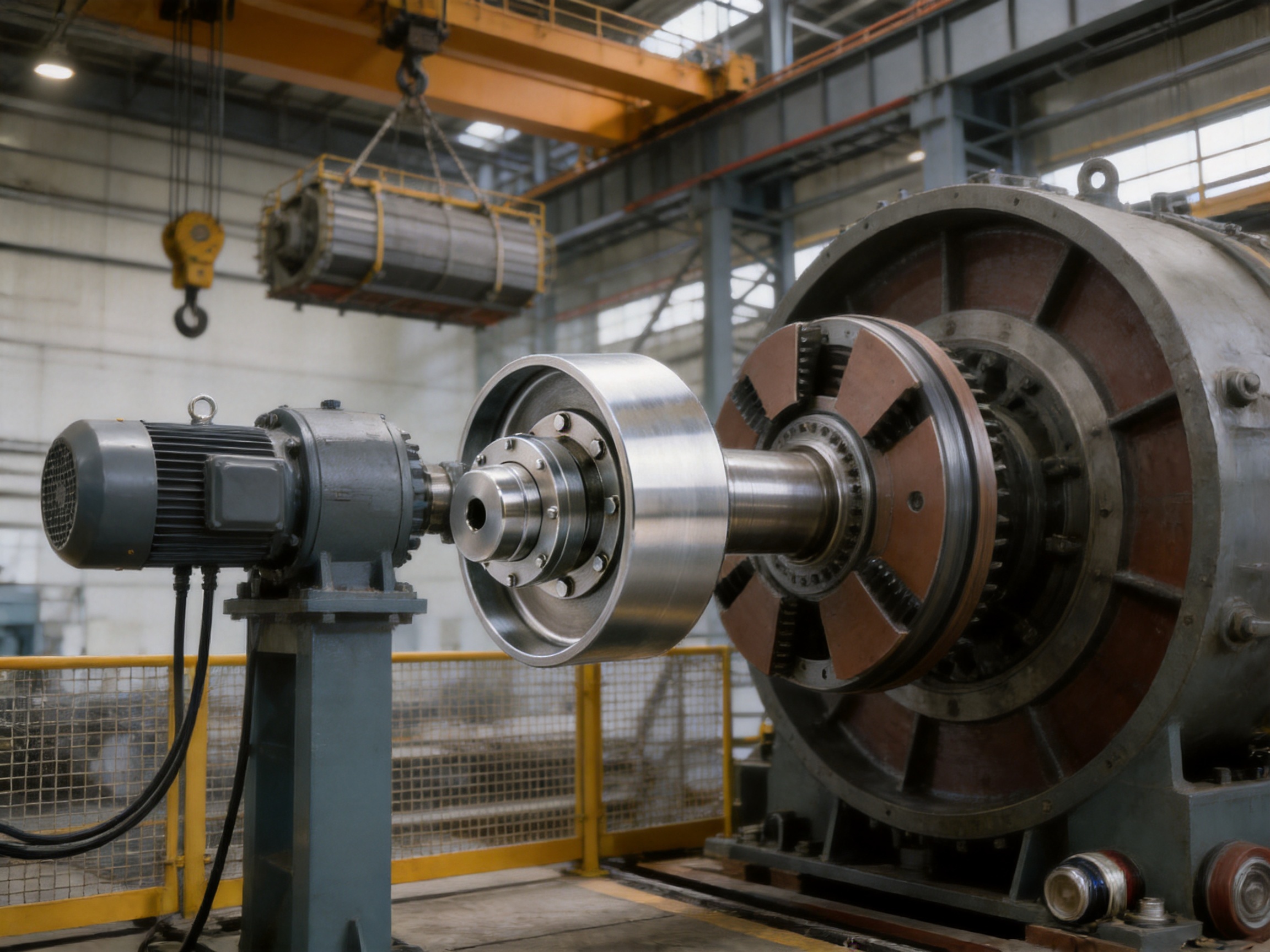
8. Manufacturing Strengths and Quality Approach
The performance of a heavy-duty coupling depends on more than its nominal design. Tooth geometry, dimensional accuracy, surface condition, concentricity, sealing fit, assembly quality, and inspection discipline all influence service life. Zhenjiang Orienthold Machinery Co., Ltd. combines design, production, and service within one enterprise, allowing product development and manufacturing activities to be coordinated.
The company is a medium-sized manufacturer specializing in industrial couplings and papermaking machinery. Its product range serves transportation, metallurgy, chemical engineering, mining, construction, and hoisting industries. This application background is important because coupling requirements vary significantly between sectors. A coupling for a hoist may prioritize braking and shock-load response, while one for a conveyor may prioritize continuous operation and contamination resistance. Practical industry experience helps connect product configuration with operating conditions.
Product Design and Engineering
The design process begins with understanding the transmission and braking requirements. Important factors include transmitted torque, operating speed, starting frequency, load variation, shaft diameter, shaft spacing, radial and angular displacement, axial movement, brake type, available space, and environmental conditions. The choice between Type I and Type II should be made according to these requirements rather than by dimensions alone.
Crowned-tooth geometry requires careful control because the spherical tooth surface determines how the gear elements contact under displacement. The tooth form must support effective engagement while maintaining suitable clearances. The brake drum geometry must also be coordinated with the coupling body so that the drum remains concentric and stable during rotation.
Machining and Component Control
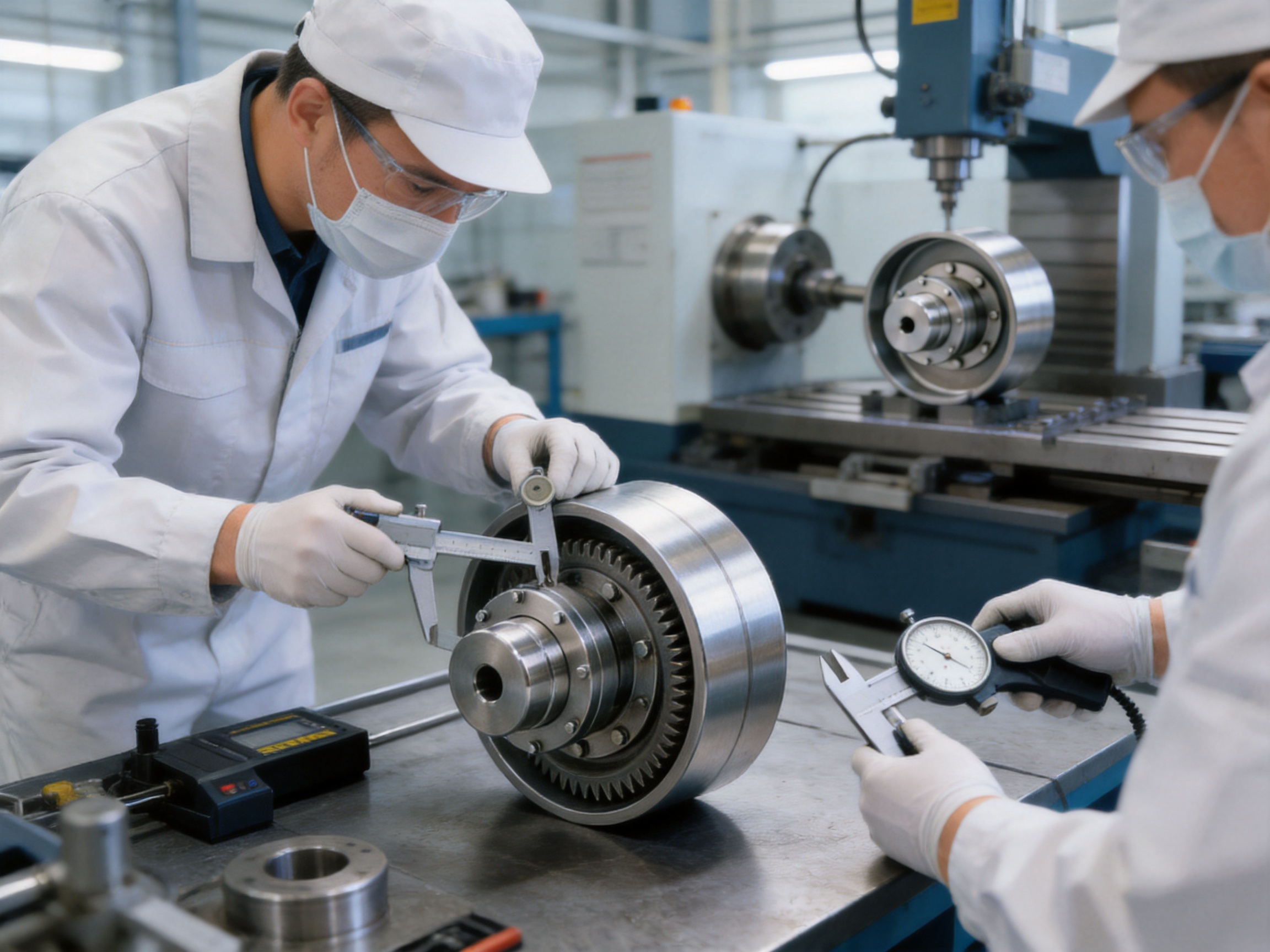
Advanced production equipment supports the machining of coupling bodies, gear elements, sealing interfaces, and brake drums. Precision machining is important for maintaining the intended tooth profile and ensuring that mating components operate smoothly. Dimensional control is also necessary for the brake drum, because excessive runout or uneven surface condition can affect brake shoe contact and produce vibration or irregular braking.
The manufacturing sequence should protect the accuracy established during machining. Components need appropriate handling, cleaning, inspection, and assembly procedures. Gear elements must be assembled without damaging tooth surfaces or seals. The brake drum and coupling body must be checked as a combined rotating assembly, not only as separate parts.
Inspection and Testing
Orienthold Machinery operates under a strict quality supervision system supported by inspection and testing equipment. Quality control for a product such as the WGZ coupling may include dimensional inspection, tooth profile verification, concentricity checks, surface examination, seal inspection, assembly verification, and functional assessment. The precise inspection plan depends on the product specification and customer requirements.
Inspection is valuable because many coupling problems are caused by small deviations that become serious under load. Incorrect tooth clearance can affect displacement compensation. Poor concentricity can cause vibration. Inadequate sealing fit can result in lubricant loss or contamination. An improperly finished brake surface can cause uneven shoe contact. A systematic quality process helps identify these issues before delivery.
Standards and Production Discipline
The company states that its products comply with national standards and that its production system includes comprehensive inspection and testing. Standards provide a reference for dimensions, materials, performance, and quality expectations. Production discipline ensures that the manufactured coupling remains consistent with the approved design.
For international customers, technical communication is also part of quality. Correct identification of shaft dimensions, brake requirements, operating conditions, installation orientation, and environmental conditions helps prevent selection errors. A manufacturer that provides pre-sales consultation and customization support can assist customers in converting machine requirements into a suitable coupling configuration.
9. How the Product Supports Total Cost of Ownership
The purchase price of a coupling is only one part of its economic value. In heavy machinery, unplanned downtime, difficult maintenance access, alignment work, replacement labor, and secondary damage can exceed the original component cost. The WGZ design can contribute to lower total ownership cost through several mechanisms.
First, integrating the brake drum and coupling can reduce the number of separate components in the drive arrangement. Fewer components may reduce installation labor and simplify spare-parts planning. Second, crowned gearing can help reduce tooth edge loading when the machinery experiences permitted displacement, which may support longer service intervals. Third, the selection of two sealing configurations allows the product to be matched to the application, avoiding an unsuitable compromise between displacement capacity and compactness.
Maintenance planning remains essential. Gear couplings require suitable lubrication, and seals must be inspected. Brake shoes and drum surfaces are wear interfaces and should be checked according to the duty cycle. A well-designed coupling cannot compensate for incorrect lubrication, overloaded operation, excessive misalignment, or neglected braking components. The economic advantage is achieved when the product is installed and maintained as part of a complete reliability program.
10. Installation Considerations
Correct installation is critical to the performance of the WGZ coupling. Before installation, the purchaser or maintenance team should confirm that the coupling model matches the shaft diameters, shaft spacing, transmitted torque, operating speed, brake arrangement, and required displacement capacity. The brake drum diameter and width must be compatible with the selected shoe-type brake.
Shaft alignment should be checked in radial, angular, and axial directions. Although the crowned gear design accommodates displacement, it is not a substitute for alignment. Initial misalignment should be kept as low as practical so that the coupling operates within its intended compensation range. Excessive initial misalignment can increase tooth loading, seal movement, vibration, and heat generation.
The coupling should be installed without forcing the hubs, sleeves, or gear elements into position by impact. Shaft and bore surfaces should be clean and free from burrs. Keys, keyways, retaining devices, and fasteners should be fitted according to the approved assembly instructions. The brake drum should be protected from damage during handling, and its working surface should remain clean and free from oil or grease.
After installation, the assembly should be rotated by hand where possible to confirm that there is no interference. The brake should be released and checked for adequate clearance between the shoes and drum. The brake should then be applied under controlled conditions to verify that the shoes contact the drum evenly. Guards should be installed before commissioning, and the first operating period should include observation for abnormal noise, vibration, temperature rise, lubricant leakage, or uneven brake action.
11. Lubrication, Sealing, and Maintenance
The gear teeth require appropriate lubrication to reduce friction, protect contact surfaces, and dissipate heat. The lubricant type, quantity, replenishment interval, and service temperature should follow the product specification and application requirements. Using an unsuitable lubricant can lead to inadequate film strength, seal incompatibility, excessive leakage, or accelerated tooth wear.
Seals should be inspected for hardening, cracking, displacement, and leakage. In mining and metallurgical environments, external contamination can be especially harmful. Dust or abrasive particles entering the gear chamber may damage tooth surfaces and increase wear. A damaged seal should be replaced promptly rather than allowing contamination to continue.
Tooth surfaces should be inspected during scheduled maintenance. Warning signs include pitting, scoring, abnormal polishing, discoloration, deformation, and concentrated wear at one edge. Such patterns may indicate inadequate lubrication, excessive load, misalignment, incorrect clearance, or a problem elsewhere in the drive system.
The brake drum should be checked for scoring, cracking, excessive wear, thermal discoloration, and dimensional change. The shoe-type brake should be inspected for lining wear, spring condition, actuator function, and correct release clearance. Uneven shoe contact may indicate drum runout, brake adjustment problems, structural movement, or improper alignment.
Maintenance records should include operating hours, load conditions, lubrication work, brake adjustments, observed wear, and replacement parts. Trend information can help identify gradual deterioration before it becomes a forced shutdown. In high-consequence applications, maintenance intervals should be based on duty cycle and risk rather than on calendar time alone.
12. Selection Checklist for Engineers and Purchasers
A reliable selection begins with complete operating data. The following questions should be answered before specifying a WGZ coupling:
What is the nominal and peak torque transmitted through the coupling?
What are the normal and maximum operating speeds?
How frequently does the machinery start, stop, reverse, or experience impact loading?
What are the shaft diameters, key dimensions, shaft spacing, and installation constraints?
What radial, angular, and axial displacement can occur during operation?
Is greater displacement compensation or lower rotational inertia the main priority?
Will Type I or Type II provide the more appropriate sealing and structural arrangement?
What shoe-type brake will be used with the brake drum?
What braking torque and stopping time are required during normal and emergency operation?
What ambient temperature, dust, moisture, chemical exposure, and vibration conditions will be present?
How will the coupling and brake be inspected and serviced after installation?
Providing complete answers allows the manufacturer to evaluate the application more accurately. Orienthold Machinery offers pre-sales consultation and customization support, which can be valuable when standard dimensions do not fully match the equipment design. A technical discussion before purchase can prevent later problems involving shaft fit, brake compatibility, installation space, or displacement capacity.
13. Customization and Service Support
Industrial coupling projects often require more than a catalog selection. Shaft dimensions may differ between machines, brake arrangements may have special requirements, and the available installation envelope may be restricted. Customization can involve dimensional adaptation, connection details, sealing configuration, brake interface considerations, or other application-specific requirements.
Orienthold Machinery integrates design, production, and service, allowing customer requirements to be evaluated by teams familiar with both manufacturing and application conditions. The company provides pre-sales consultation, customization support, flexible logistics and payment options, and maintenance assistance. These services are particularly useful for international industrial customers who need coordinated communication from initial inquiry through delivery and after-sales support.
The company’s experience in transportation, metallurgy, chemical engineering, mining, construction, and hoisting gives it a broad application base. This does not mean that every application can use the same coupling specification. Instead, it provides a foundation for comparing operating conditions and identifying the configuration that best matches the machine.
Reliable service also includes clear technical documentation. Customers should receive information covering installation, lubrication, allowable operating conditions, brake compatibility, inspection, and replacement procedures. Accurate documentation supports safe commissioning and helps maintenance personnel preserve the intended performance of the coupling throughout its service life.
14. Safety and Reliability Considerations
Because the WGZ coupling may be used in hoisting and other high-energy machinery, safety must be considered throughout its life cycle. The coupling should be selected according to the maximum foreseeable load, not only the average operating load. Emergency braking conditions may produce different torque and thermal requirements from routine stopping. These conditions should be evaluated during system design.
All rotating couplings and brake drums require suitable guards. Personnel should not approach the rotating assembly during operation, and inspection should be performed only under controlled lockout and isolation procedures. Brake release mechanisms should be checked so that the brake does not drag during normal rotation, while the applied condition must provide the required stopping or holding function.
Changes in noise, vibration, temperature, lubricant leakage, or brake response should be treated as early warning signs. Continuing to operate a coupling after abnormal symptoms appear can increase damage to the teeth, shafts, bearings, brake, or gearbox. Prompt inspection is generally safer and less costly than waiting for a complete failure.
The integrated design supports reliability by reducing the number of separate transmission and braking interfaces, but reliability still depends on the complete machine system. Motor, gearbox, shafts, bearings, brake, coupling, controls, and guards must be evaluated together. A technically suitable coupling cannot overcome an undersized brake, weak shaft, excessive bearing movement, or unsuitable control sequence.
15. Competitive Position in Industrial Couplings
The WGZ coupling competes through a combination of design integration, misalignment accommodation, application flexibility, and manufacturing support. Its crowned gear profile offers a practical alternative to straight-tooth coupling arrangements where shaft movement and tooth edge loading are concerns. Its integrated brake drum offers an alternative to installing a separate braking component on another shaft location.
Compared with a rigid coupling, the WGZ design provides significantly greater flexibility for permitted shaft displacement. Compared with a simple elastic coupling, its gear construction is intended for heavy-duty torque transmission and industrial braking applications. Compared with a separate coupling and brake arrangement, it can provide a more compact layout and reduce the number of independently arranged components.
The product’s competitiveness also depends on the manufacturer’s ability to deliver consistent quality. Orienthold Machinery supports its products with design capability, advanced equipment, inspection and testing resources, national-standard production, customization, and maintenance service. These strengths are important to customers who require not only a component but also a reliable supply and technical support partner.
Product selection should always be based on measurable application requirements. No coupling design is universally superior in every condition. The WGZ model is particularly compelling when the machine needs high-torque gear transmission, controlled braking through a shoe-type brake, and compensation for operating shaft displacement within a compact industrial assembly.
16. Questions and Answers
Q1: What is the primary function of the WGZ coupling?
The WGZ coupling transmits torque between connected shafts and incorporates a brake drum for use with a shoe-type braking system. It combines transmission and braking interfaces in one heavy-duty assembly.
Q2: What makes the gear teeth crowned?
The external teeth are machined on a spherical surface whose center coincides with the shaft axis. This crowned geometry helps the coupling accommodate permitted radial, axial, and angular shaft displacement while reducing the tendency toward tooth edge loading.
Q3: Can the coupling compensate for unlimited misalignment?
No. The crowned design improves misalignment accommodation, but every coupling has defined operating limits. The machine should be aligned as accurately as practical, and the permissible displacement values in the applicable product documentation should not be exceeded.
Q4: How does the integrated brake drum operate?
The brake drum is rigidly connected to the coupling body. When the shoe-type brake is applied, the shoes press against the drum surface and generate braking torque, helping stop or hold the connected rotating machinery.
Q5: What is the difference between Type I and Type II?
Type I uses a split sealing end and larger tooth spacing, making it suitable where greater radial displacement compensation is important. Type II uses an integral sealing end and provides a more compact structure with lower rotational inertia, making it suitable for limited space and faster dynamic response.
Q6: Which industries commonly use this product?
Typical applications include hoisting and conveying equipment, mining machinery, metallurgical installations, construction equipment, and large rotating systems. The product is particularly suitable where high torque and reliable braking are required together.
Q7: What should be considered when choosing the brake?
The brake should be matched to the drum dimensions, required braking torque, stopping time, load, operating speed, duty cycle, thermal conditions, and emergency requirements. The coupling and brake should be designed as a coordinated system.
Q8: Why is sealing important in a gear coupling?
Sealing helps retain lubricant around the gear teeth and prevents dust, moisture, and abrasive particles from entering the coupling. Proper sealing supports tooth durability and stable operation, especially in mining and metallurgical environments.
Q9: Does the integrated design eliminate maintenance?
No. The coupling still requires lubrication, seal inspection, tooth inspection, alignment checks, and brake drum and shoe maintenance. Integration simplifies the machine layout but does not remove the need for a planned maintenance program.
Q10: Can Orienthold Machinery support customized requirements?
Yes. The company provides pre-sales consultation and customization support. Customers can discuss shaft dimensions, installation limitations, brake requirements, environmental conditions, and other application details with the manufacturer.
Q11: What symptoms may indicate a coupling problem?
Abnormal noise, vibration, heat, lubricant leakage, tooth wear, brake dragging, uneven shoe contact, or changes in stopping performance may indicate a problem. The machine should be isolated and inspected before continued operation if serious symptoms occur.
Q12: What information should be supplied for product selection?
Important information includes torque, speed, duty cycle, shaft dimensions, shaft spacing, expected radial and angular displacement, axial movement, brake type, braking torque, ambient conditions, installation space, and maintenance requirements.
17. Conclusion
The WGZ Type Crowned-Gear Coupling with Brake Wheel is designed for industrial machinery that requires dependable torque transmission and integrated braking. Its crowned gear profile supports compensation for radial, axial, and angular displacement while helping reduce tooth edge loading and localized stress concentration. Its rigidly connected brake drum provides a direct interface with shoe-type braking systems, supporting controlled shutdown and emergency stopping.
The two sealing configurations extend the product’s application flexibility. Type I emphasizes larger tooth spacing and greater radial displacement compensation, while Type II emphasizes compact construction and lower rotational inertia. This choice allows engineers to select a configuration according to the machine’s alignment behavior, available space, and dynamic requirements.
Beyond the product design, manufacturing capability is a major part of the value proposition. Zhenjiang Orienthold Machinery Co., Ltd. combines coupling design, production, inspection, testing, customization, logistics, and maintenance support. Its products serve demanding sectors including transportation, metallurgy, mining, construction, chemical engineering, and hoisting. A strict quality supervision system, comprehensive inspection equipment, national-standard production, and application-oriented technical service support consistent industrial performance.
For customers seeking a compact, heavy-duty coupling that combines crowned-gear transmission with a shoe-type brake interface, the WGZ design offers a practical and technically focused solution. Correct selection, accurate installation, suitable lubrication, brake compatibility, and disciplined maintenance remain essential to achieving its full service potential.
References
1. Manufacturer product information for the WGZ Type Crowned-Gear Coupling with Brake Wheel.
2. Manufacturer technical information concerning crowned-tooth gear coupling construction, sealing configurations, and industrial applications.
3. General engineering principles for industrial gear couplings, shaft alignment, lubrication, and misalignment compensation.
4. General engineering principles for shoe-type braking systems, brake drum operation, stopping torque, and maintenance.
5. Industrial machinery maintenance practices for mining, metallurgy, conveying, construction, and hoisting equipment.
6. National-standard manufacturing and inspection practices applicable to industrial couplings and rotating machinery components.
Product: WGZ Type Crowned-Gear Coupling with Brake Wheel
PREV: SWC-DH Short Telescopic Welded Universal Coupling for Space-Constrained Heavy-Duty DrivesNEXT: LLB Type Tyre Coupling: Design, Performance, Manufacturing Quality, and Industrial Applications
Be the First to Know
For exclusive deals and latest offers, sign up by entering your email address below.
Related products
News
-
-
Consider a 250 kW crane hoist that begins to vibrate only when the load is lifted. The drum gear coupling is inspected ...
READ MORE -
China's coupling industry is at a critical historical juncture of transformation from scale expansion to quality and eff...
READ MORE -
Gear Coupling vs. Drum Gear Coupling: The Core Difference The main difference is that "gear coupling" is a broad catego...
READ MORE -
Two quotes land for the same replacement gear coupling: $1,850 from one shop and $2,600 from another. Both promise stan...
READ MORE -
Industrial Couplings: The Definitive Technical Encyclopedia – Classification, Sizing, Failure Prevention, and Lifecycle...
READ MORE


ABOUT US
PRODUCTS
INDUSTRIES
CONTACT US
- Phone: +86-18652865511
- Email: sales@ohmach.com
- Address: No.1, Minying Developing Zone, Zhenjiang, Jiangsu, China
Copyright Zhenjiang Orienthold Machinery Co., Ltd. All Rights Reserved.
 Custom Industrial Shaft Coupling Manufacturers