 English
 русский
 Português
 عربى
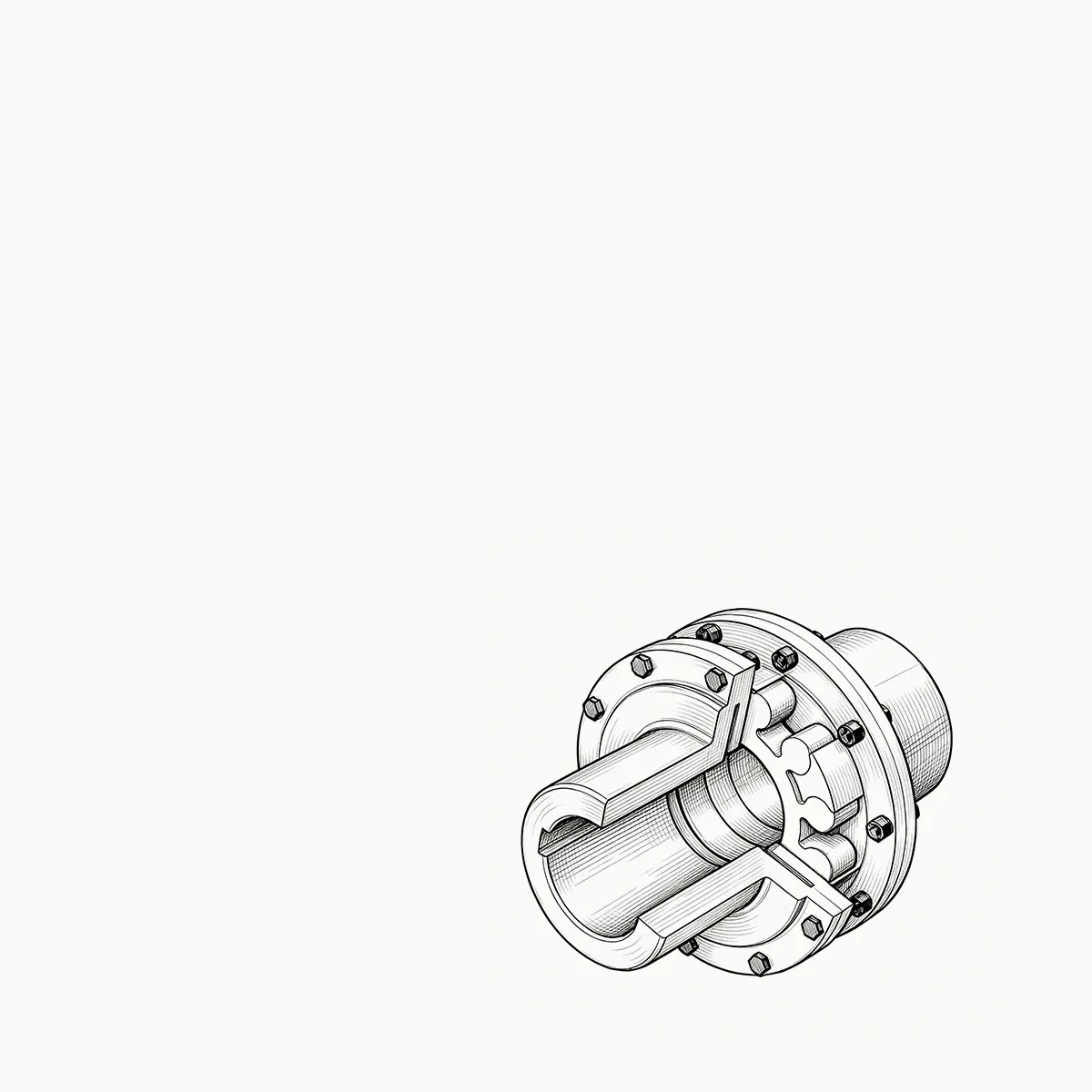
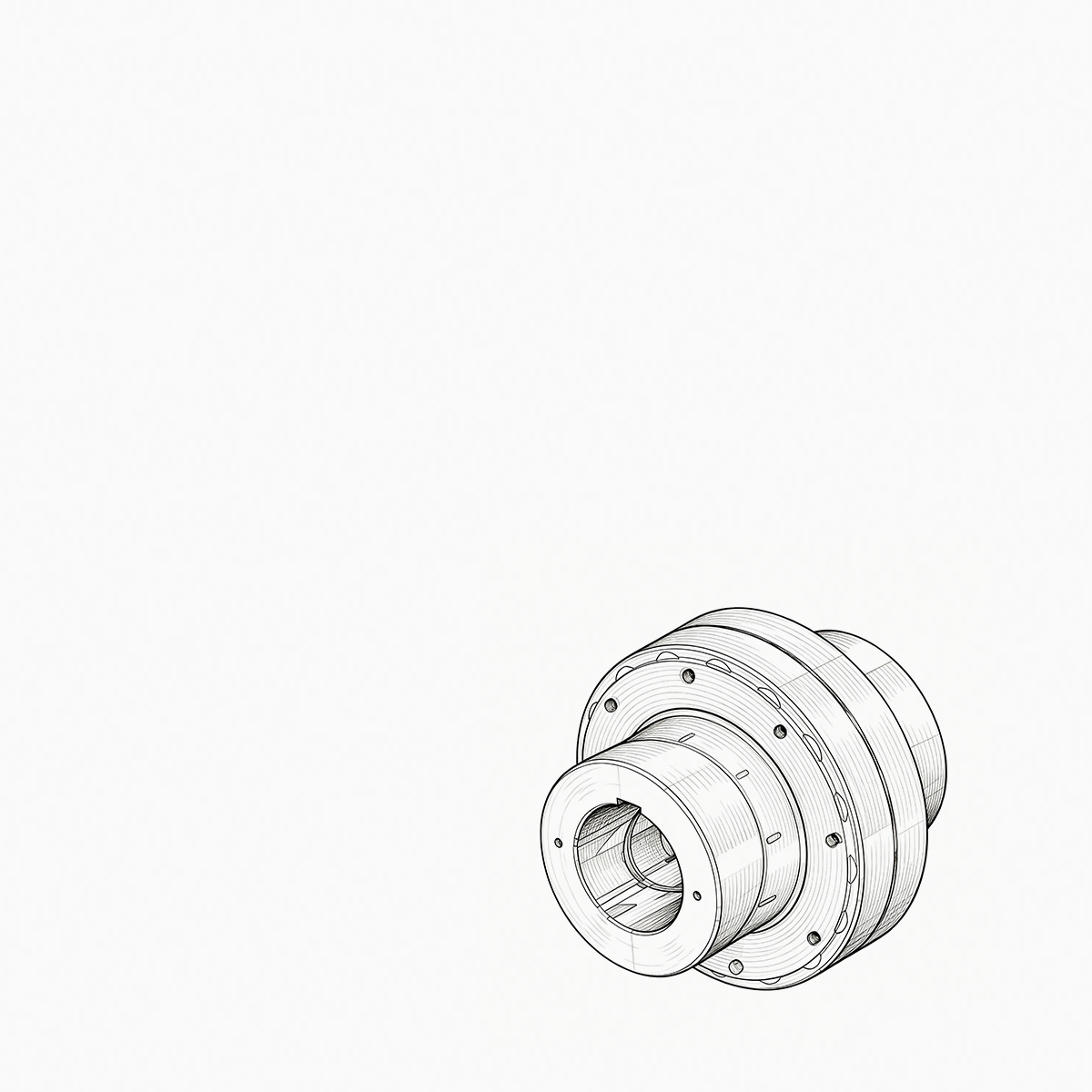
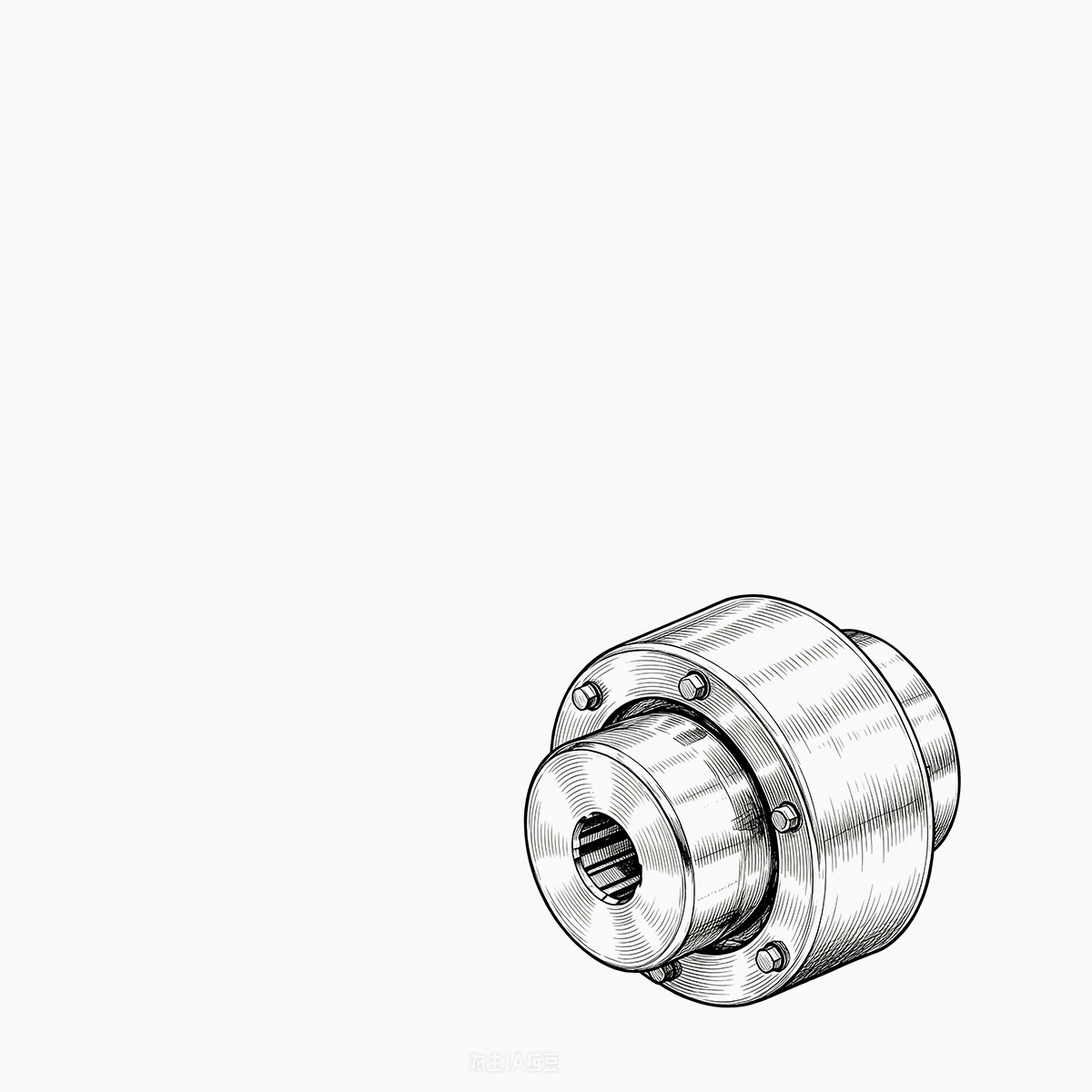
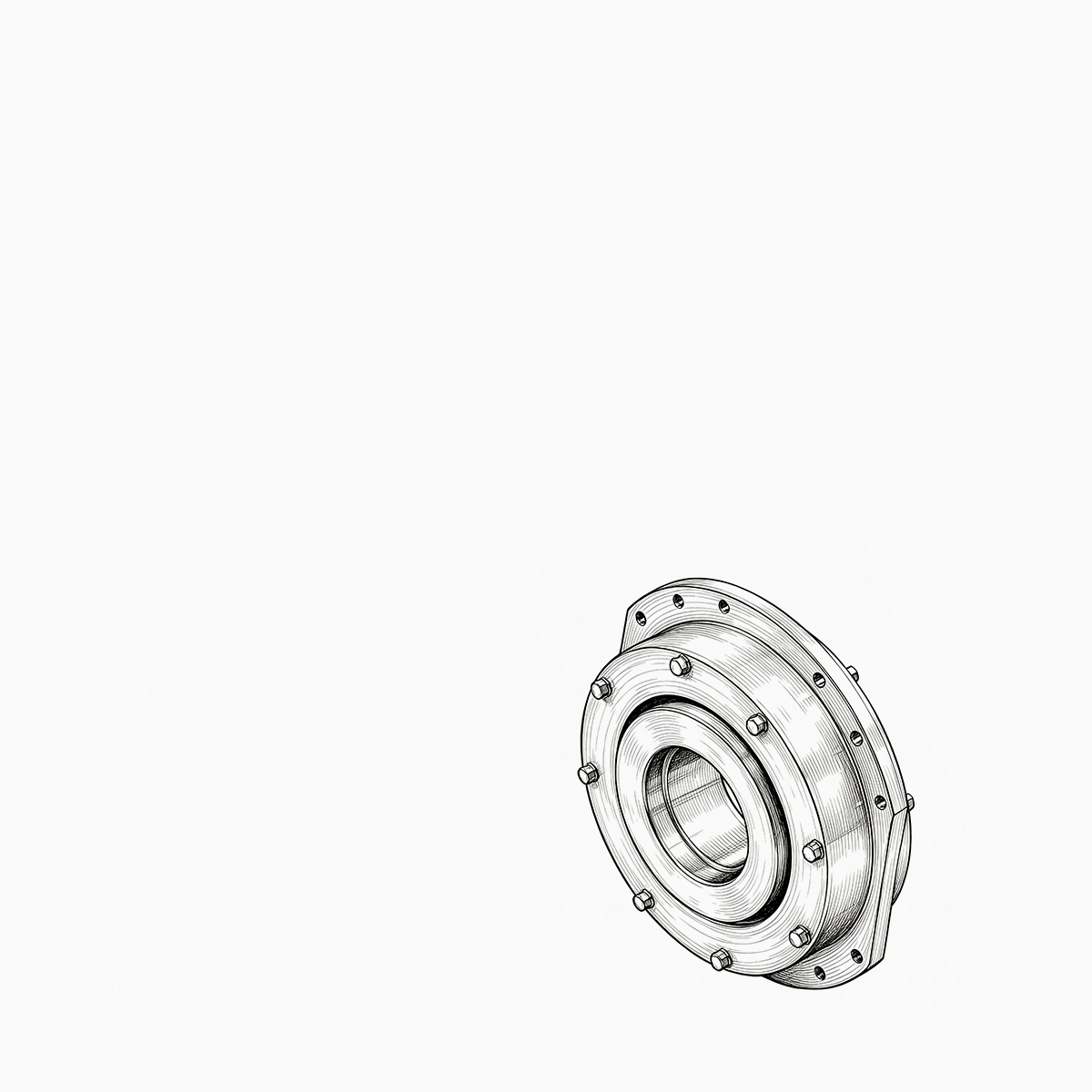

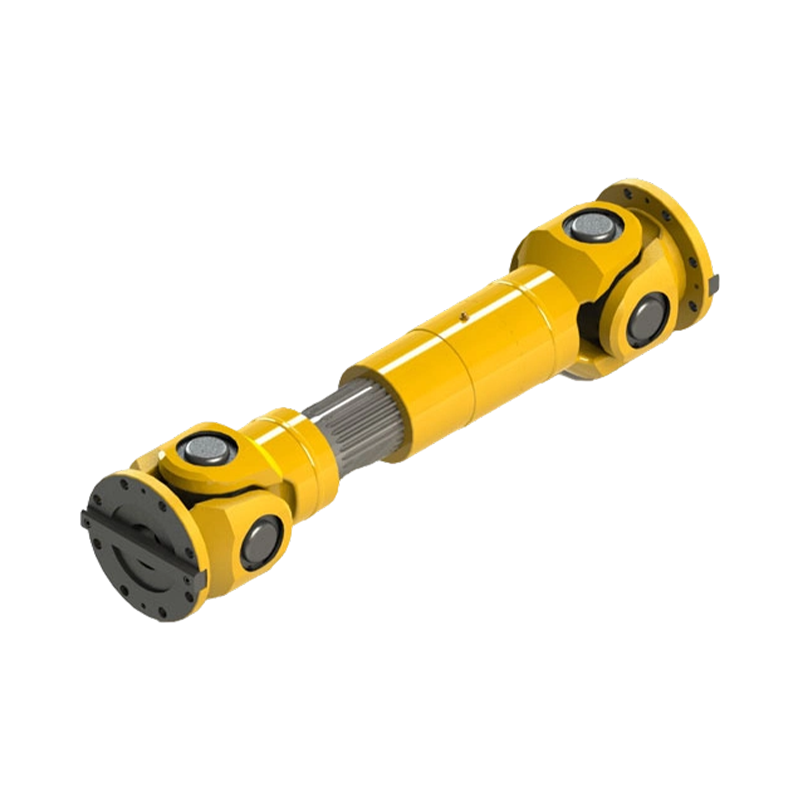
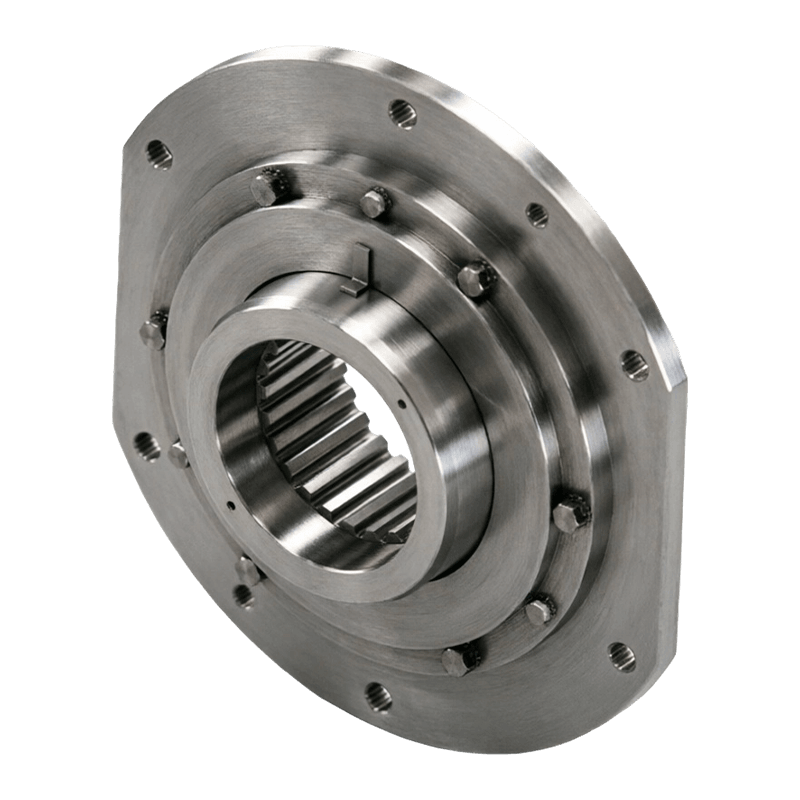
Consider a 250 kW crane hoist that begins to vibrate only when the load is lifted. The drum gear coupling is inspected ...
READ MORE
LLB Type Tyre Coupling: Reliable, Flexible, and Maintenance-Efficient Power Transmission
Admin 2026-09-29Content
- 1 Product Overview
- 2 Main Construction and Operating Principle
- 3 Technical Characteristics
- 4 Key Performance Advantages
- 5 Advantages Compared with Other Coupling Designs
- 6 Manufacturing Strengths and Quality Control
- 7 Application Areas
- 8 Selection Guidelines
- 9 Installation Recommendations
- 10 Maintenance and Service Life
- 11 Why Choose Orienthold Machinery
- 12 Q&A
- 12.1 What is the LLB type tyre coupling used for?
- 12.2 What torque can the LLB coupling transmit?
- 12.3 Does the coupling require lubrication?
- 12.4 What is the normal operating temperature range?
- 12.5 Can the coupling operate outdoors?
- 12.6 How does the integral tyre compare with separate rubber pins or bushes?
- 12.7 Can the LLB coupling compensate for poor alignment?
- 12.8 What information is needed for product selection?
- 12.9 Can the coupling be customized?
- 12.10 How should the tyre body be inspected?
- 12.11 Is the LLB coupling suitable for heavy-duty machinery?
- 13 Conclusion
- 14 References
- 15 Product: LLB Type Tyre Coupling
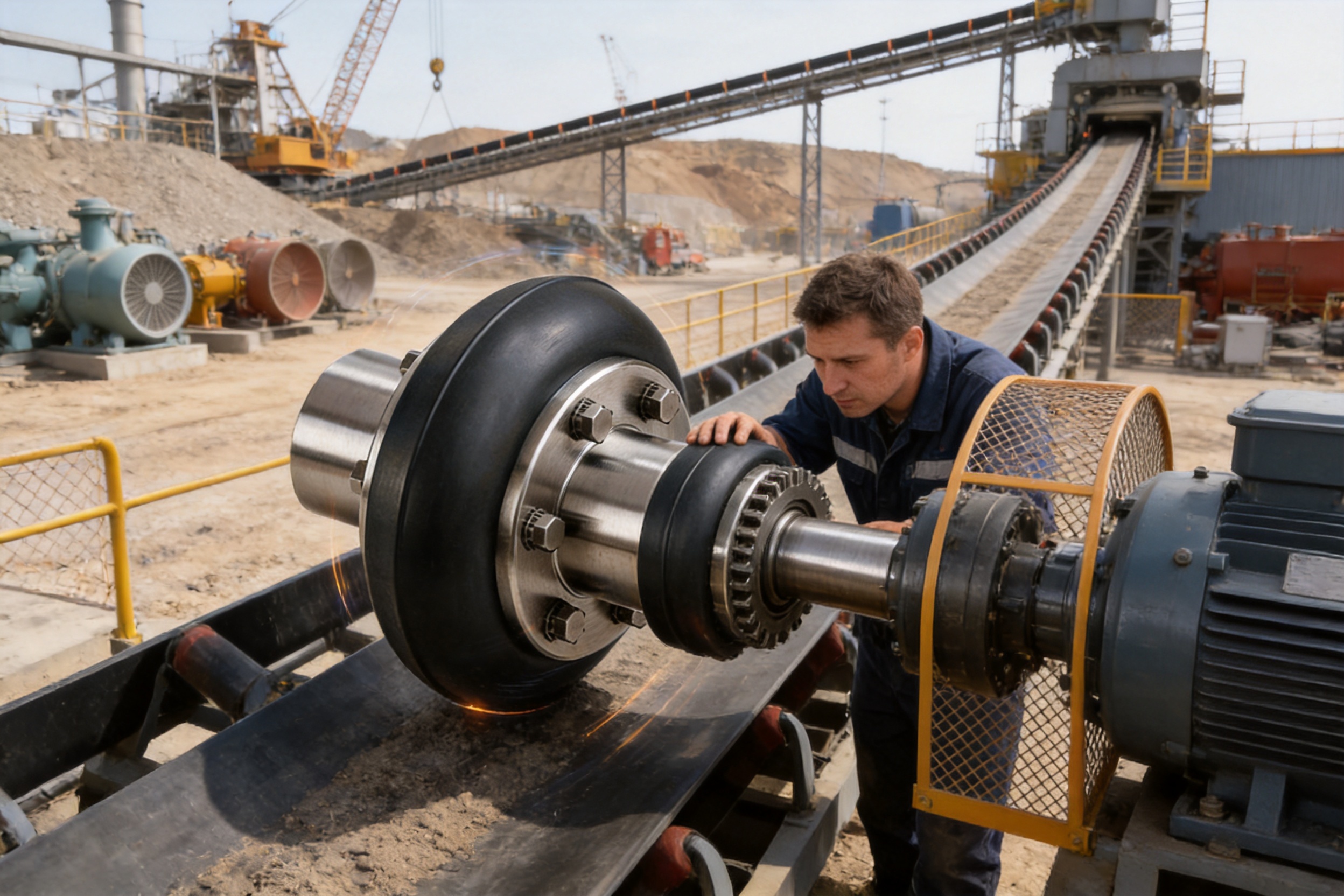
The LLB type tyre coupling is a highly elastic industrial shaft coupling designed for power transmission systems that require dependable torque transfer, vibration reduction, and compensation for shaft misalignment. With a working temperature range of approximately -20°C to 80°C and a torque transmission capacity from 10 to 20,000 N·m, it is suitable for a wide variety of industrial machines and demanding operating environments.
Unlike rigid couplings, the LLB type tyre coupling uses an integral elastic tyre body to connect two metal coupling halves. This flexible element allows the coupling to absorb shock loads, reduce vibration, and accommodate angular, radial, and axial displacement between connected shafts. These characteristics make the coupling especially valuable in systems where motors, gearboxes, pumps, conveyors, cranes, fans, compressors, and other driven machines may experience dynamic loads or unavoidable installation deviations.
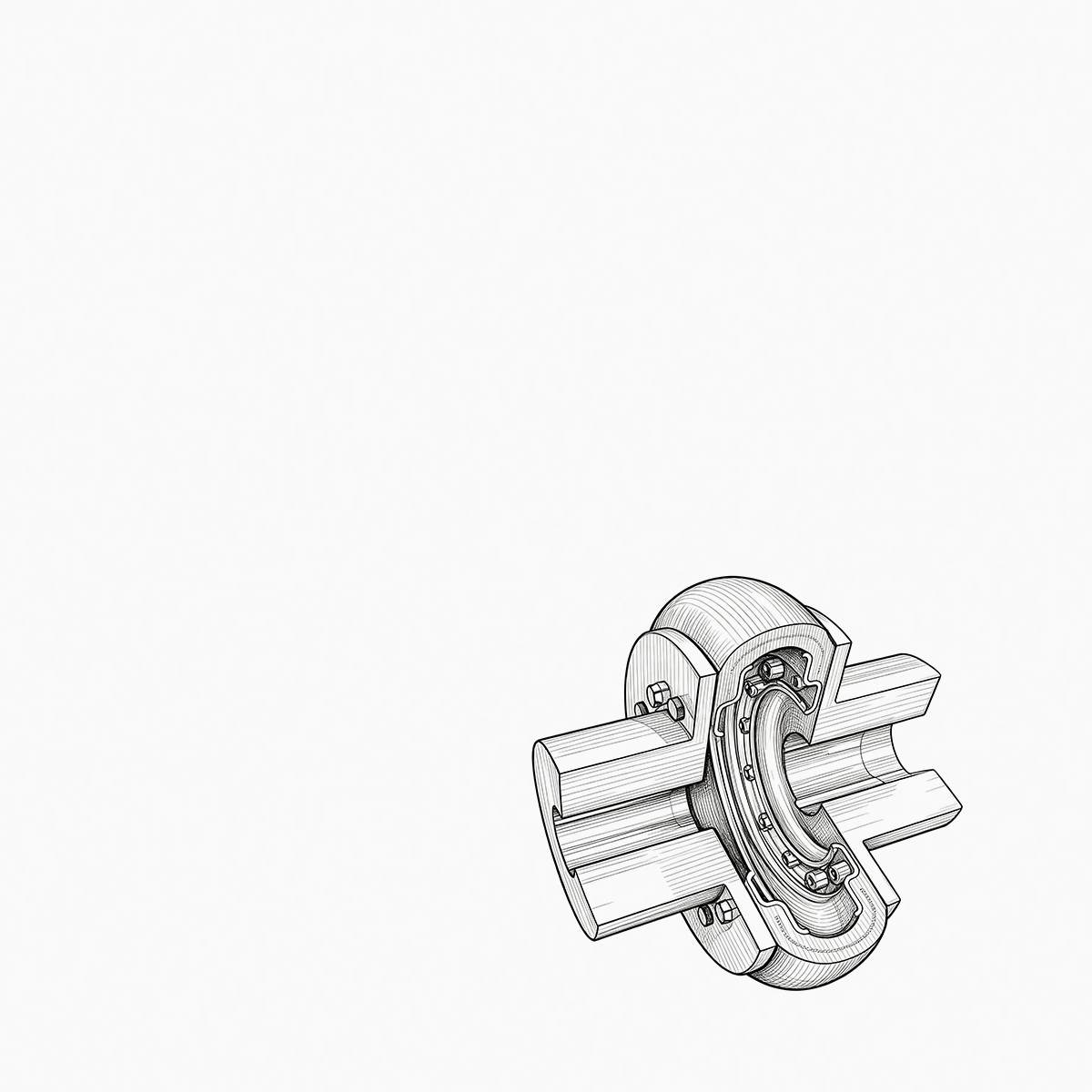
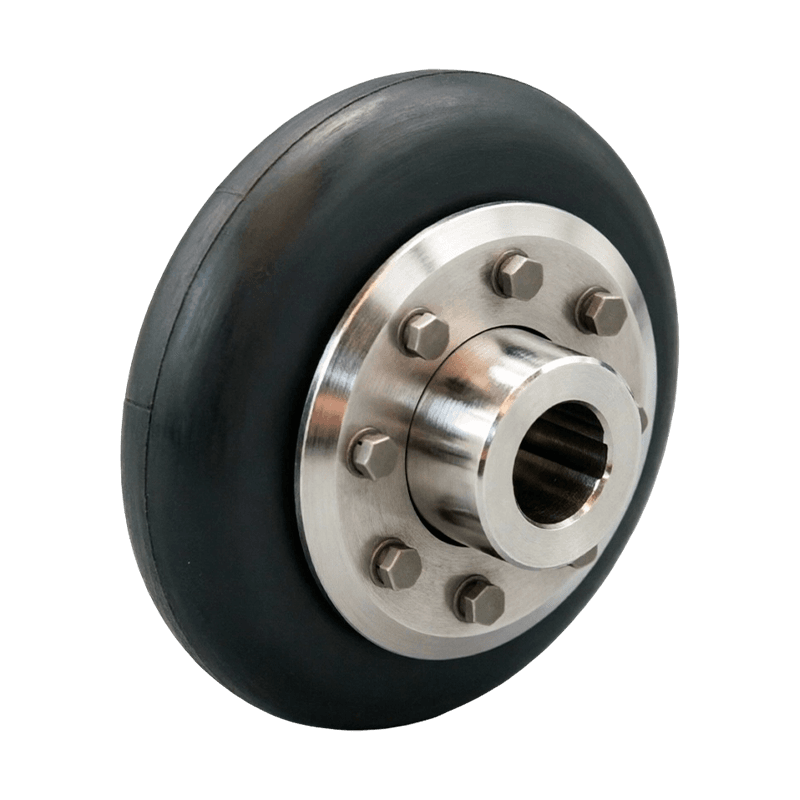
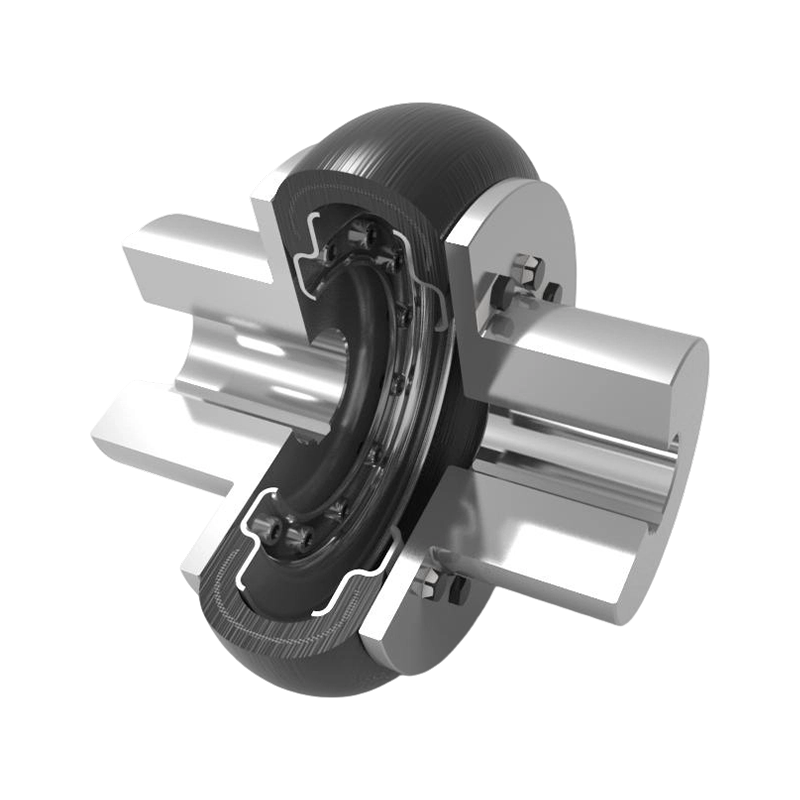
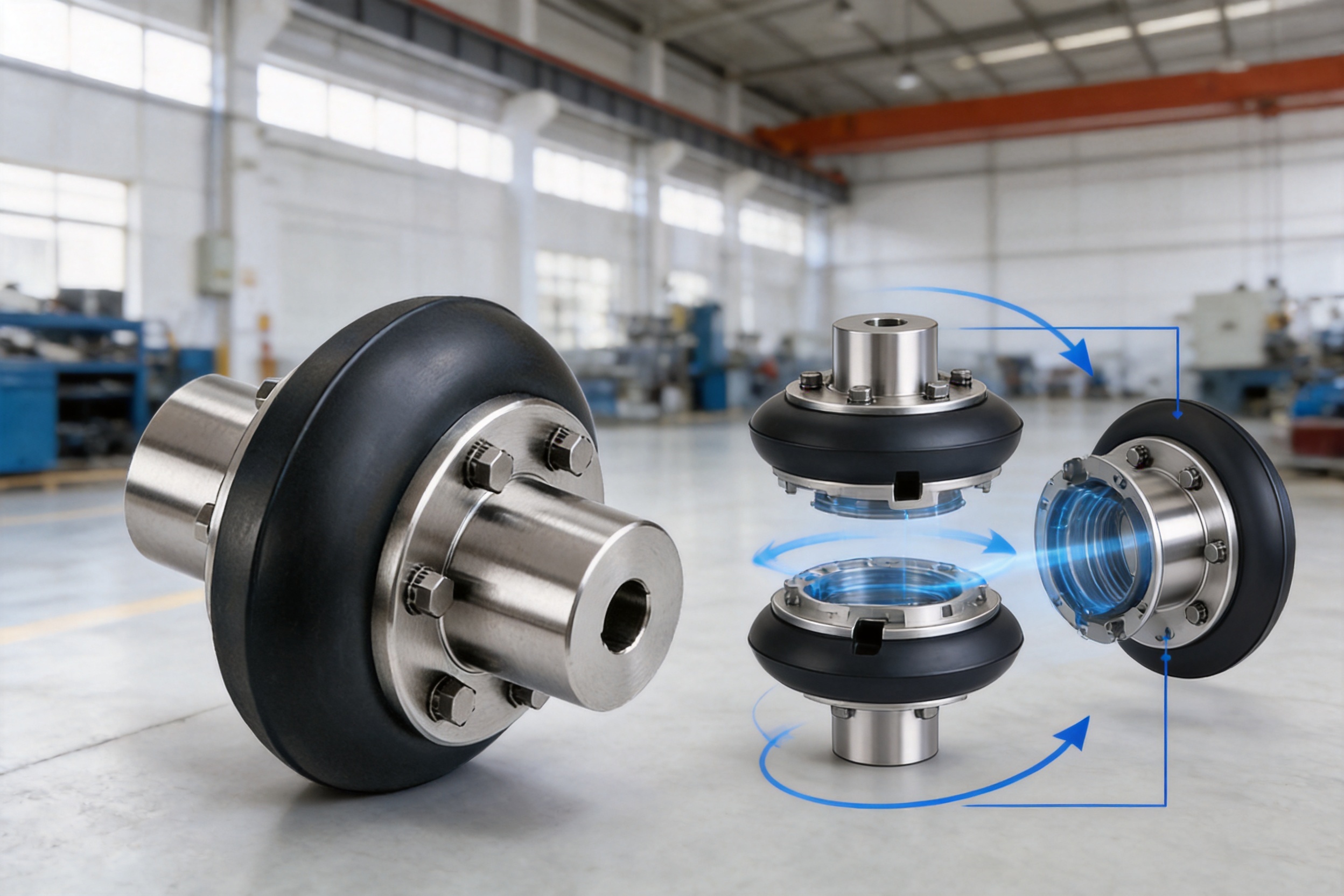
The coupling has a simple construction consisting mainly of two metal coupling halves, one integral tyre body, and connecting bolts. This straightforward design reduces the number of individual components, simplifies installation, and makes inspection and replacement more convenient. Because the tyre body does not require lubrication, routine maintenance is minimized compared with gear couplings and other couplings that rely on grease-filled tooth profiles.
Manufactured by Zhenjiang Orienthold Machinery Co., Ltd., the LLB type tyre coupling combines practical mechanical design with controlled material selection, precision machining, rubber vulcanization, inspection, and service support. The company integrates design, production, testing, and customer service, allowing it to provide both standard coupling solutions and customized products for transportation, metallurgy, chemical engineering, mining, construction, hoisting, and other industries.
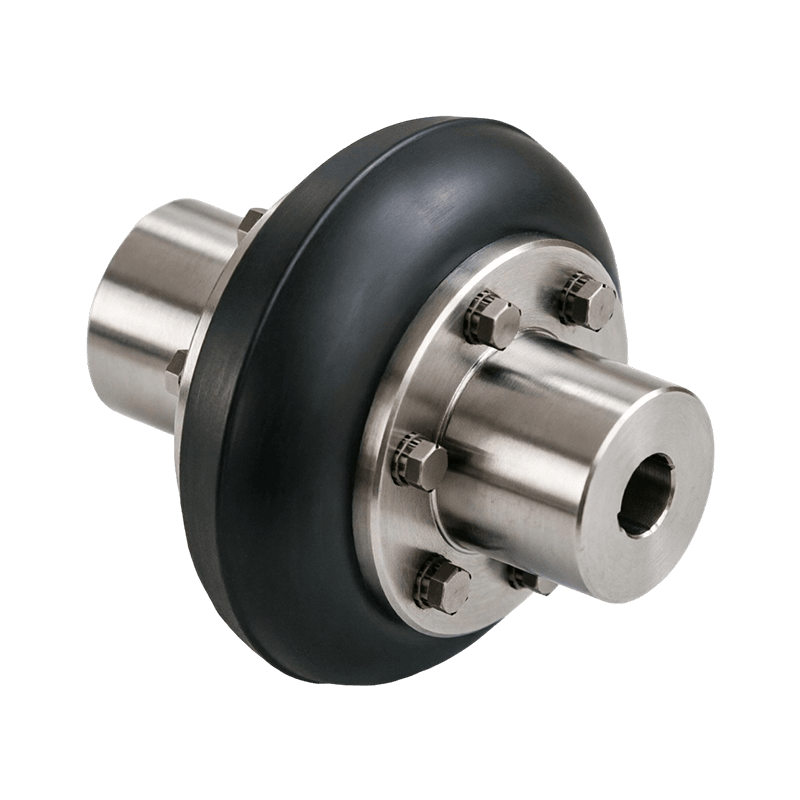
LLB Type Tyre Coupling
Product Overview
A tyre coupling is an elastic coupling in which torque is transmitted through a flexible rubber or rubber-composite element positioned between two metal hubs or flanges. The LLB type is designed as an integral tyre coupling. Its elastic element forms a continuous tyre-like ring rather than a collection of separate rubber blocks, pins, or individual flexible pads.
This integral design gives the coupling a balanced combination of flexibility and structural continuity. When the shafts rotate, torque passes from the driving shaft through one metal coupling half, into the tyre body, and then through the second metal coupling half to the driven shaft. At the same time, the tyre body deforms elastically to absorb vibration and compensate for small deviations in shaft alignment.
The LLB type tyre coupling is intended for industrial transmission systems in which smooth operation, impact absorption, and accessible maintenance are important. It can operate in ordinary indoor or outdoor industrial conditions, provided that the actual application remains within the specified temperature, torque, speed, environmental, and alignment limits selected for the particular model.
The standard working temperature range is approximately -20°C to 80°C. Improved rubber compounds and specialized constructions may extend the operating range to approximately -30°C to 85°C. The precise range depends on the selected material, environment, speed, duty cycle, and exposure to chemicals, oils, sunlight, moisture, and abrasive contaminants.
Torque capacity covers a broad range from approximately 10 N·m to 20,000 N·m. This broad range allows the LLB series concept to serve both relatively light industrial equipment and heavy-duty transmission systems. Correct model selection remains essential because the actual required coupling size must be determined from rated torque, peak torque, service factor, operating speed, shaft dimensions, misalignment, temperature, and environmental conditions.
Main Construction and Operating Principle
Metal Coupling Halves
The two metal coupling halves form the connection between the shafts and the elastic tyre body. Depending on the model and load requirements, these components are generally manufactured from high-strength cast iron or cast steel. Heavy-duty versions may use forged steel that is subsequently machined through multiple precision processes.
The metal coupling halves must provide adequate resistance to torsion, bore stress, bolt loading, and fatigue. Their geometry is designed to distribute forces across the tyre body and fastening system instead of concentrating stress in a small area. Proper material selection and controlled machining help maintain concentricity, dimensional accuracy, and reliable contact between the coupling halves and connected equipment.
Typical machining operations may include turning, boring, drilling, facing, keyway processing, and finishing of critical locating surfaces. Depending on the order requirements, additional inspection may be applied to verify bore dimensions, bolt-hole positions, runout, surface condition, and overall dimensional conformity.
Integral Tyre Body
The integral tyre body is the core elastic component of the coupling. It is made from a rubber compound reinforced with skeleton materials such as nylon cord. The rubber provides elasticity and damping, while the reinforcing cord helps control deformation and withstand repeated cyclic loading.
The tyre body is bonded to its metal support structure through a vulcanization process. Vulcanization creates a durable bond between the rubber compound and the reinforcing or metallic structure. This bond is essential because the coupling must repeatedly transfer torque while experiencing compression, tension, bending, and shear deformation.
The rubber formulation can be optimized for tear strength, fatigue resistance, weather resistance, hardness, and temperature stability. Improved compounds may increase resistance to cracking and environmental aging while maintaining the flexibility required for vibration isolation and misalignment compensation.
The closed tyre design also supports effective sealing. It helps reduce the entry of dust, water, and other contaminants while preventing grease leakage from the coupling. Since the elastic element does not depend on a grease-filled tooth engagement, the coupling is particularly convenient in applications where lubrication management is undesirable or difficult.
Connecting Bolts
Connecting bolts secure the metal coupling halves and tyre body assembly. The bolt arrangement must be tightened according to the recommended procedure and torque values for the selected model. Correct tightening is important because insufficient clamping can cause movement, fretting, or uneven load distribution, while excessive tightening may damage the elastic body or distort the assembly.
During installation, the bolts should be checked for correct grade, length, thread condition, washer arrangement, and seating. Bolt tightening should normally be carried out progressively and evenly in a suitable crosswise sequence. After initial operation, an inspection may be advisable to confirm that the fasteners remain secure.
Axial Assembly Arrangement
The LLB type tyre coupling is assembled axially. This arrangement contributes to the convenience of installation and removal because the coupling can be fitted or dismantled along the shaft direction without the complex procedures associated with some multi-piece or heavily enclosed coupling designs.
Axial assembly can be particularly useful where maintenance personnel need to replace the tyre body, inspect fasteners, or disconnect machinery during planned shutdowns. Nevertheless, the available shaft movement, surrounding equipment, guards, and machine foundation should be considered before installation. Adequate working clearance is necessary for safe maintenance.
Technical Characteristics
| Characteristic | LLB Type Tyre Coupling Information |
|---|---|
| Coupling type | Highly elastic tyre coupling |
| Primary function | Torque transmission, vibration damping, shock absorption, and shaft misalignment compensation |
| Approximate torque range | 10 to 20,000 N·m |
| Standard working temperature | Approximately -20°C to 80°C |
| Possible specialized temperature range | Approximately -30°C to 85°C, depending on compound and application |
| Elastic element | Integral rubber tyre reinforced with materials such as nylon cord |
| Metal components | Cast iron, cast steel, or forged steel depending on model and duty |
| Lubrication requirement | No routine lubrication of the elastic element is required |
| Assembly method | Axial assembly |
| Typical applications | Transportation, metallurgy, mining, construction, hoisting, chemical engineering, pumps, fans, conveyors, and general industrial drives |
The values in this table describe the product range and design characteristics rather than a substitute for an individual selection calculation. The permissible torque and speed of a specific coupling depend on the exact size, rubber compound, shaft arrangement, service factor, operating temperature, and transmitted load profile.
Key Performance Advantages
High Elasticity and Effective Vibration Damping
The main advantage of the LLB type tyre coupling is its high elasticity. The tyre body deforms under dynamic loading and absorbs part of the energy generated by starting, stopping, load changes, and mechanical irregularities. This reduces the transmission of vibration from the driving machine to the driven machine and helps protect bearings, gearboxes, shafts, and foundations.
In a motor-driven system, for example, the coupling can help soften the effect of motor starting torque and reduce the severity of torsional shocks. In equipment with reciprocating, intermittent, or uneven loads, the elastic tyre may reduce the mechanical stress that would otherwise be transferred directly through a rigid connection.
Vibration damping can also improve operator comfort and reduce noise generated by structural resonance. Although the coupling cannot correct an improperly designed or severely unbalanced system, it provides a valuable layer of mechanical resilience when correctly selected and installed.
Compensation for Shaft Misalignment
Industrial machines rarely remain in perfect alignment throughout their entire service life. Thermal expansion, foundation movement, bearing wear, manufacturing tolerances, pipe loads, installation errors, and equipment settlement can all produce shaft misalignment.
The flexible tyre body allows the LLB coupling to accommodate limited angular, radial, and axial displacement. This capability helps reduce additional bearing loads and prevents the coupling from acting as an unintended rigid constraint between two machines.
Misalignment compensation should not be interpreted as permission to operate with excessive alignment errors. Every flexible coupling has defined permissible limits. Alignment should be performed as accurately as practical, and the expected operating movement should be considered during selection. Excessive misalignment increases tyre deformation, heat generation, fatigue, and wear.
Broad Torque Capability
With a product range extending from approximately 10 to 20,000 N·m, the LLB type design can be adapted to many industrial power transmission requirements. Smaller models may be used in light machinery, while larger and stronger constructions can support heavy industrial equipment.
The broad range simplifies product selection for facilities that operate different machines but prefer a consistent coupling concept. Maintenance teams can become familiar with one general operating principle while selecting different sizes and materials for specific applications.
For correct sizing, the nominal machine torque should not be used alone. Starting torque, braking torque, reversing operation, shock loading, duty cycle, operating speed, and environmental factors must be considered. A service factor should be applied according to the equipment type and load characteristics.
Convenient Installation and Maintenance
The LLB coupling has a relatively simple structure with only a small number of major components. Its axial assembly arrangement supports efficient installation, disassembly, and inspection. When the tyre body eventually reaches the end of its service life, replacement can generally be performed without replacing the entire coupling assembly, provided the metal halves and fastening components remain suitable.
The absence of routine lubrication is another important advantage. Gear couplings, chain couplings, and certain other designs may require periodic grease replenishment, seal inspection, or lubricant replacement. The LLB tyre coupling avoids these tasks for the elastic element, helping reduce maintenance labor and the risk of lubrication-related failure.
Maintenance personnel should still inspect the coupling regularly. No-lubrication operation does not mean no inspection is required. The rubber tyre should be checked for cracks, cuts, swelling, hardening, separation, excessive wear, or abnormal deformation. Bolts, hubs, keys, guards, and shaft connections should also be inspected.
Durability and Environmental Resistance
The tyre body is designed to withstand repeated deformation and cyclic torque transmission. The reinforcing nylon cord helps stabilize the rubber structure, while optimized rubber compounds can improve tear resistance and weather resistance.
The closed design helps protect the internal connection from dust and moisture. This is useful in mining, construction, material handling, and outdoor machinery where airborne particles and changing weather conditions may affect exposed mechanical components.
Environmental resistance remains application-dependent. Direct contact with aggressive chemicals, petroleum products, solvents, ozone, high levels of ultraviolet radiation, or extreme heat may affect rubber performance. Customers should identify all relevant environmental conditions before selecting the compound and coupling configuration.
Advantages Compared with Other Coupling Designs
Compared with Rigid Couplings
Rigid couplings can provide a firm connection and may be suitable when shafts are accurately aligned and no relative movement is expected. However, they provide little or no protection against vibration, shock, thermal expansion, or installation error.
The LLB type tyre coupling offers a more forgiving connection. Its elastic element compensates for limited misalignment and reduces the transmission of shock loads. This can help improve the service life of connected machinery, particularly where operating conditions change frequently.
Compared with Gear Couplings
Gear couplings can transmit high torque and may accommodate certain types of misalignment. However, they normally require lubrication and may require more detailed maintenance of gear teeth, seals, and grease condition.
The LLB type tyre coupling does not require routine lubrication for its elastic tyre element. Its construction is easier to understand, and its maintenance procedure is generally simpler. It also provides strong vibration damping because the flexible element is made from rubber rather than relying primarily on sliding or meshing metallic teeth.
For applications where extreme torque density, very high speed, or severe temperature conditions favor a gear coupling, a gear design may remain appropriate. The LLB coupling is particularly attractive when damping, simplicity, and reduced maintenance are more important than maximum compact torque capacity.
Compared with Pin and Bush Couplings
Pin and bush couplings use multiple flexible elements distributed around the coupling circumference. They can offer useful damping and are widely used in industrial machinery. However, their individual bushes and pins may require more detailed inspection and replacement of multiple small components.
The LLB coupling uses one integral tyre body. This reduces the number of separate elastic parts and provides a continuous flexible element. Replacement can therefore be more straightforward, and the closed tyre shape can offer improved protection against contaminants.
Compared with Disc Couplings
Disc couplings are valued for torsional stiffness, high-speed performance, and low backlash. They are often selected for precision motion systems, turbines, and other applications requiring accurate angular transmission.
The LLB type tyre coupling has a different design priority. It emphasizes elasticity, shock absorption, and vibration isolation. It may be a better solution for conveyors, cranes, pumps, fans, crushers, and general industrial equipment where the load is variable and damping is beneficial.
Compared with Elastomeric Spider Couplings
Spider couplings use a separate elastomer insert positioned between toothed hubs. They are compact and convenient for many small and medium-duty applications. However, the separate insert may be more exposed to the operating environment, and the design may provide less capacity for certain heavy-duty applications.
The integral tyre body of the LLB coupling offers a continuous elastic structure and can be produced in larger sizes for higher torque transmission. It is also well suited to applications where environmental sealing, shock absorption, and durable industrial construction are required.
Manufacturing Strengths and Quality Control
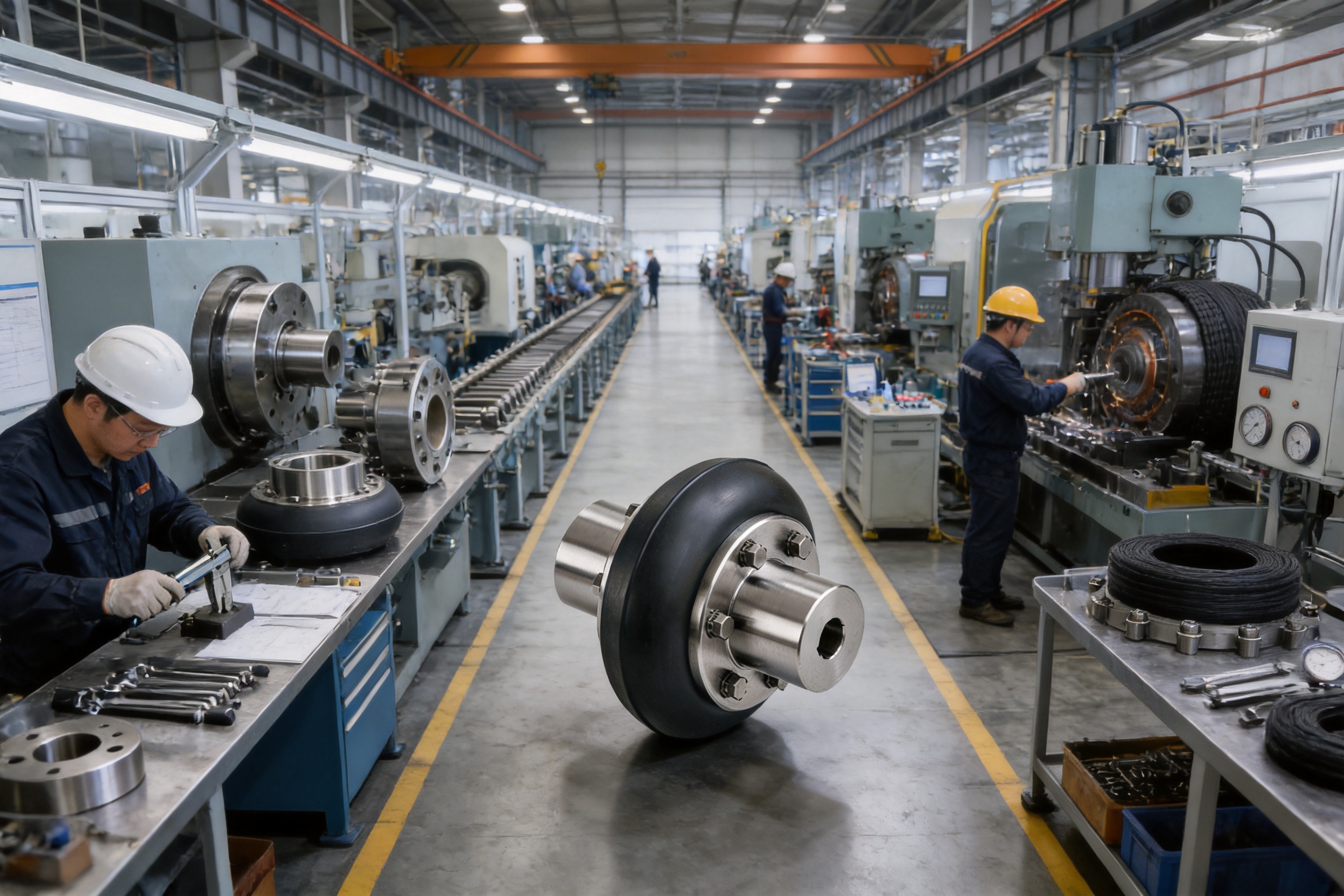
Zhenjiang Orienthold Machinery Co., Ltd. operates as a medium-sized enterprise specializing in industrial couplings and papermaking machinery. Its production model integrates product design, manufacturing, inspection, and service. This integrated approach supports communication between engineering, production, quality control, and customer service teams.
Engineering and Product Design
The first stage of a reliable coupling is an appropriate design. Engineering work includes consideration of torque, speed, shaft arrangement, bore size, keyway requirements, misalignment, installation space, temperature, and operating environment.
For the LLB type coupling, design attention is directed toward the relationship between the metal coupling halves and the elastic tyre. The tyre must be flexible enough to damp vibration and compensate for misalignment, while remaining strong enough to carry repeated torque and shock loads. The metal components must also distribute loads evenly and maintain secure connections under dynamic operation.
Design work can include material selection, dimensional analysis, stress evaluation, rubber compound selection, and adaptation to customer requirements. When standard dimensions do not match the machine, the company can evaluate customized bores, keyways, connection dimensions, materials, or special environmental requirements.
Material Selection
Material selection directly influences coupling reliability. Cast iron and cast steel may be used for different load levels and structural requirements, while forged steel can be selected for heavy-duty models requiring high strength and toughness.
The rubber compound is selected according to flexibility, hardness, temperature resistance, tear strength, fatigue behavior, and environmental exposure. Reinforcing nylon cord contributes to dimensional stability and load resistance. The vulcanized bond between rubber and the supporting structure must remain stable under repeated deformation.
Material traceability and incoming inspection are important elements of production control. Raw materials should be checked against purchasing and technical requirements before they enter the manufacturing process. This helps reduce variation and supports consistent performance from batch to batch.
Precision Machining
The metal coupling halves are processed using machining procedures designed to achieve accurate bores, faces, locating surfaces, bolt holes, and keyways. Precision machining contributes to correct installation, shaft concentricity, and balanced operation.
Dimensional accuracy is especially important for the shaft bore and keyway. A bore that is too loose can produce movement, fretting, and impact loading. A bore that is too tight can make installation difficult and may create unwanted stress. Keyway dimensions must support proper torque transfer without excessive clearance or interference.
Machined faces should provide stable seating for the tyre body and associated fastening components. Bolt-hole position and pitch must remain accurate to ensure that loads are distributed evenly around the coupling.
Rubber Vulcanization and Bonding
Vulcanization is one of the most important processes in the production of the integral tyre body. During vulcanization, heat and pressure transform the rubber compound into an elastic, durable material with controlled mechanical properties.
The process also supports bonding between the rubber, nylon cord, and metal skeleton. Proper control of temperature, pressure, time, compound preparation, and mold condition is necessary to produce a uniform tyre body with reliable adhesion and consistent geometry.
Potential defects such as incomplete bonding, air pockets, uneven thickness, surface cracking, contamination, or dimensional distortion can affect service life. For this reason, visual inspection, dimensional checks, and appropriate performance verification are important after molding and vulcanization.
Inspection and Testing
Orienthold Machinery maintains inspection and testing capabilities to support product quality. Inspection may cover raw materials, machining dimensions, rubber appearance, bonding quality, assembly condition, and finished product conformity.
Depending on the order and product specification, testing may include dimensional inspection, hardness verification, torque-related assessment, runout measurement, surface inspection, and checks of bolt-hole and bore accuracy. Quality supervision helps ensure that products comply with applicable national standards and customer requirements.
A complete quality system is especially important for couplings because failures can affect connected equipment, production continuity, and workplace safety. Consistent inspection helps identify defects before shipment and provides confidence that the coupling is suitable for its intended operating conditions.
Customization Capability
Industrial machinery often has nonstandard shaft diameters, unusual installation limitations, special keyways, different connection methods, or demanding environmental conditions. A supplier with design and manufacturing capability can evaluate these requirements rather than offering only a fixed catalog product.
Customization may involve bore dimensions, keyway form, metal material, tyre compound, bolt arrangement, corrosion protection, or special packaging. Each modification should be reviewed for its influence on strength, balance, misalignment capacity, temperature range, and service life.
Customer drawings, equipment data, load information, and operating conditions provide the foundation for a responsible customized solution. Clear technical communication before production helps prevent incorrect dimensions and reduces installation delays.
Application Areas
Transportation and Conveyor Equipment
Conveyors and transportation systems often operate continuously and may experience frequent starting, stopping, and load variation. The LLB tyre coupling can absorb starting shocks and reduce vibration between motors, gearboxes, drums, and other drive components.
In dusty environments, the closed tyre body helps reduce the entry of contaminants. Proper guarding and periodic inspection remain essential, especially when the conveyor carries abrasive materials or operates outdoors.
Metallurgy
Metallurgical equipment can involve heavy loads, high starting torque, intermittent operation, and elevated ambient temperatures. The LLB coupling can provide elastic load transfer and vibration damping in suitable temperature and torque ranges.
Because metallurgical facilities may expose equipment to heat, scale, dust, water, and chemical substances, the selected rubber compound and metal material must be reviewed carefully. Specialized versions may be considered where the standard temperature range is insufficient.
Mining
Mining machinery operates under demanding conditions that may include shock loading, dust, moisture, uneven foundations, and difficult maintenance access. A coupling that requires no routine lubrication and contains a simple number of major parts can reduce maintenance complexity.
The LLB design is suitable for selected mining drives, conveyors, pumps, fans, crushers, and auxiliary equipment when the torque, speed, temperature, and alignment requirements are within the rated limits of the selected model.
Construction Equipment
Construction machinery frequently moves between sites and may experience variable loading, vibration, and repeated acceleration. The elastic tyre body helps reduce the effect of mechanical shock and can compensate for limited alignment changes caused by equipment movement.
Construction environments can be exposed to mud, water, dust, and changing weather. The closed structure and weather-resistant rubber options can be beneficial, although regular cleaning and inspection are still recommended.
Hoisting and Crane Equipment
Crane and hoisting systems require careful control of acceleration, deceleration, braking, and load changes. Couplings used in these systems must be selected with appropriate service factors and consideration of peak torque and emergency braking conditions.
The LLB type coupling can help damp torsional shock and reduce vibration in suitable hoisting drives. It should always be used with correctly rated shafts, keys, brakes, gearboxes, guards, and control systems. Safety-critical lifting applications require detailed engineering review and compliance with applicable regulations.
Pumps, Fans, and General Industrial Drives
Pumps and fans may experience vibration from imbalance, fluid pulsation, or operating changes. An elastic tyre coupling can reduce the transmission of these disturbances and help accommodate small alignment deviations between the driver and driven machine.
General industrial drives benefit from the coupling’s simple structure and no-lubrication operation. It can be considered for equipment in chemical engineering, water handling, material processing, paper production, and other facilities where reliable continuous operation is important.
Selection Guidelines
Choosing an LLB type tyre coupling requires more than matching the nominal shaft diameter. The coupling should be selected from complete operating data so that it can transmit torque safely while maintaining acceptable temperature and fatigue performance.
Determine the Required Torque
Start with the motor or engine power and operating speed. The approximate nominal torque can be calculated using the applicable power-speed relationship. The result should then be multiplied by a service factor that reflects the type of driven machine and the severity of operation.
Equipment with smooth, continuous loading may require a lower service factor than equipment with frequent starts, reversals, impacts, braking events, or reciprocating loads. Peak and transient torque should also be considered because a coupling that is adequate for average torque may fail under repeated overloads.
Check Speed and Balance
The operating speed must remain within the permissible speed of the selected coupling. Higher speed increases the importance of concentricity, balance, alignment, and proper installation.
Where the coupling operates at elevated speed, the complete rotating assembly should be evaluated. Bore accuracy, key fit, bolt condition, tyre uniformity, and coupling runout can all influence vibration. Guards should be installed to protect personnel from rotating parts.
Evaluate Misalignment
Measure or estimate angular, radial, and axial displacement between the connected shafts. The LLB coupling can compensate for limited misalignment, but the expected movement must remain within the product’s permissible range.
Alignment should be corrected mechanically rather than relying on the coupling to absorb avoidable installation errors. Excessive misalignment can accelerate rubber fatigue, raise operating temperature, and increase loads on bearings and shafts.
Review Temperature and Environment
Confirm the minimum and maximum ambient temperatures, heat transferred from nearby equipment, exposure to sunlight, water, oil, chemicals, ozone, and abrasive dust. The standard range is approximately -20°C to 80°C, while specialized compounds may extend the range to approximately -30°C to 85°C.
If the coupling is exposed to substances that attack rubber, the compound must be reviewed before purchase. Environmental compatibility can be as important as torque capacity when determining service life.
Confirm Shaft and Installation Dimensions
Provide shaft diameters, keyway dimensions, shaft extensions, distance between shaft ends, available axial space, and any restrictions caused by guards or machine housings. The coupling must fit the actual equipment without forcing shafts into an incorrect position.
Where possible, provide drawings or photographs of the installation area. This allows the supplier to review assembly access and identify possible conflicts before manufacture.
Installation Recommendations
Before installation, inspect all coupling components for transport damage, corrosion, contamination, or dimensional irregularities. Confirm that the coupling model, bore, keyway, tyre compound, and fasteners match the order and equipment requirements.
Clean the shaft ends and coupling bores. Remove burrs, dirt, paint, and other material that could prevent proper seating. Check the fit of the keys and confirm that the keys do not project excessively into the coupling bore or interfere with assembly.
Install the coupling halves on the shafts according to the approved drawing or technical instructions. Do not use impact tools or excessive force that could damage the tyre body, bores, bearings, or shaft ends.
Set the required distance between shaft ends and verify angular and radial alignment. The coupling should not be used to pull machines into alignment. Correct the machine position and foundation condition first.
Install and tighten the connecting bolts evenly. Use the recommended tightening torque and sequence for the selected model. After assembly, rotate the shafts by hand where possible to check for interference, abnormal resistance, or uneven movement.
Install a suitable guard before operating the machine. The guard should prevent contact with rotating components while allowing sufficient ventilation and access for authorized inspection.
Maintenance and Service Life
Regular inspection helps identify problems before they result in unplanned downtime. The inspection interval should reflect operating hours, load severity, speed, temperature, environment, and the consequences of failure.
Inspect the tyre body for cracks, cuts, abrasion, hardening, softening, swelling, discoloration, separation, exposed reinforcement, or unusual deformation. Any visible deterioration should be evaluated promptly.
Check for loose or damaged bolts, fretting around the hubs, key movement, shaft corrosion, excessive runout, and abnormal noise. Unusual vibration or temperature may indicate misalignment, overload, imbalance, bearing failure, or tyre deterioration.
The tyre should be replaced if it has reached the recommended service limit or shows significant damage. Replacement should be performed with the machine isolated, locked out, and secured against unexpected movement. Use a compatible replacement element and inspect the metal coupling halves before reassembly.
Do not apply petroleum products, solvents, or unapproved chemicals to the rubber tyre. If cleaning is necessary, use a method compatible with the compound and the supplier’s technical guidance.
Why Choose Orienthold Machinery
Zhenjiang Orienthold Machinery Co., Ltd. combines manufacturing experience with product design and service capability. Its business covers industrial couplings and papermaking machinery, giving the company experience in producing mechanical components for demanding industrial users.
The company maintains advanced equipment and comprehensive testing methods to support controlled production. Its products are used in transportation, metallurgy, chemical engineering, mining, construction, hoisting, and other industrial sectors. This application breadth helps the company understand the practical requirements of different users rather than focusing only on isolated component production.
A strict quality supervision system supports raw material control, manufacturing inspection, finished-product verification, and order conformity. Compliance with national standards provides a foundation for consistent production, while technical development and process improvement support the needs of international customers.
The company also provides one-stop service covering pre-sales consultation, product customization, logistics coordination, payment flexibility, and maintenance support. This is valuable for customers who need more than a standard catalog part. Engineering communication can help define the correct coupling size, material, bore, tyre compound, and installation arrangement before production begins.
Compared with suppliers that focus only on low initial price, a complete manufacturing and service system can offer greater long-term value. Properly selected and manufactured couplings can reduce vibration-related failures, simplify maintenance, shorten replacement time, and support stable operation of the wider transmission system.
Q&A
What is the LLB type tyre coupling used for?
It is used to connect two shafts and transmit torque while reducing vibration, absorbing shock, and compensating for limited angular, radial, and axial misalignment. Typical applications include conveyors, pumps, fans, cranes, hoists, mining equipment, metallurgical machinery, construction machinery, and general industrial drives.
What torque can the LLB coupling transmit?
The product range can transmit approximately 10 to 20,000 N·m, depending on the specific model and operating conditions. The exact permissible torque must be confirmed using the selected size, speed, service factor, temperature, load pattern, and environmental conditions.
Does the coupling require lubrication?
The integral tyre body does not require routine lubrication. This is one of the design’s main maintenance advantages. However, the coupling still requires periodic inspection of the tyre, bolts, hubs, keys, shafts, and guards.
What is the normal operating temperature range?
The standard working temperature range is approximately -20°C to 80°C. Specialized rubber compounds and models may extend the range to approximately -30°C to 85°C. The correct range depends on the specific compound and application.
Can the coupling operate outdoors?
Yes, it can be used in suitable outdoor applications when the selected materials are compatible with temperature, moisture, sunlight, dust, and other environmental conditions. Weather resistance should be reviewed for exposed installations, and suitable guarding or protection should be provided.
How does the integral tyre compare with separate rubber pins or bushes?
The integral tyre provides one continuous elastic element instead of several individual rubber components. This can simplify assembly and replacement, improve structural continuity, and provide effective sealing against contaminants. The best design still depends on the required torque, speed, stiffness, space, and application conditions.
Can the LLB coupling compensate for poor alignment?
It can compensate for limited alignment deviations, but it should not be used to correct severe installation errors. Accurate shaft alignment remains necessary. Excessive misalignment may shorten tyre life, increase heat generation, and overload bearings.
What information is needed for product selection?
Important information includes motor power, operating speed, nominal and peak torque, machine type, starting and braking conditions, shaft diameters, keyways, shaft-end distance, expected misalignment, ambient temperature, chemicals, moisture, dust, and installation space.
Can the coupling be customized?
Customization may be available for bore dimensions, keyways, materials, tyre compounds, bolt arrangements, and other technical requirements. Customized designs should be reviewed by the manufacturer to confirm strength, balance, temperature capability, and compatibility with the equipment.
How should the tyre body be inspected?
Look for cracks, cuts, abrasion, hardening, swelling, separation, exposed reinforcement, discoloration, and unusual deformation. Also check for loose bolts, abnormal vibration, overheating, and noise. Any significant defect should be investigated before continued operation.
Is the LLB coupling suitable for heavy-duty machinery?
Selected models can be used in heavy-duty machinery within their rated torque, speed, temperature, and misalignment limits. Heavy-duty applications require proper service-factor calculation and careful evaluation of starting torque, impact loading, braking, and environmental conditions.
Conclusion
The LLB type tyre coupling provides a practical solution for industrial transmission systems that require flexibility, vibration damping, shock absorption, and reliable torque transfer. Its integral rubber tyre body, reinforced construction, axial assembly, closed design, and no-lubrication operation make it convenient for both installation and ongoing maintenance.
With an approximate torque range of 10 to 20,000 N·m and a standard working temperature range of -20°C to 80°C, the product can serve a wide selection of industrial equipment. Specialized compounds may extend temperature capability where required. The coupling’s ability to compensate for limited shaft misalignment can reduce mechanical stress and support smoother operation.
Its advantages are strengthened by the manufacturing capabilities of Zhenjiang Orienthold Machinery Co., Ltd. The company integrates engineering, material selection, precision machining, rubber vulcanization, inspection, customization, logistics, and technical service. This integrated approach helps customers obtain coupling solutions that are not only dimensionally compatible but also appropriate for their actual operating conditions.
For the best result, users should provide complete equipment data and select the coupling according to torque, speed, service factor, shaft dimensions, temperature, environment, and misalignment. When correctly selected, installed, and maintained, the LLB type tyre coupling can provide durable and economical performance in demanding industrial applications.
References
1. Industrial Coupling Design Principles, technical reference material for flexible shaft couplings and torque transmission systems.
2. Rubber Engineering Fundamentals, reference material on elastomer composition, vulcanization, reinforcement, fatigue, and environmental resistance.
3. Machinery Alignment and Installation Practices, technical guidance for shaft alignment, coupling installation, vibration control, and maintenance inspection.
4. Industrial Power Transmission Equipment Selection Guidelines, reference material covering service factors, operating speed, torque calculation, and application engineering.
5. Manufacturer Product and Quality Information for LLB Type Tyre Couplings, including construction, materials, operating range, manufacturing processes, and application guidance.
Product: LLB Type Tyre Coupling
PREV: SWP-C Non-Telescopic Short Universal Coupling: Compact Design, Reliable Torque Transmission, and Advanced ManufacturingNEXT: JMII Double-Diaphragm Coupling: Precision Torque Transmission for Demanding Industrial Systems
Be the First to Know
For exclusive deals and latest offers, sign up by entering your email address below.
Related products
News
-
-
A rotating equipment engineer at a steel finishing mill recently described a flexible coupling that had failed twice in...
READ MORE -
A mill drive rarely fails without warning. It knocks at speed, throws a smear of dark grease around the sleeve flange, ...
READ MORE -
China's coupling industry is at a critical historical juncture of transformation from scale expansion to quality and eff...
READ MORE -
During a routine vibration survey on a high-speed compressor train, engineers found a 4.5 mm/s velocity spike at the mo...
READ MORE -
A maintenance engineer pulls a failed coupling from a pump drive. The elastomer sleeves are cracked, the pin bolts are ...
READ MORE


ABOUT US
PRODUCTS
INDUSTRIES
CONTACT US
- Phone: +86-18652865511
- Email: sales@ohmach.com
- Address: No.1, Minying Developing Zone, Zhenjiang, Jiangsu, China
Copyright Zhenjiang Orienthold Machinery Co., Ltd. All Rights Reserved.
 Custom Industrial Shaft Coupling Manufacturers