 English
 русский
 Português
 عربى

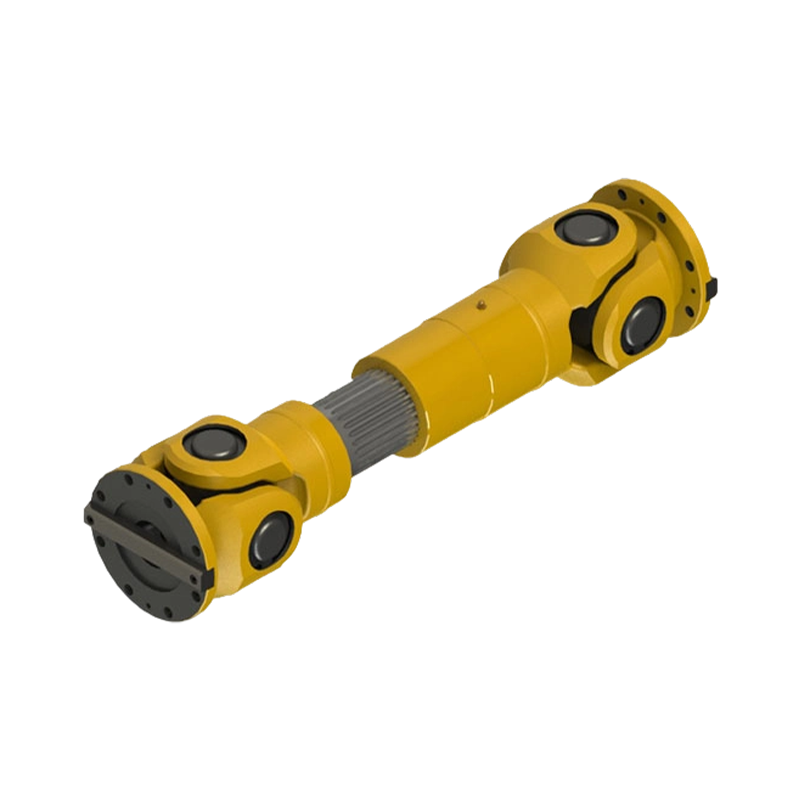
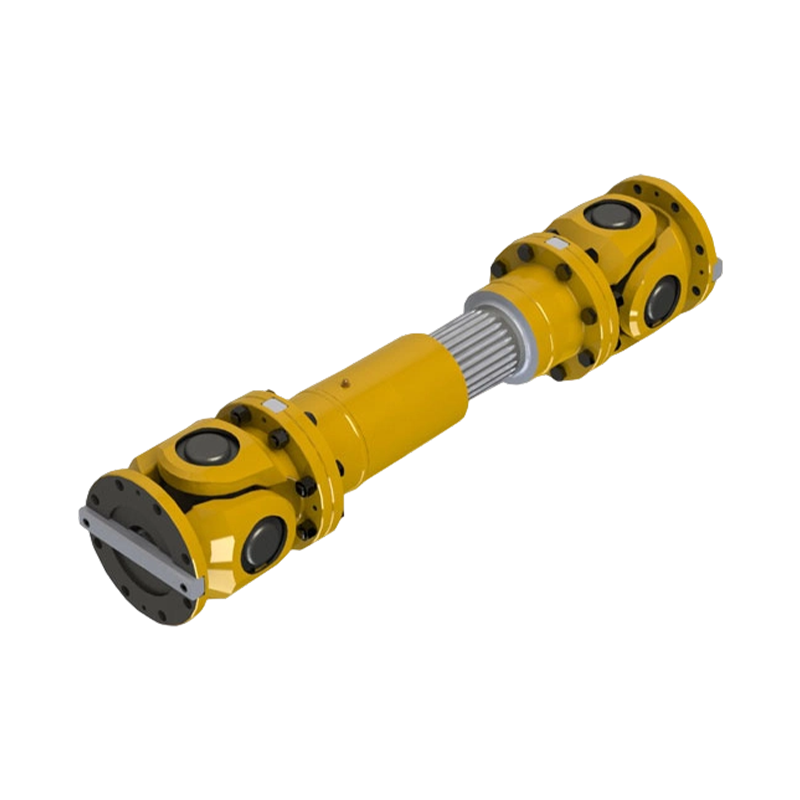
Consider a 250 kW crane hoist that begins to vibrate only when the load is lifted. The drum gear coupling is inspected ...
READ MORE
SWP-C Non-Telescopic Short Universal Coupling: Compact Design, Reliable Torque Transmission, and Advanced Manufacturing
Admin 2026-10-05Content
- 1 Introduction
- 2 What Is a Non-Telescopic Short Universal Coupling?
- 3 Core Construction and Operating Principle
- 4 Main Advantages of the SWP-C Design
- 5 Comparison with Conventional Coupling Arrangements
- 6 Advanced Manufacturing Process
- 7 Application Areas
- 8 Selection Guidelines
- 9 Installation and Maintenance Recommendations
- 10 Customization and Technical Support
- 11 Why Manufacturing Capability Matters
- 12 Frequently Asked Questions
- 12.1 What is the main advantage of the SWP-C coupling?
- 12.2 Is the SWP-C a telescopic coupling?
- 12.3 What type of misalignment can it accommodate?
- 12.4 Why is the cross assembly important?
- 12.5 How does the sealing system improve performance?
- 12.6 Can the coupling be used in high-speed machinery?
- 12.7 What industries use this type of coupling?
- 12.8 What information is needed for product selection?
- 12.9 How does the product compare with a longer universal coupling?
- 12.10 What maintenance does the SWP-C require?
- 12.11 Can customized versions be supplied?
- 12.12 Why should users purchase from an experienced manufacturer?
- 13 Conclusion
- 14 References
- 15 Product: SWP-C Non-telescopic Short Type Universal Coupling
Introduction
Modern industrial transmission systems increasingly require mechanical components that combine high torque capacity, dimensional accuracy, operational reliability, and efficient use of installation space. In transportation equipment, metallurgy, mining machinery, construction systems, and hoisting applications, the available distance between connected shafts is often limited. Conventional universal couplings may provide dependable angular compensation, but their overall length can make installation difficult in compact machines. The SWP-C Non-Telescopic Short Type Universal Coupling addresses this challenge through a compact structural design intended for confined transmission layouts.
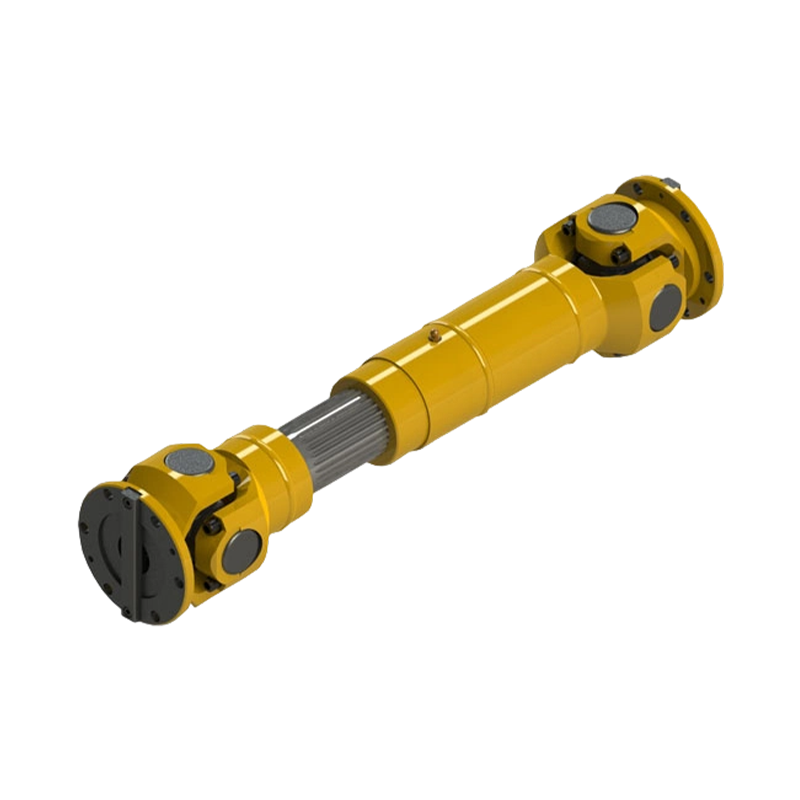
The SWP-C belongs to the cross universal coupling family and is designed to transmit torque between shafts operating with angular misalignment. It uses a high-strength flange yoke, precision-machined cross assembly, short connecting sleeve, needle-bearing arrangement, and a multi-stage sealing system. Through structural optimization, the overall coupling length is reduced by approximately 20% to 30% compared with more conventional arrangements while maintaining effective torque transmission and stable operation.
This compact construction does not simply reduce dimensions. It is intended to improve the integration of a coupling into a complete machine. A shorter coupling may simplify equipment layout, reduce the space required for guards and maintenance access, and help engineers accommodate existing shaft locations without extensive redesign. At the same time, the SWP-C retains the fundamental operating advantages of a cross universal joint, including angular flexibility, robust torque transmission, and suitability for demanding industrial environments.
The product is manufactured by Zhenjiang Orienthold Machinery Co., Ltd., a medium-sized enterprise specializing in industrial couplings and papermaking machinery. The company combines product design, machining, assembly, quality inspection, and technical service. Its products are used in transportation, metallurgy, chemical engineering, mining, construction, and hoisting industries. This combination of engineering experience and manufacturing capability supports the development of coupling solutions for standard and customized transmission requirements.
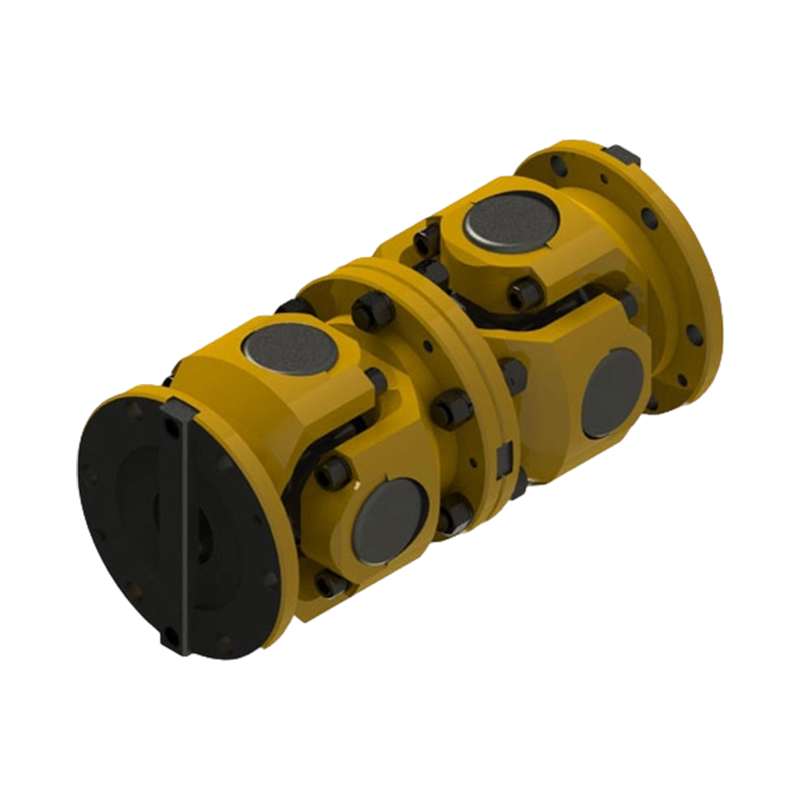
SWP-C Non-telescopic Short Type Universal Coupling
What Is a Non-Telescopic Short Universal Coupling?
A universal coupling is a mechanical transmission component used to connect two shafts that are not perfectly aligned on the same straight axis. Depending on the application, the connected shafts may operate at an angle relative to one another. The coupling transfers rotational torque while allowing the shafts to maintain a degree of angular movement. This function is especially important in equipment where the driving and driven assemblies are separated by structural members, movable components, or changing operating positions.
The term “cross universal coupling” refers to the cross-shaped central joint that permits angular articulation. The cross assembly normally includes a cross shaft, bearing assemblies, and sealing devices. Each bearing supports the rotating movement between the cross and the yokes. When the driving shaft rotates, the flange yoke and cross assembly transmit motion to the driven yoke and connected shaft.
The SWP-C is described as non-telescopic because its primary structure does not provide the same axial length compensation associated with a telescopic universal coupling. Instead, it is optimized as a short, fixed-length coupling for applications where the shaft arrangement is already established and where compactness is a priority. This configuration can offer improved structural simplicity and installation convenience when axial movement is not required.
The short design is achieved through the optimization of the connecting structure, yoke arrangement, and overall component layout. The goal is to reduce unnecessary axial length without weakening the essential load-bearing parts. A shorter body can be particularly valuable when the coupling must be installed inside a restricted machine frame, between closely spaced bearings, or near other mechanical components.
Core Construction and Operating Principle
High-Strength Flange Yoke
The flange yoke is one of the most important load-bearing parts of the coupling. It connects the universal joint to the adjacent shaft, flange, or machine component and transfers torque into the cross assembly. The SWP-C uses a flange yoke forged from high-strength alloy steel. Forging helps produce a dense and durable component suitable for repeated cyclic loading, shock loads, and demanding industrial operation.
Compared with a poorly designed or inadequately manufactured yoke, a properly engineered forged yoke can provide more consistent mechanical integrity and improved resistance to deformation. Its geometry must be accurately controlled because the yoke directly influences alignment, bearing loading, rotational balance, and the distribution of torque through the joint.
The flange design also supports efficient installation. A flange connection can be arranged for relatively direct attachment to the mating shaft or equipment interface. This may reduce the number of separate adapters required during installation and can make removal more convenient during inspection or maintenance. The exact flange dimensions, bolt arrangement, bore, and interface details should be confirmed according to the selected product specification and the requirements of the machine.
Precision Cross Assembly
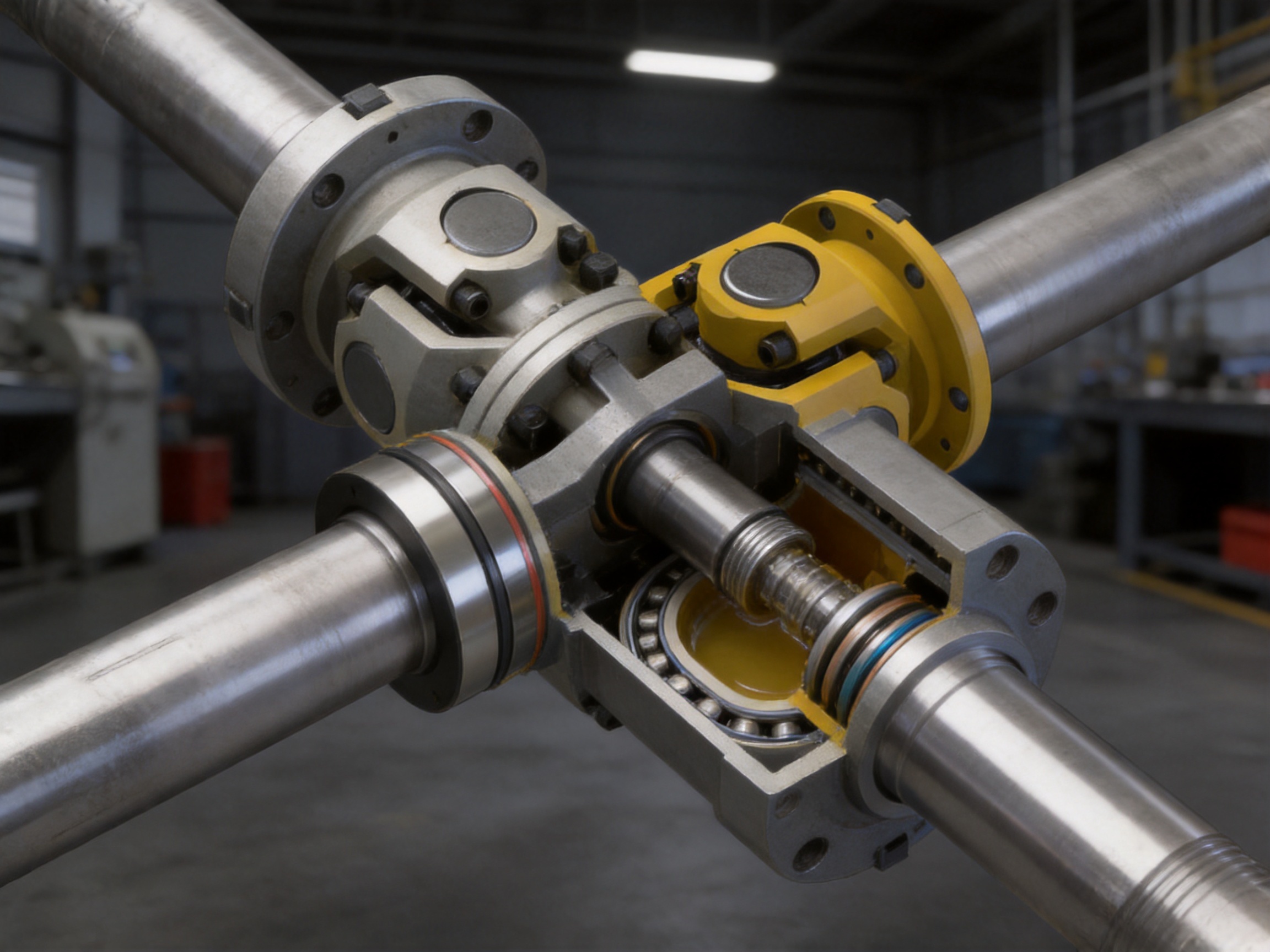
The cross assembly is the central moving element of the SWP-C universal coupling. It contains the cross shaft, needle bearings, and sealing devices. The cross shaft provides the articulated connection between the yokes, while the needle bearings allow the parts to rotate with reduced friction. Because the cross assembly is continuously exposed to alternating forces, dimensional accuracy and surface quality are essential.
Precision machining helps control the fit between the cross shaft, bearing cups, yokes, and related components. Accurate fits can reduce excessive clearance and help limit radial play. Lower radial play improves the consistency of torque transmission and helps the coupling respond more precisely to changes in rotational direction or operating load.
The cross assembly must also accommodate the dynamic conditions created by angular operation. When a universal coupling rotates at an angle, the motion is more complex than the rotation of a simple straight shaft. Proper component geometry, balanced construction, adequate lubrication, and correct installation are therefore important for controlling vibration and minimizing premature wear.
Short Connecting Sleeve
The connecting sleeve is optimized to reduce the axial length of the coupling. This is the defining structural feature of the SWP-C short type. By integrating the sleeve with the surrounding coupling arrangement and reducing unnecessary extension, the product can fit into transmission systems with limited center distance.
A compact connecting sleeve may provide several practical advantages. It can help engineers maintain a shorter shaft line, reduce interference with adjacent equipment, and create more room for protective guards or inspection access. In replacement projects, the compact dimensions may also help when an existing machine has insufficient clearance for a standard-length coupling.
Short construction must be considered together with operating requirements. The coupling should be selected according to torque, speed, angular displacement, shaft dimensions, service conditions, and installation geometry. The compact design is an important advantage, but it does not eliminate the need for correct engineering selection.
Needle Bearings and Sealing Devices
Needle bearings are used in the cross assembly to support rotational movement within a compact radial space. Their geometry allows the coupling to carry load while maintaining a relatively small bearing diameter. This is useful in a short universal coupling because the design must deliver adequate load capacity without creating excessive overall dimensions.
The sealing system protects the bearing and lubrication areas from external contamination. Industrial equipment may be exposed to dust, water, metal particles, paper fibers, mud, chemical residue, or other contaminants. Without effective sealing, these materials could enter the bearing area, accelerate wear, contaminate grease, and increase the risk of failure.
The SWP-C incorporates a multi-stage sealing arrangement intended to reduce grease leakage and prevent the ingress of outside contaminants. Effective sealing contributes to longer service life, more stable lubrication, and lower maintenance frequency. Seal condition should nevertheless be checked as part of a regular maintenance program, particularly in abrasive, wet, or chemically aggressive environments.
Main Advantages of the SWP-C Design
Space Efficiency in Confined Installations
The most visible advantage of the SWP-C is its compact length. The overall design reduces the coupling length by approximately 20% to 30% through structural optimization. This can be valuable in machines where the distance between shafts is restricted or where a conventional coupling would interfere with neighboring parts.
Space efficiency can influence more than the coupling itself. A shorter transmission component may allow a smaller equipment enclosure, provide additional clearance around bearings, simplify the layout of protective guards, and reduce the need to relocate motors or driven equipment. It may also help manufacturers standardize a machine platform across different configurations where available installation space varies.
In retrofit applications, compactness can be particularly important. Existing equipment often has fixed foundation positions, established shaft centers, and limited access for structural modifications. Installing a shorter coupling may help solve a dimensional problem without requiring a complete redesign of the drive system.
High Torque Density
Torque density refers to the amount of torque that can be transmitted relative to the size and weight of the component. The SWP-C is designed to provide high torque density within a compact envelope. Its forged alloy-steel yoke, cross assembly, and optimized load path support the transmission of substantial torque while preserving the short configuration.
High torque density can help reduce the space occupied by a complete drive train. It may also enable equipment designers to achieve the required output performance without using an oversized coupling. However, the correct model must always be chosen according to the actual service torque, peak torque, speed, duty cycle, shock loading, and angular conditions of the application.
Low Backlash and Precise Torque Transmission
Backlash is unwanted relative movement between connected components. Excessive backlash may cause impact during start-up, stopping, reversing, or load changes. It can also reduce positioning accuracy and contribute to vibration. The optimized bearing arrangement and precision-manufactured cross assembly of the SWP-C are intended to reduce radial play and support precise torque transmission.
Low backlash is useful in systems where the shaft must respond consistently to changes in load. It can be beneficial in lifting equipment, material-handling systems, rolling equipment, conveyors, and other machines in which repeated acceleration and deceleration occur. Reduced clearance may also help limit impact forces on the coupling and connected components.
Stable Operation at Medium and High Speeds
The coupling is designed for medium- to high-speed operation when properly selected and installed. Its compact structure, precision machining, and attention to dynamic balance help support stable rotation. Correct balance is particularly important for a universal coupling because angular operation can create complex dynamic forces.
A balanced coupling can help reduce vibration, noise, and stress on adjacent bearings and shafts. Stable operation also supports longer service intervals and better machine availability. The actual permissible speed depends on the coupling size, operating angle, torque, installation conditions, balance grade, and manufacturer’s technical data. Users should not assume that every size is suitable for the same speed.
Durability in Demanding Environments
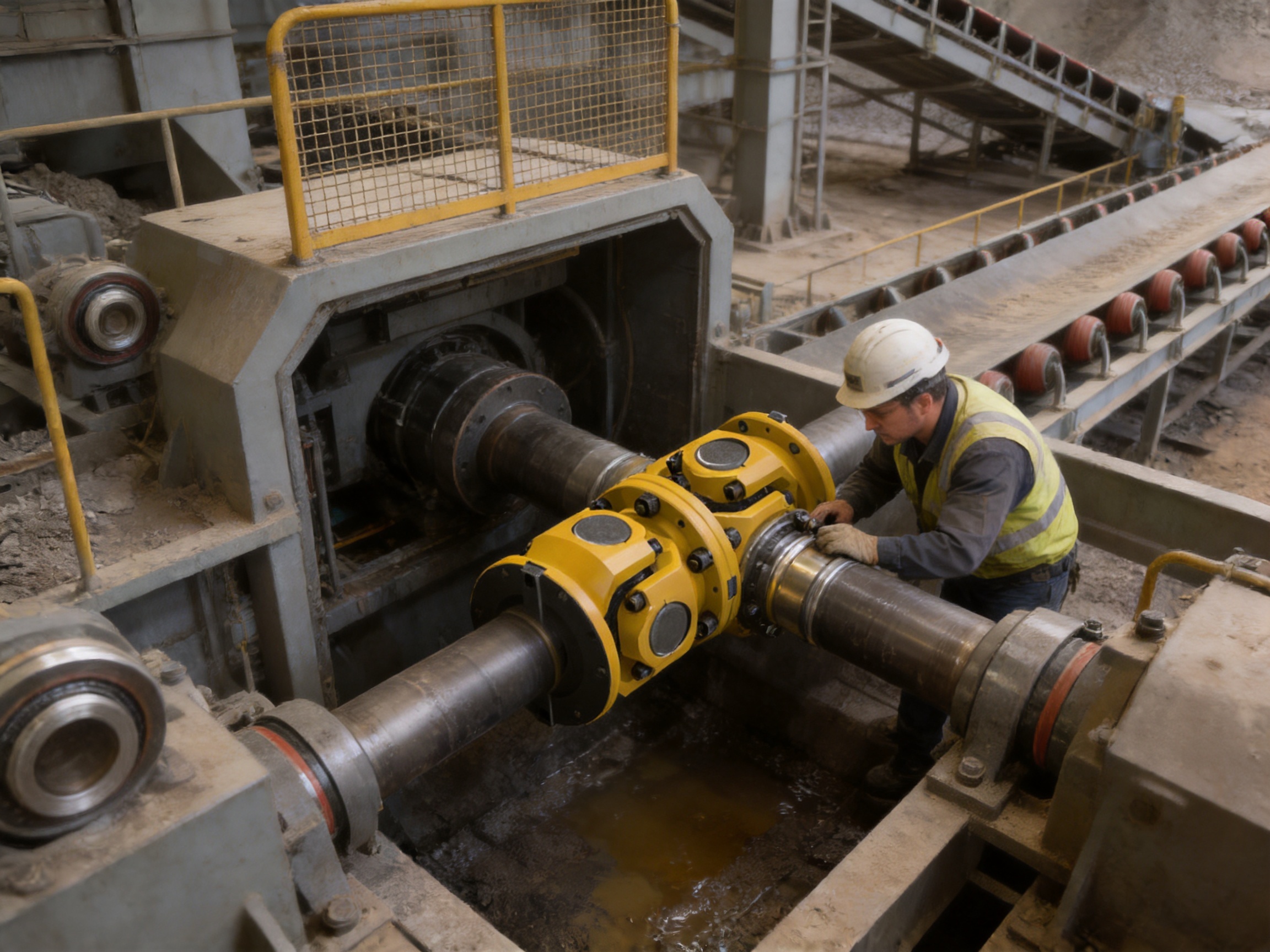
Industrial couplings are often exposed to fluctuating loads, repeated starts and stops, dust, moisture, temperature changes, and shock. The SWP-C is designed for use in demanding sectors such as transportation, metallurgy, mining, construction, and hoisting. Its forged steel yoke, robust cross assembly, and protective sealing system provide a foundation for dependable long-term service.
Durability depends on the complete system rather than one component alone. Proper alignment, lubrication, correct bolt tightening, suitable guards, appropriate operating speed, and regular inspection all contribute to coupling life. The product’s structural strength and sealing performance can reduce risk, but proper use remains essential.
Installation Convenience
The integral flange design facilitates installation and can reduce assembly complexity. A direct flange interface may make it easier to position the coupling and connect it to the driving and driven elements. The short body can also be advantageous in restricted spaces where technicians have limited room to maneuver tools or components.
Installation should begin with a review of shaft alignment, flange dimensions, bolt quality, coupling orientation, and available clearance. The connected shafts should be supported independently and should not impose unintended radial or axial loads on the coupling. Bolts should be tightened according to an appropriate sequence and torque requirement.
Comparison with Conventional Coupling Arrangements
The SWP-C should be compared with conventional universal couplings according to application requirements rather than appearance alone. A standard-length coupling may be suitable when installation space is plentiful, while the SWP-C is especially advantageous where compactness, low clearance, and integration flexibility are important.
| Evaluation Factor | Conventional Long Universal Coupling | SWP-C Short Universal Coupling | Practical Benefit |
|---|---|---|---|
| Overall length | May require greater axial installation space | Reduced by approximately 20% to 30% through optimized construction | Better suitability for confined layouts |
| Torque transmission | Depends on size, material, and joint design | Supported by forged alloy-steel yokes and a precision cross assembly | Reliable transmission in demanding duties |
| Radial play | Can increase as bearing clearance or wear develops | Optimized bearing structure is intended to reduce radial play | More precise and stable torque transfer |
| Contamination protection | Varies according to sealing arrangement | Multi-stage sealing system helps retain grease and block contaminants | Improved protection and potentially lower maintenance demand |
| Installation | May require additional clearance and adapters | Integral flange design supports direct installation | Convenient integration into existing equipment |
| Dynamic behavior | Depends on balance and machining quality | Precision manufacturing supports low backlash and good dynamic balance | More stable medium- and high-speed operation |
| Retrofit suitability | May be limited by available shaft distance | Compact geometry can assist replacement projects | Less need for major equipment modification |
This comparison does not mean that a short coupling is automatically superior in every situation. A telescopic design may be preferable when axial movement is required, and another coupling type may be more appropriate for flexible misalignment, electrical insulation, or extreme torsional damping. The advantage of the SWP-C is its focused combination of compact size, universal-joint flexibility, robust construction, and efficient torque transmission.
Advanced Manufacturing Process
Engineering Design and Structural Optimization
The manufacturing process begins with engineering analysis of the coupling structure and the intended operating conditions. The design must account for torque, rotational speed, angular displacement, shaft dimensions, bearing loads, environmental exposure, and installation limitations. Structural optimization is used to reduce length while preserving strength in the yokes, cross assembly, and connecting sleeve.
A successful compact design requires careful attention to load paths. Removing unnecessary material or length must not create weak sections, excessive stress concentration, or insufficient bearing support. The product’s optimized geometry is therefore intended to balance compactness with strength, durability, and dynamic performance.
Engineering work also considers assembly access and maintenance. A coupling that is compact but difficult to inspect would not deliver the full practical benefit of its reduced dimensions. The SWP-C design combines a short form with a flange interface and sealed cross assembly to support efficient installation and service.
Forging of Alloy-Steel Yokes
The flange yoke is forged from high-strength alloy steel. Forging is a manufacturing process in which metal is shaped under controlled force. It can produce a strong, dense structure and support consistent mechanical properties throughout the component. For a torque-transmitting yoke, these characteristics are important because the part is exposed to cyclic stress and possible shock loading.
After forging, the yoke requires further machining to achieve its specified dimensions, interfaces, bearing seats, flange surfaces, and connection features. The quality of these operations directly affects alignment and the performance of the assembled joint. Accurate machining also helps ensure that the cross assembly is positioned correctly within the yoke.
Precision Machining
Precision machining is used to refine the forged parts and produce the dimensional accuracy required by the cross assembly. Machined surfaces must meet appropriate requirements for size, roundness, concentricity, surface finish, and positional accuracy. These factors influence bearing fit, movement, torque transmission, and dynamic balance.
Precision machining is particularly important for the cross shaft and bearing-related surfaces. If the components are not accurately produced, the coupling may develop uneven loading, increased clearance, vibration, or accelerated wear. Controlled machining helps the assembled coupling operate smoothly and supports repeatable product quality.
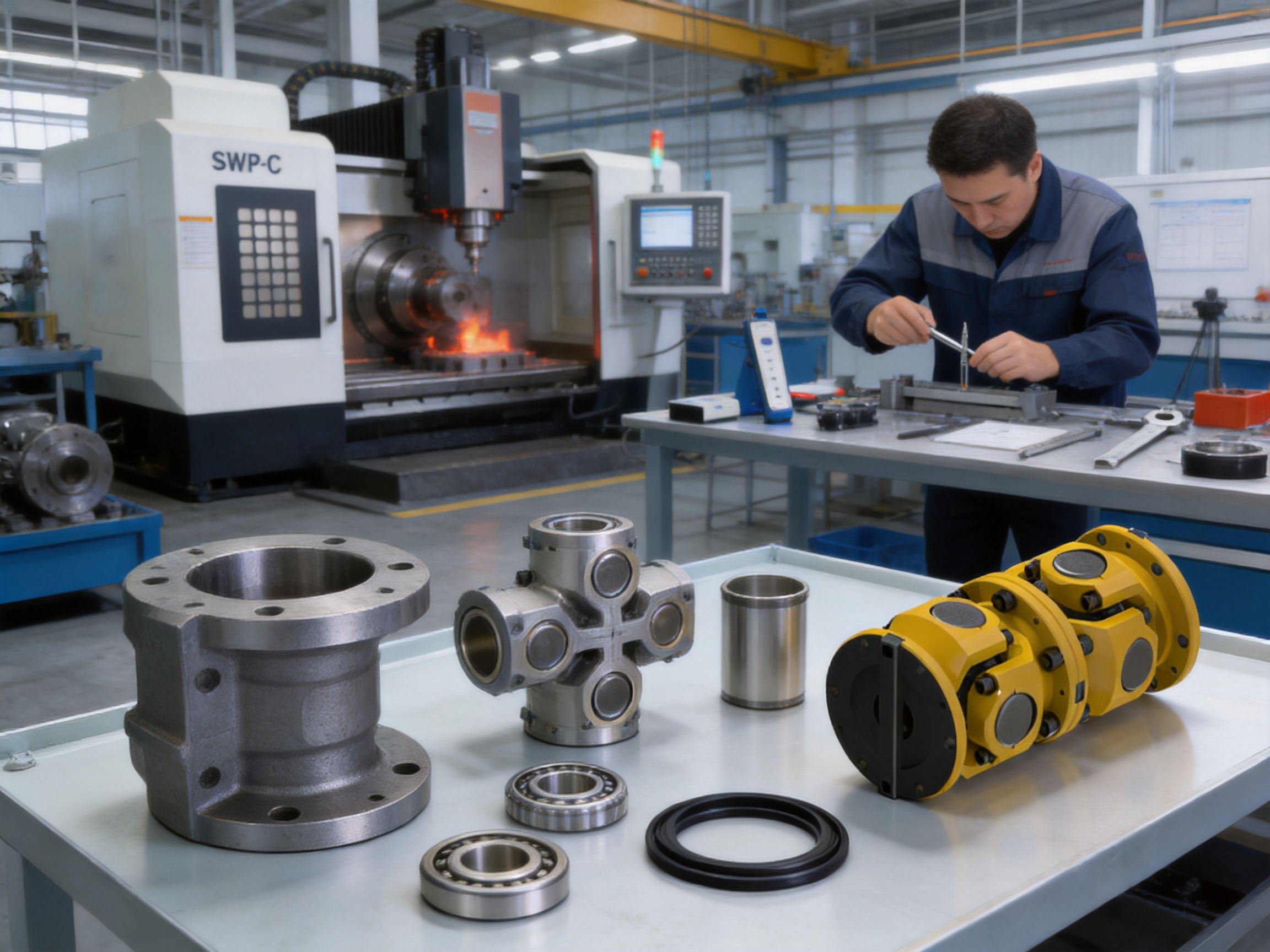
The company’s advanced equipment and comprehensive inspection methods contribute to the consistent manufacture of coupling components. Production capability is not limited to making individual parts; it also includes controlling the relationship between parts during assembly. This integrated approach is essential for a precision transmission product.
Cross Assembly and Bearing Integration
During assembly, the cross shaft, needle bearings, yokes, sealing devices, and connecting sleeve must be installed in the correct sequence and orientation. Bearing components must be properly seated, lubricated, and protected. Incorrect assembly can create preload, looseness, uneven movement, or premature seal damage.
Assembly personnel must also verify that the joint articulates smoothly without excessive resistance or unwanted play. The coupling should transmit movement through its intended range while maintaining the correct relationship between the yokes. These checks are important before the product is released for shipment.
Sealing and Lubrication Control
The multi-stage sealing system is integrated into the cross assembly to retain grease and limit contamination. Seal installation requires careful handling because cuts, deformation, incorrect seating, or contamination during assembly may affect service performance. Lubrication must also be applied in a controlled manner so that bearing areas receive adequate grease without creating unnecessary pressure or leakage.
Proper lubrication supports the movement of the needle bearings and reduces friction between moving surfaces. The appropriate grease type, quantity, and replenishment interval depend on operating speed, temperature, load, environment, and manufacturer recommendations. Users should follow the applicable maintenance instructions rather than combining incompatible lubricants.
Inspection and Testing
Quality supervision is an important part of coupling production. Orienthold Machinery operates with inspection and testing equipment intended to verify product quality and dimensional consistency. Inspection may include checks of raw materials, forged components, machined dimensions, bearing fits, flange interfaces, sealing conditions, assembly quality, and rotational behavior.
Testing helps identify defects before delivery and provides confidence that the product conforms to the required design. For couplings, visual inspection alone is not enough. Dimensional accuracy, assembly condition, movement, balance, and surface quality all influence performance. A comprehensive inspection process supports dependable operation in the field.
The company manufactures products in accordance with national standards and applies quality supervision throughout production. Its experience in couplings and papermaking machinery provides a practical understanding of industrial equipment requirements, including continuous operation, heavy loads, maintenance access, and the need for reliable supply.
Application Areas
Transportation Equipment
Transportation machinery often includes long or segmented drive systems in which shafts must transmit power across changing equipment sections. A compact universal coupling can assist in connecting shafts where the available installation distance is restricted. Its angular flexibility may also help accommodate the relative position of connected components.
Examples may include industrial conveying systems, transfer equipment, drive assemblies, and specialized transport machinery. The exact application should be assessed according to speed, torque, environmental conditions, and the degree of angular misalignment.
Metallurgical Machinery
Metallurgical equipment is frequently exposed to high loads, elevated temperatures, dust, vibration, and repeated operating cycles. Rolling, feeding, straightening, and transfer systems may require strong and dependable shaft connections. The SWP-C’s forged yoke and sealed bearing arrangement can provide a suitable foundation for these demanding conditions when the coupling is correctly selected and protected.
In steel and metal processing plants, equipment layout is often highly compact. Production lines may contain closely spaced rollers, gearboxes, motors, and structural frames. The short configuration can help engineers manage shaft connections without requiring excessive axial space.
Mining Equipment
Mining machinery operates in harsh environments that may contain dust, abrasive particles, moisture, and fluctuating loads. Conveyors, crushers, feeders, screens, and material-handling systems can impose significant torque and shock on transmission components. The sealing system of the SWP-C is intended to reduce the entry of external contaminants into the bearing area.
Mining operators also value maintainability because equipment downtime can be costly and access may be difficult. A compact coupling with an integral flange arrangement may simplify replacement and support more efficient maintenance procedures, provided sufficient guarding and service clearance are included in the equipment design.
Construction Machinery
Construction equipment often includes mobile or semi-mobile mechanisms with changing loads and limited internal space. Hoisting, lifting, conveying, mixing, and rotating functions may require a coupling capable of handling angular shaft relationships. The SWP-C may be considered for fixed-length shaft connections where a non-telescopic configuration satisfies the movement requirements.
Construction environments can expose the coupling to mud, water, impact, and vibration. The multi-stage sealing arrangement and robust steel structure are valuable features, but regular inspection remains necessary. Accumulated debris should be removed, and protective guards should be maintained in good condition.
Hoisting and Lifting Systems
Hoisting equipment requires dependable torque transmission because load movement may involve frequent starting, stopping, reversing, and braking. These operating conditions can increase the importance of low backlash, accurate assembly, and adequate shock-load capacity. A correctly selected SWP-C coupling can support the connection between drive units and driven mechanisms where the shaft arrangement requires angular articulation.
Safety is essential in lifting applications. Coupling selection must consider rated load, acceleration, braking torque, emergency stopping, duty classification, and applicable safety standards. The coupling should never be treated as an isolated component; it must be integrated into a complete engineered system with suitable guards, brakes, supports, and inspections.
Papermaking Machinery
Papermaking equipment commonly operates continuously and requires stable speed, accurate transmission, and reliable service over long production periods. Roll drives, conveying sections, preparation equipment, and auxiliary machinery may benefit from compact couplings where machine frames provide limited space.
Paper fibers, moisture, cleaning chemicals, and continuous rotational operation create special environmental conditions. The SWP-C sealing system can help protect the internal bearing areas, while proper lubrication and scheduled inspection help preserve performance. The manufacturer’s experience in papermaking machinery provides additional insight into the needs of continuous-process equipment.
Selection Guidelines
Determine the Required Torque
The first step in selecting a coupling is to determine the required operating torque and peak torque. The calculation should include motor power, rotational speed, transmission efficiency, duty cycle, start-up conditions, braking effects, and possible shock loads. A coupling should not be selected solely according to average running torque because transient loads may be significantly higher.
Where the application has frequent starts and stops, reversing operation, impact loading, or abrupt changes in material flow, an appropriate service factor should be applied. The required service factor depends on the machine and operating conditions. Consult the product’s technical documentation for the allowable torque range of each size.
Check Speed and Angular Conditions
Operating speed and angular displacement directly influence universal coupling performance. Higher speeds place greater demands on balance, bearing condition, lubrication, and alignment. Larger operating angles may increase bearing loads and dynamic effects. The selected coupling must be suitable for the actual combination of torque, speed, and angle.
The permissible angular operating range should be confirmed before installation. The shafts should be arranged so that the coupling does not operate beyond its rated articulation. If the equipment requires substantial axial movement, a telescopic universal coupling or another specialized design may be more appropriate than the non-telescopic SWP-C.
Verify Shaft and Flange Dimensions
Users should confirm shaft diameter, bore requirements, flange dimensions, bolt-circle details, key or spline arrangements, and available axial length. The coupling must fit the connected equipment without forced assembly or unplanned modification. The short design is most effective when the available installation space is measured accurately before ordering.
It is also important to check radial clearance, guard dimensions, maintenance access, and the possibility of removing the coupling later. A compact coupling should not be installed so close to surrounding structures that inspection or replacement becomes impractical.
Assess the Environment
Environmental conditions include temperature, dust, moisture, chemicals, corrosive substances, vibration, and cleaning methods. These factors influence the selection of sealing materials, lubrication, protective guards, and maintenance intervals. Where the coupling is exposed to severe contamination, additional external protection may be advisable.
The multi-stage sealing system helps protect the internal components, but no seal is a substitute for appropriate equipment design. Water jets, abrasive particles, or corrosive chemicals should not be directed unnecessarily at the coupling. Guards should prevent accidental contact while allowing practical inspection.
Installation and Maintenance Recommendations
Installation Procedure
Before installation, inspect the coupling for transport damage, contamination, missing components, and signs of corrosion. Confirm that the product dimensions match the equipment drawings. Clean mating surfaces and ensure that the shafts and flanges are free from burrs, oil deposits, and foreign material that could prevent proper seating.
Position the coupling without forcing the connected shafts into alignment. The driving and driven shafts should be supported by their own bearings and supports. The coupling should transmit torque and accommodate the intended angular relationship; it should not be used to compensate for major structural misalignment or to support unrelated loads.
Install bolts, keys, splines, and other connection components according to the product instructions. Tighten fasteners in a balanced sequence using suitable tools. Under-tightening may permit joint movement, while over-tightening may damage threads, flanges, or connected components. After assembly, rotate the system manually if possible to check for interference, binding, or abnormal resistance.
Alignment Verification
Although a universal coupling can accommodate angular misalignment, alignment should still be controlled carefully. Excessive misalignment may increase bearing loads, vibration, and wear. Measure the shaft relationship using appropriate alignment equipment and verify that the operating angle falls within the allowable range.
Alignment should be checked again after the machine reaches operating temperature if thermal expansion may alter shaft positions. Foundation movement, bearing replacement, structural deformation, and changes to connected equipment can also affect alignment. Periodic verification is especially important for heavy-duty and continuous-process machinery.
Lubrication
Lubrication is essential for the needle bearings and other moving surfaces. Use the recommended grease and follow the appropriate replenishment interval. The interval may be shorter in high-speed, high-load, wet, dusty, or high-temperature applications.
During lubrication, check for unusual resistance, grease leakage, damaged seals, or contamination. Excessive leakage may indicate seal wear, over-lubrication, or damage. Contaminated grease should not be ignored because it may indicate that the sealing system has been compromised.
Routine Inspection
Routine inspection should include visual checks of the yokes, cross assembly, seals, flanges, bolts, guards, and surrounding equipment. Look for cracks, deformation, corrosion, loose fasteners, abnormal grease loss, unusual noise, or increasing vibration. Any change in operating behavior should be investigated before it develops into a serious failure.
Backlash and radial play should be monitored over time. A gradual increase may indicate bearing wear, cross-shaft damage, loose connections, or insufficient lubrication. Replacing worn components at an appropriate stage can prevent secondary damage to shafts, gearboxes, bearings, and machine frames.
Failure Prevention
Many coupling failures are caused by incorrect selection, excessive operating angle, poor alignment, inadequate lubrication, contamination, loose bolts, or operation beyond the rated speed and torque. Preventive maintenance should address these causes systematically rather than focusing only on visible damage.
Operators should maintain records of lubrication, inspections, alignment checks, repairs, and operating incidents. These records can help identify trends and support planned replacement during scheduled shutdowns. In critical equipment, spare coupling components should be stored under clean and dry conditions so that replacement can be completed quickly.
Customization and Technical Support
Industrial equipment does not always conform to a single standard shaft arrangement. Customers may require specific flange dimensions, bore sizes, connection methods, materials, surface treatments, or operating configurations. A coupling manufacturer with design and production capabilities can evaluate these requirements and provide a more suitable solution than a purely off-the-shelf approach.
Orienthold Machinery integrates design, production, and service, allowing it to support customization and technical consultation. The company can assess the customer’s operating conditions, equipment layout, torque requirements, and installation limitations. This one-stop approach can help reduce communication gaps between design, manufacturing, and delivery.
Customization should be based on complete technical information. Useful data includes motor power, speed, operating torque, peak torque, shaft diameter, flange drawings, angular displacement, environmental conditions, duty cycle, installation space, and maintenance requirements. Accurate information enables the manufacturer to recommend the correct construction and avoid unnecessary changes after production begins.
Technical support also extends beyond product supply. Pre-sales consultation can assist with model selection and application review. Flexible logistics and payment options can support international procurement, while maintenance guidance can help users obtain consistent service life after installation. For industrial customers, this combination of product quality and service responsiveness is an important consideration when comparing suppliers.
Why Manufacturing Capability Matters
A coupling is a precision mechanical assembly rather than a simple piece of steel. Its performance depends on material quality, forging integrity, machining accuracy, bearing installation, sealing, balancing, inspection, and correct packaging. A supplier with control over these stages can respond more effectively to quality requirements and application-specific needs.
Orienthold Machinery operates as a medium-sized industrial enterprise with technical capabilities, advanced equipment, and comprehensive testing methods. Its experience covers couplings and papermaking machinery, and its products are supplied to large enterprises in various regions. This background indicates an understanding of the practical demands of industrial customers, including stable production, consistent quality, customization, and delivery support.
The company follows a strict quality supervision system and manufactures products in accordance with national standards. Its manufacturing approach combines process control with product inspection. This is particularly relevant for the SWP-C because small deviations in cross assembly fit, flange alignment, bearing clearance, or seal installation can affect vibration, wear, and service life.
Manufacturing strength also supports continuous product improvement. Feedback from transportation, metallurgy, mining, construction, hoisting, chemical engineering, and papermaking applications can help identify opportunities to refine materials, sealing, machining, and structural design. The result is a coupling that is not only compact in dimensions but also developed with practical industrial use in mind.
Frequently Asked Questions
What is the main advantage of the SWP-C coupling?
The main advantage is its short, compact construction. The overall length is reduced by approximately 20% to 30% through structural optimization, making the coupling suitable for transmission systems with limited installation space. It also combines this compactness with a forged alloy-steel yoke, precision cross assembly, needle bearings, sealing protection, low backlash, and high torque density.
Is the SWP-C a telescopic coupling?
No. The SWP-C is a non-telescopic short universal coupling. It is intended for fixed-length shaft connections where axial movement is not the primary requirement. If the machine requires significant axial compensation, another coupling configuration should be evaluated.
What type of misalignment can it accommodate?
The SWP-C is designed to accommodate angular misalignment between connected shafts through its cross universal joint. The allowable angle depends on the specific product size and operating conditions. Shaft alignment should still be controlled carefully, and the coupling should not be used to compensate for excessive or unintended misalignment.
Why is the cross assembly important?
The cross assembly is the central moving part of the coupling. It includes the cross shaft, needle bearings, and sealing devices. It allows the yokes to articulate while transmitting torque. Its dimensional accuracy, bearing condition, lubrication, and sealing directly influence smooth operation, radial play, vibration, and service life.
How does the sealing system improve performance?
The multi-stage sealing system helps retain grease in the bearing area and limits the entry of dust, moisture, metal particles, paper fibers, and other contaminants. This protection can extend bearing life and reduce maintenance requirements. Seal condition should still be inspected regularly, especially in harsh environments.
Can the coupling be used in high-speed machinery?
It is designed for medium- to high-speed operation when correctly selected, installed, aligned, and balanced. The actual permissible speed depends on coupling size, torque, operating angle, balance, and service conditions. Users should confirm the rated speed in the applicable technical documentation before applying the coupling.
What industries use this type of coupling?
Applications may include transportation equipment, metallurgy, mining, construction, hoisting, chemical engineering, papermaking machinery, conveyors, material-handling equipment, and other industrial transmission systems. The correct model depends on the specific torque, speed, angle, environment, and dimensional requirements.
What information is needed for product selection?
Important information includes motor power, operating speed, normal and peak torque, duty cycle, shaft diameter, flange dimensions, operating angle, available installation length, environmental conditions, temperature, required lubrication interval, and whether axial movement is present. Complete information allows the manufacturer to evaluate the application more accurately.
How does the product compare with a longer universal coupling?
The SWP-C offers a shorter installation length, which can provide greater flexibility in confined layouts and retrofit projects. Its compact structure may also reduce interference with adjacent equipment. A longer coupling may remain appropriate where space is available or where its specific shaft arrangement is required. The best selection depends on the machine rather than on length alone.
What maintenance does the SWP-C require?
Maintenance normally includes lubrication according to the recommended interval, inspection of seals and grease condition, checking bolts and flange connections, monitoring vibration and noise, verifying alignment, and checking for abnormal radial play. Maintenance intervals should be adjusted for load, speed, temperature, contamination, and operating environment.
Can customized versions be supplied?
Industrial coupling requirements may involve customized shaft dimensions, flange interfaces, materials, or connection details. The manufacturer provides design, production, customization, logistics, and maintenance support. Customers should submit complete technical drawings and operating data so that the proposed configuration can be reviewed before production.
Why should users purchase from an experienced manufacturer?
An experienced manufacturer can coordinate material selection, forging, machining, assembly, sealing, testing, and technical support. This integrated capability helps reduce quality variations and provides a clearer response to application-specific requirements. It also supports more reliable after-sales service and replacement planning.
Conclusion
The SWP-C Non-Telescopic Short Type Universal Coupling is designed for industrial transmission systems that require dependable torque transfer in a restricted installation space. Its compact structure reduces overall length by approximately 20% to 30%, while its forged high-strength alloy-steel yoke, precision cross assembly, needle bearings, short connecting sleeve, and multi-stage sealing system support reliable operation.
Compared with conventional longer universal coupling arrangements, the SWP-C can provide meaningful advantages in space efficiency, retrofit flexibility, installation convenience, low backlash, and dynamic stability. Its optimized bearing structure helps reduce radial play, while the integral flange design supports efficient assembly. The sealing system helps protect internal components from grease leakage and external contamination.
The product’s value is strengthened by the manufacturing capabilities of Zhenjiang Orienthold Machinery Co., Ltd. The company integrates design, production, testing, customization, and service, with applications across transportation, metallurgy, chemical engineering, mining, construction, hoisting, and papermaking machinery. Its advanced equipment, quality supervision system, and comprehensive inspection methods provide a foundation for consistent industrial coupling production.
Correct selection and maintenance remain essential. Engineers should evaluate torque, speed, angular displacement, shaft dimensions, environmental conditions, duty cycle, and installation space before choosing a model. When properly selected, installed, lubricated, and inspected, the SWP-C can provide a compact and reliable connection for demanding mechanical transmission systems.
References
1. Industrial Coupling Design Principles, Mechanical Power Transmission Engineering Reference.
2. Universal Joint and Cross Assembly Maintenance Practices, Industrial Machinery Service Guide.
3. Mechanical Power Transmission Components: Selection, Alignment, and Lubrication Guidelines.
4. Forged Alloy Steel Components for Heavy-Duty Industrial Machinery, Materials and Manufacturing Reference.
5. Bearing Sealing and Lubrication in Contaminated Industrial Environments, Machinery Reliability Handbook.
6. General Principles for Coupling Installation, Dynamic Balance, and Preventive Maintenance.
7. Product and company information supplied for the SWP-C Non-Telescopic Short Type Universal Coupling.
Product: SWP-C Non-telescopic Short Type Universal Coupling
PREV: Industrial Couplings: Precision Power Transmission for Demanding ApplicationsNEXT: LLB Type Tyre Coupling: Reliable, Flexible, and Maintenance-Efficient Power Transmission
Be the First to Know
For exclusive deals and latest offers, sign up by entering your email address below.
Related products
News
-
-
China's coupling industry is at a critical historical juncture of transformation from scale expansion to quality and eff...
READ MORE -
During a routine vibration survey on a high-speed compressor train, engineers found a 4.5 mm/s velocity spike at the mo...
READ MORE -
A maintenance engineer pulls a failed coupling from a pump drive. The elastomer sleeves are cracked, the pin bolts are ...
READ MORE -
Two quotes land for the same replacement gear coupling: $1,850 from one shop and $2,600 from another. Both promise stan...
READ MORE -
A mill drive rarely fails without warning. It knocks at speed, throws a smear of dark grease around the sleeve flange, ...
READ MORE


ABOUT US
PRODUCTS
INDUSTRIES
CONTACT US
- Phone: +86-18652865511
- Email: sales@ohmach.com
- Address: No.1, Minying Developing Zone, Zhenjiang, Jiangsu, China
Copyright Zhenjiang Orienthold Machinery Co., Ltd. All Rights Reserved.
 Custom Industrial Shaft Coupling Manufacturers