 English
 русский
 Português
 عربى
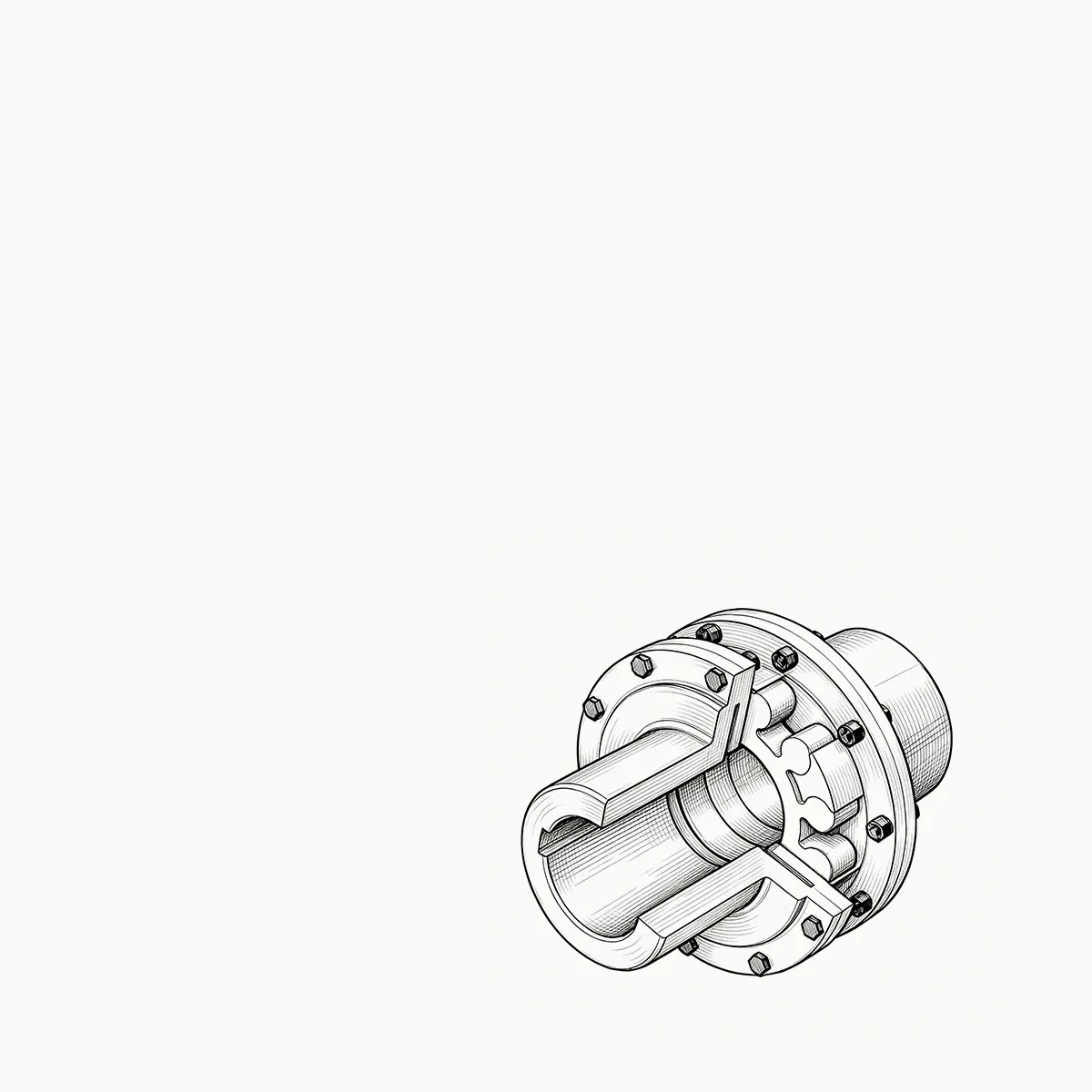
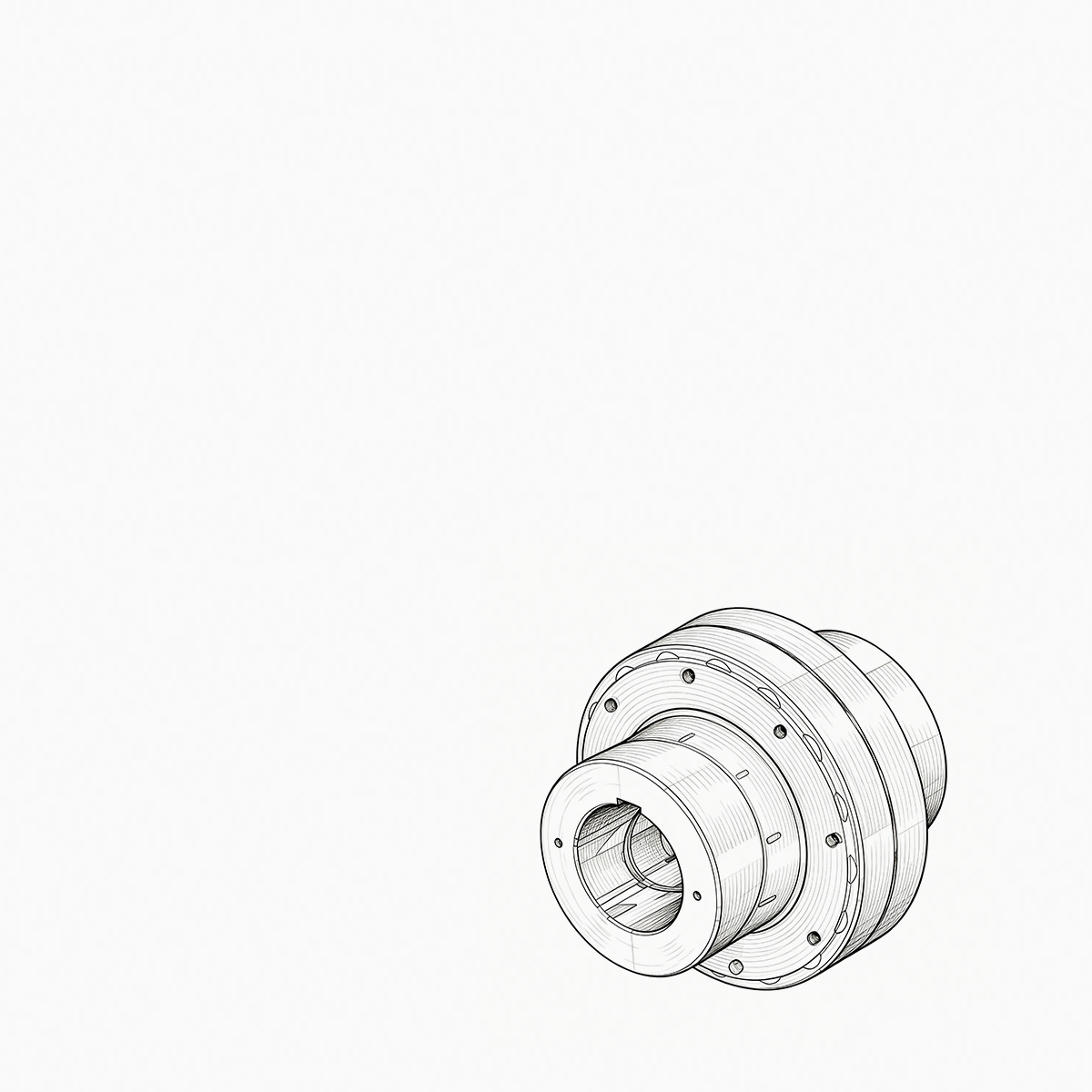
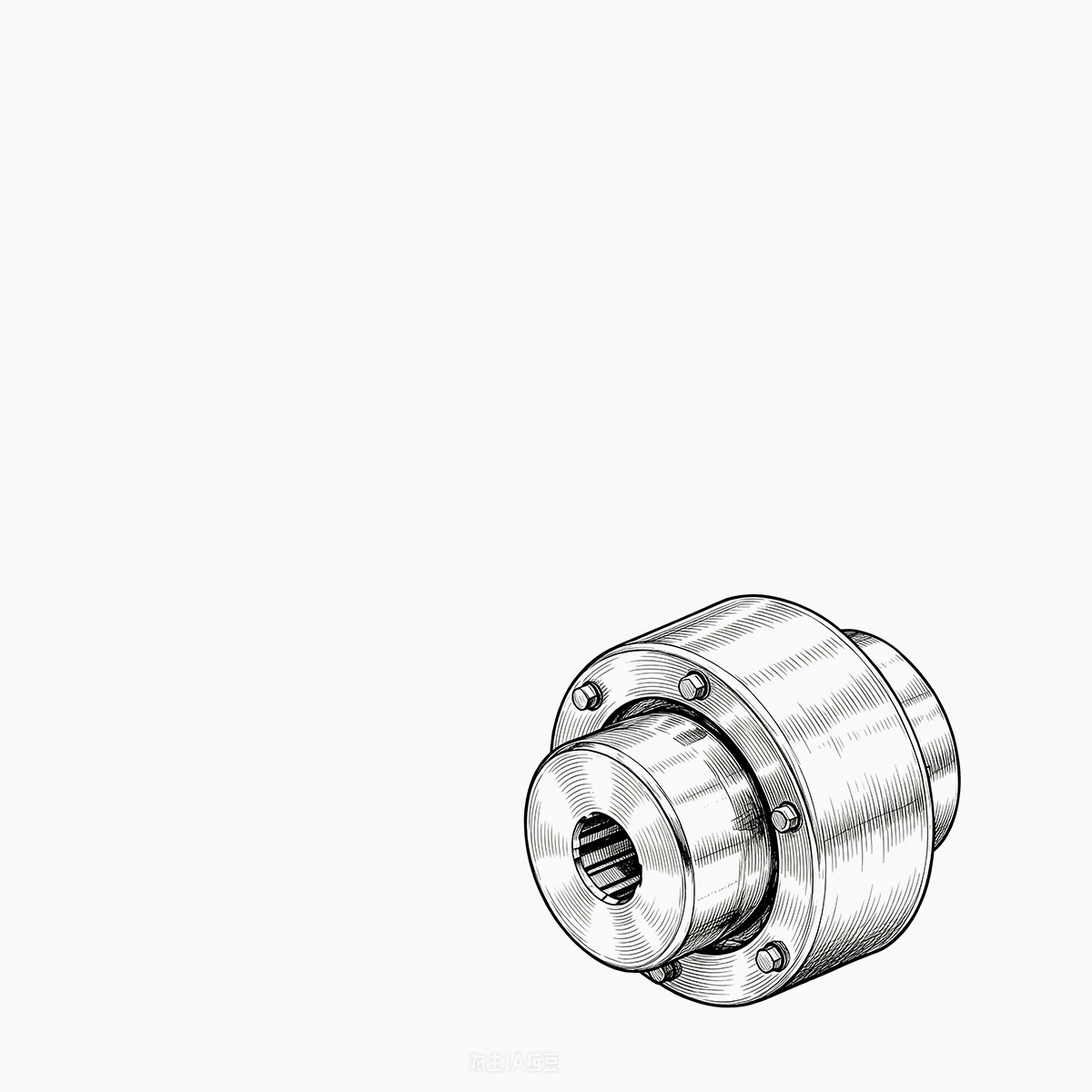
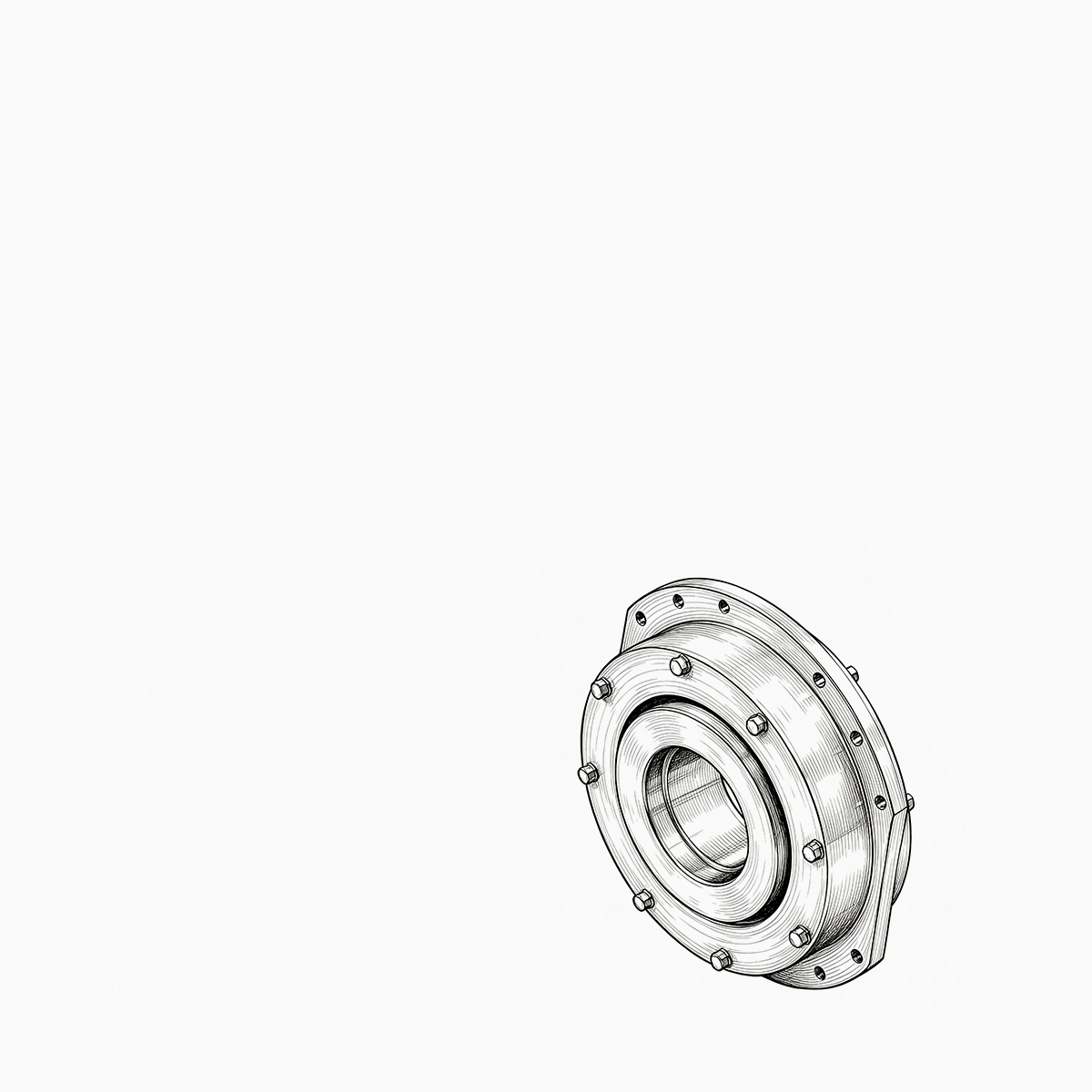
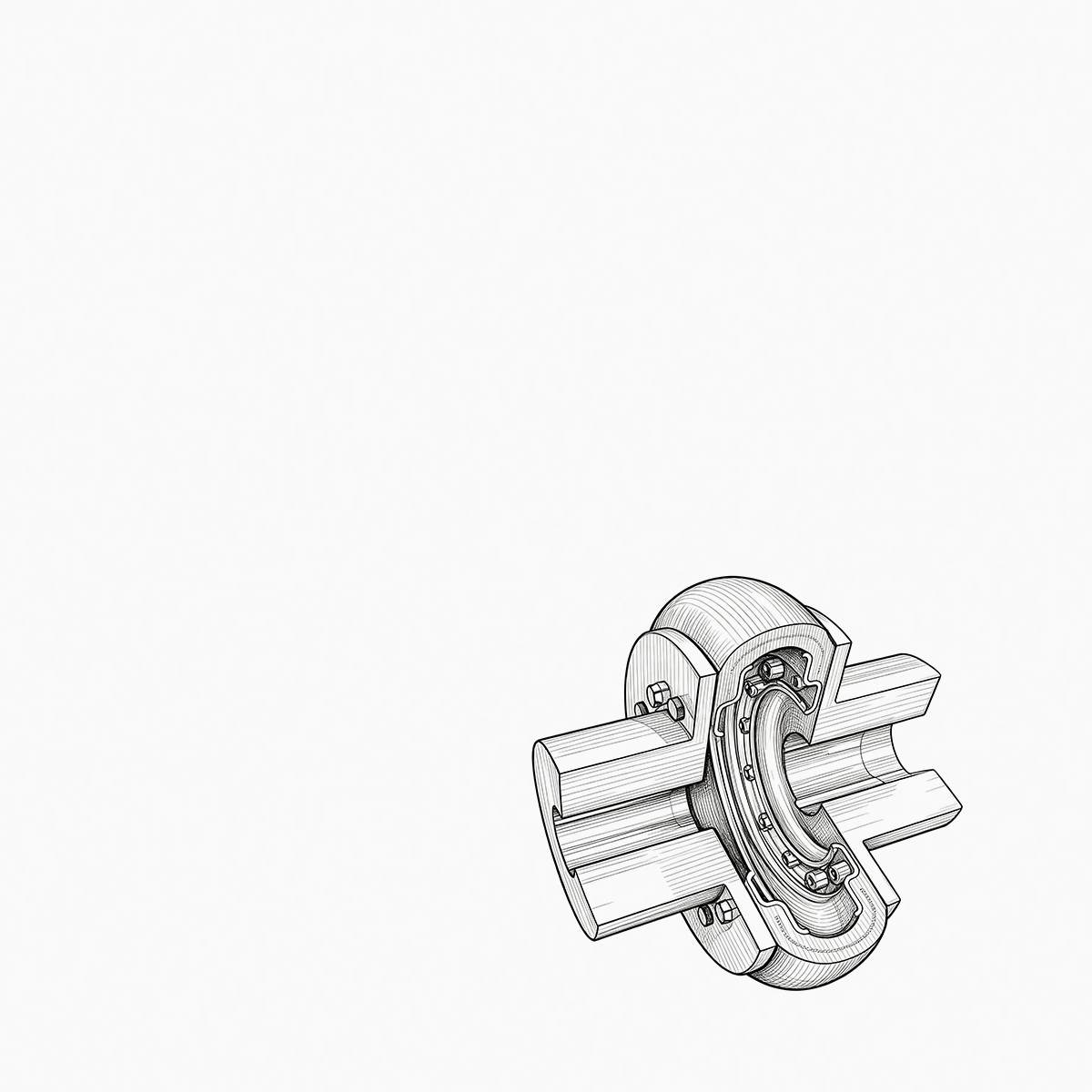

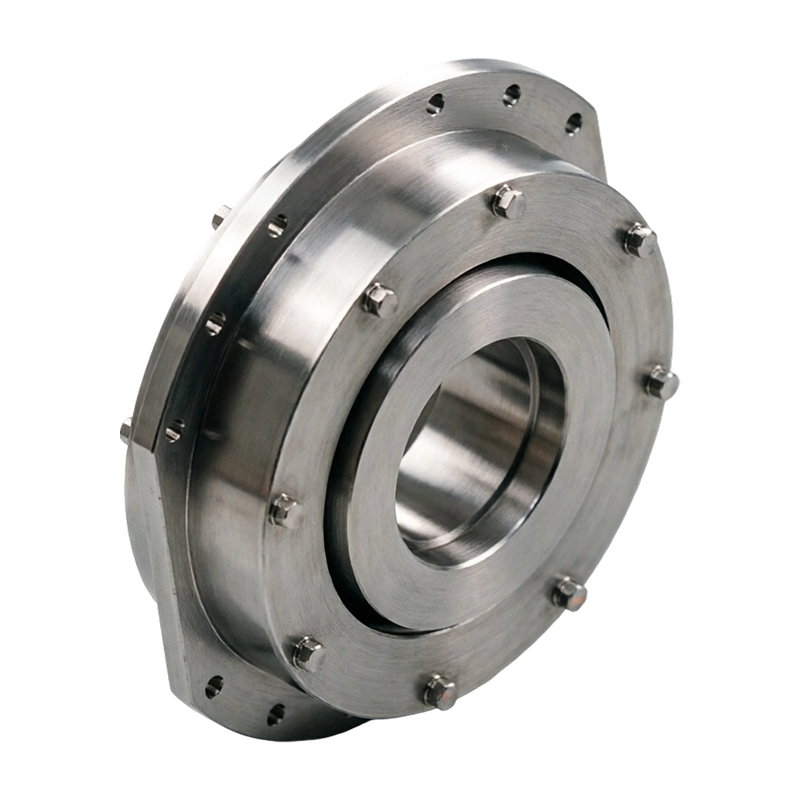
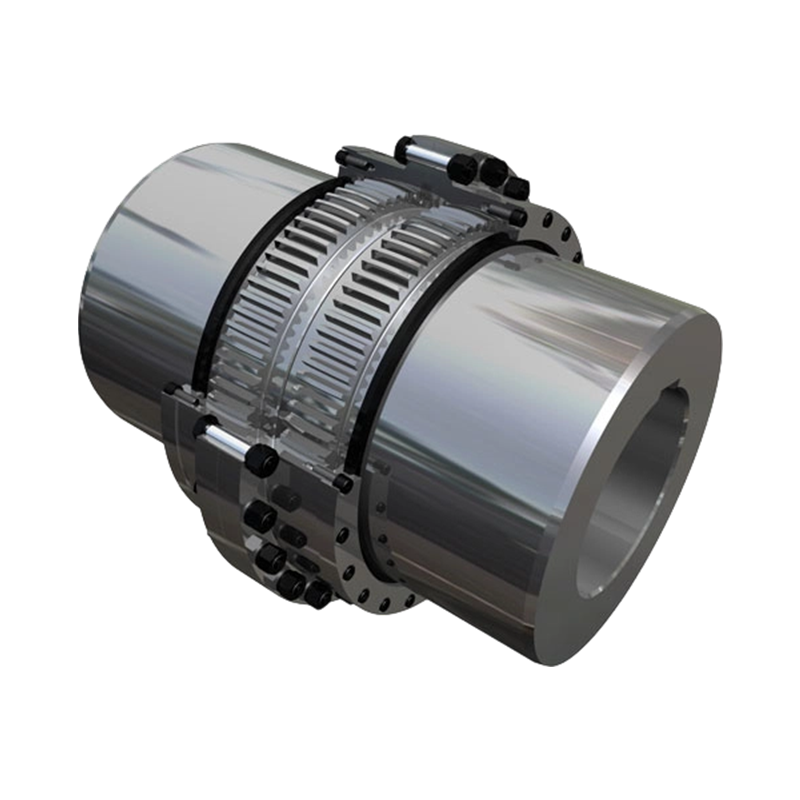
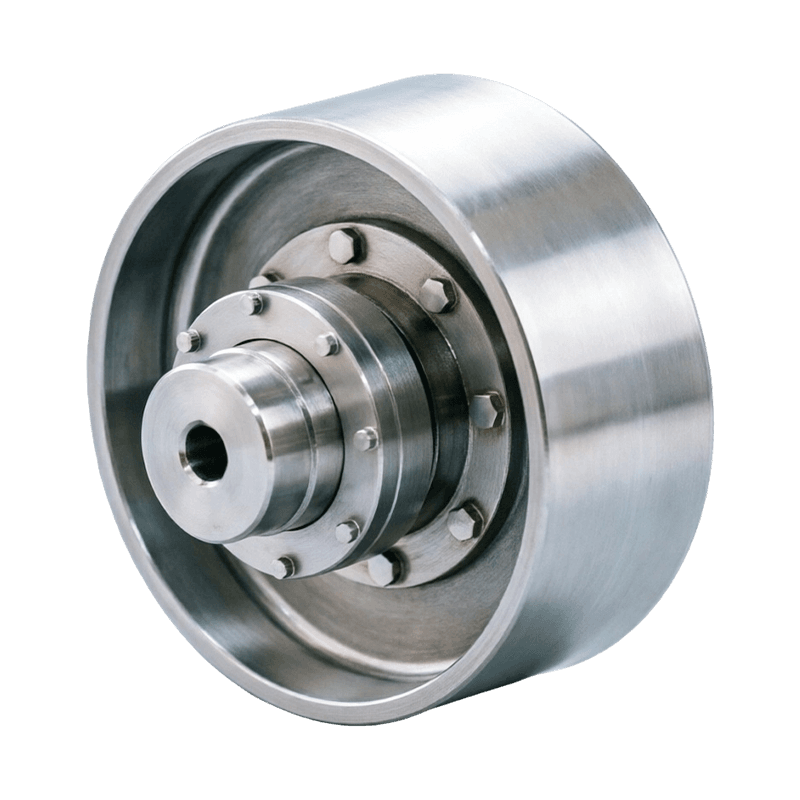
A mill drive rarely fails without warning. It knocks at speed, throws a smear of dark grease around the sleeve flange, ...
READ MORE
DC Type Crowned-Gear Drum Coupling for Heavy-Duty Hoisting Systems
Admin 2026-10-17Content
- 1 Product Overview and Intended Application
- 2 Structural Design of the DC Type Coupling
- 3 How the Crowned Gear Tooth Design Improves Performance
- 4 Torque Transmission and Radial-Load Support
- 5 Advantages Compared with General-Purpose Couplings
- 6 Manufacturing Strengths and Quality-Oriented Production
- 7 Materials, Lubrication, and Environmental Protection
- 8 Installation Recommendations
- 9 Maintenance and Inspection Program
- 10 Application Industries
- 11 Technical Selection Considerations
- 12 Why Choose an Experienced Industrial Coupling Manufacturer
- 13 Service, Customization, and Supply Support
- 14 Frequently Asked Questions
- 14.1 What is the main purpose of a DC type crowned-gear drum coupling?
- 14.2 Can this coupling transmit axial loads?
- 14.3 What is the advantage of crowned or drum-shaped teeth?
- 14.4 How does the coupling accommodate alignment variation?
- 14.5 Is the coupling suitable for general industrial machinery?
- 14.6 Why are the oil port and oil drain port important?
- 14.7 What should be checked before selecting a coupling?
- 14.8 How often should the coupling be inspected?
- 14.9 What may cause premature tooth wear?
- 14.10 Can the product be customized?
- 14.11 What information should be provided for a technical quotation?
- 14.12 What makes a specialized drum coupling different from a standard flexible coupling?
- 15 Conclusion
- 16 References
- 17 Product: DC Type Crowned-Gear Drum Coupling
Modern lifting and hoisting equipment depends on transmission components that can carry high torque, withstand substantial radial loading, and continue operating reliably under demanding working conditions. The coupling between a speed reducer and a drum is particularly important because it must transfer power efficiently while accommodating the operational alignment conditions created by large rotating assemblies. The DC type crowned-gear drum coupling is designed specifically for this duty. It combines a crowned or drum-tooth gear connection with a spherical load-supporting structure, lubrication protection, sealing components, and practical inspection features.
Unlike a general-purpose flexible coupling, this product is engineered for hoisting transmission systems in which the coupling must transmit torque while supporting considerable radial loads. Its principal application is the connection between a reducer output shaft and a crane drum or similar drum-driven mechanism. The coupling is designed to handle the demanding interaction between torque transmission, shaft alignment, drum rotation, and radial force. It is not intended to transmit axial loads, making correct system design and installation essential.
The main operating advantage of the DC type design lies in the combination of crowned gear teeth and a self-aligning spherical bearing arrangement. The external gear sleeve and internal gear ring transmit torque through a precision-meshed tooth connection. At the same time, the outer spherical surface of the load-bearing ring works against the corresponding internal bearing surface of the flange internal gear ring. This creates a self-aligning support that helps accommodate operational alignment variation and carries radial loads generated during hoisting.
For users of cranes, hoists, lifting machinery, transport systems, metallurgical equipment, mining machinery, and other heavy industrial installations, coupling selection directly influences uptime, maintenance frequency, safety management, and total operating cost. A properly selected crowned-gear drum coupling can reduce tooth-end stress, improve load distribution, protect the connected shafts, and support stable power transmission over an extended service period.
DC Type Crowned-Gear Drum Coupling
Product Overview and Intended Application
The DC type crowned-gear drum coupling is a specialized mechanical transmission component for heavy-duty hoisting systems. Its primary role is to connect a speed reducer to a drum and transfer rotational power from the reducer to the drum. In a crane application, the drum may be responsible for winding a wire rope or operating another lifting mechanism. The coupling therefore forms a critical link in the complete drive train.
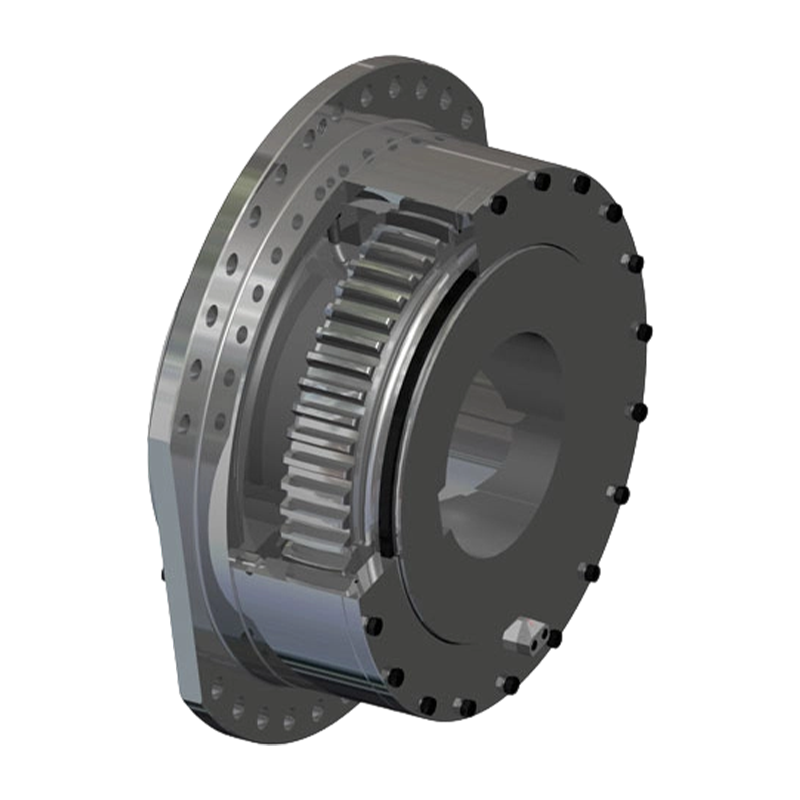
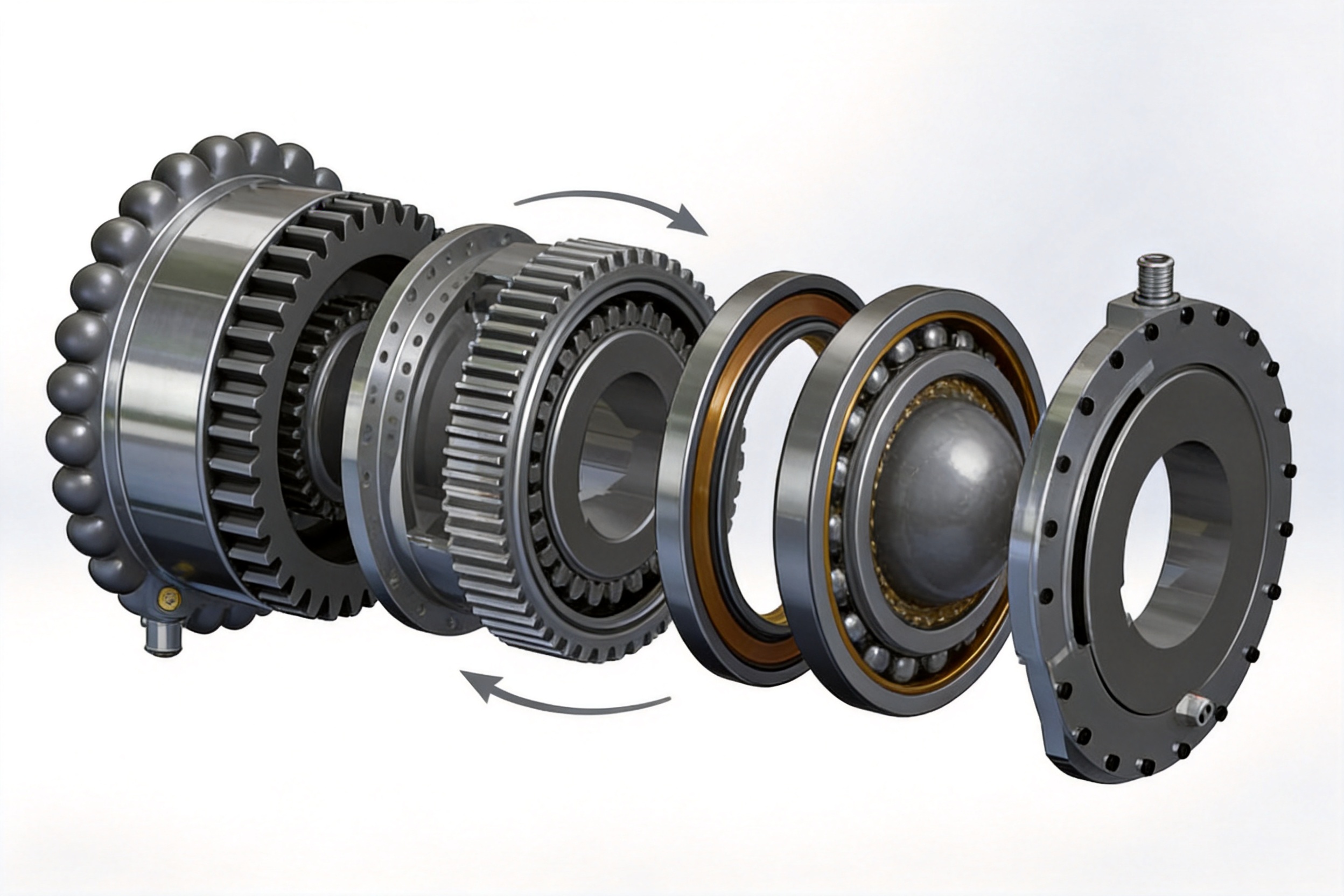
The coupling is constructed from several coordinated assemblies. These include an externally toothed sleeve with crowned drum teeth, a flange internal gear ring with a connecting flange, a load-bearing ring with an outer spherical surface, inner and outer end covers, sealing rings, a positioning wear indicator, a lubrication oil port, and an oil drain port. Each part contributes to either power transmission, radial load support, lubrication, sealing, inspection, or connection with adjacent equipment.
The external gear sleeve is normally connected to the reducer or shaft-side transmission member. Its drum-shaped external teeth engage with the internal teeth of the flange gear ring. The flange assembly is connected to the drum or the corresponding machine structure. As the reducer rotates, torque passes through the gear engagement and drives the drum. The design provides a compact transmission path while integrating radial-load support into the coupling structure.
The coupling is especially appropriate for equipment that operates under heavy load, intermittent impact, frequent starting and stopping, or variable lifting conditions. These conditions are common in overhead cranes, gantry cranes, port machinery, steel mill lifting systems, mining hoists, construction equipment, and industrial handling lines. In each application, the coupling should be selected according to torque, speed, radial load, drum geometry, environmental conditions, installation space, and maintenance requirements.
Because the DC type coupling is not designed for axial load transmission, axial forces should be controlled by the machine’s bearings, drum support arrangement, or other dedicated structural components. The coupling should not be used as a substitute for an axial thrust bearing. Correct division of loads between the coupling and the surrounding machine structure is one of the most important conditions for safe and durable operation.
Structural Design of the DC Type Coupling
Externally Toothed Sleeve
The externally toothed sleeve is one of the principal torque-transmitting elements. Its outer surface contains specially formed crowned teeth that mesh with the internal teeth of the flange gear ring. The sleeve transfers torque through multiple engaged teeth, allowing the load to be distributed across the gear circumference rather than concentrated at a single contact location.
The sleeve design is especially important in a hoisting coupling because the connected shafts and drum may experience small angular or positional variations during operation. A rigid straight-tooth connection is less capable of accommodating such conditions and may create concentrated contact at the tooth ends. The crowned tooth profile is intended to improve contact conditions and reduce the risk of edge loading.
Flange Internal Gear Ring
The flange internal gear ring surrounds the external gear sleeve and provides the internal tooth surface needed for torque transmission. Its flange section connects the coupling to the drum or related machine component. The gear ring also incorporates the internal spherical bearing surface that works with the load-bearing ring.
Because the flange gear ring performs both transmission and structural support functions, its dimensional accuracy and surface quality are important. The internal gear profile must maintain consistent engagement with the external sleeve, while the spherical bearing surface must provide controlled contact for radial-load support. The connecting flange must also match the bolt pattern, mounting dimensions, and structural requirements of the drum assembly.
Load-Bearing Ring with Spherical Outer Surface
The load-bearing ring provides the coupling’s dedicated radial support function. Its outer spherical surface contacts the internal bearing surface of the flange internal gear ring. This arrangement forms a self-aligning spherical bearing within the coupling body.
During crane operation, the drum and reducer may not remain perfectly aligned under all load conditions. Deflection, assembly tolerances, structural deformation, and changing rope forces can produce radial displacement or angular variation. The spherical support arrangement helps accommodate these operating conditions while maintaining a controlled load path.
The spherical bearing structure is a major distinction between a specialized drum coupling and many standard flexible couplings. A conventional coupling may compensate for misalignment but may not be designed to carry the same radial loads associated with a crane drum. The DC type product integrates alignment compensation and radial-load support into a purpose-built assembly for hoisting machinery.
End Covers and Sealing Rings
The inner and outer end covers help enclose the internal gear and bearing components. Sealing rings help retain lubricant inside the working chamber and reduce the entry of dust, moisture, and other contaminants. Effective sealing is essential because gear teeth and spherical bearing surfaces depend on a stable lubrication film.
In industrial environments, couplings may be exposed to metal dust, mineral particles, rainwater, grease, elevated temperatures, or cleaning fluids. The end-cover and sealing arrangement provides a protective barrier around the working components. Although no seal can compensate for severe contamination or improper maintenance, a well-designed enclosure can significantly improve the operating stability of the internal mechanism.
Wear Indicator, Oil Port, and Drain Port
The positioning wear indicator provides a practical method for checking the relative condition or movement of the coupling assembly. It supports preventive inspection by helping maintenance personnel identify abnormal wear or changes in the coupling’s operating position before a serious failure occurs.
The lubrication oil port allows lubricant to be introduced into the internal working chamber. The oil drain port facilitates lubricant removal during service. Together, these features simplify routine maintenance and make it easier to establish a repeatable lubrication and inspection program.
How the Crowned Gear Tooth Design Improves Performance
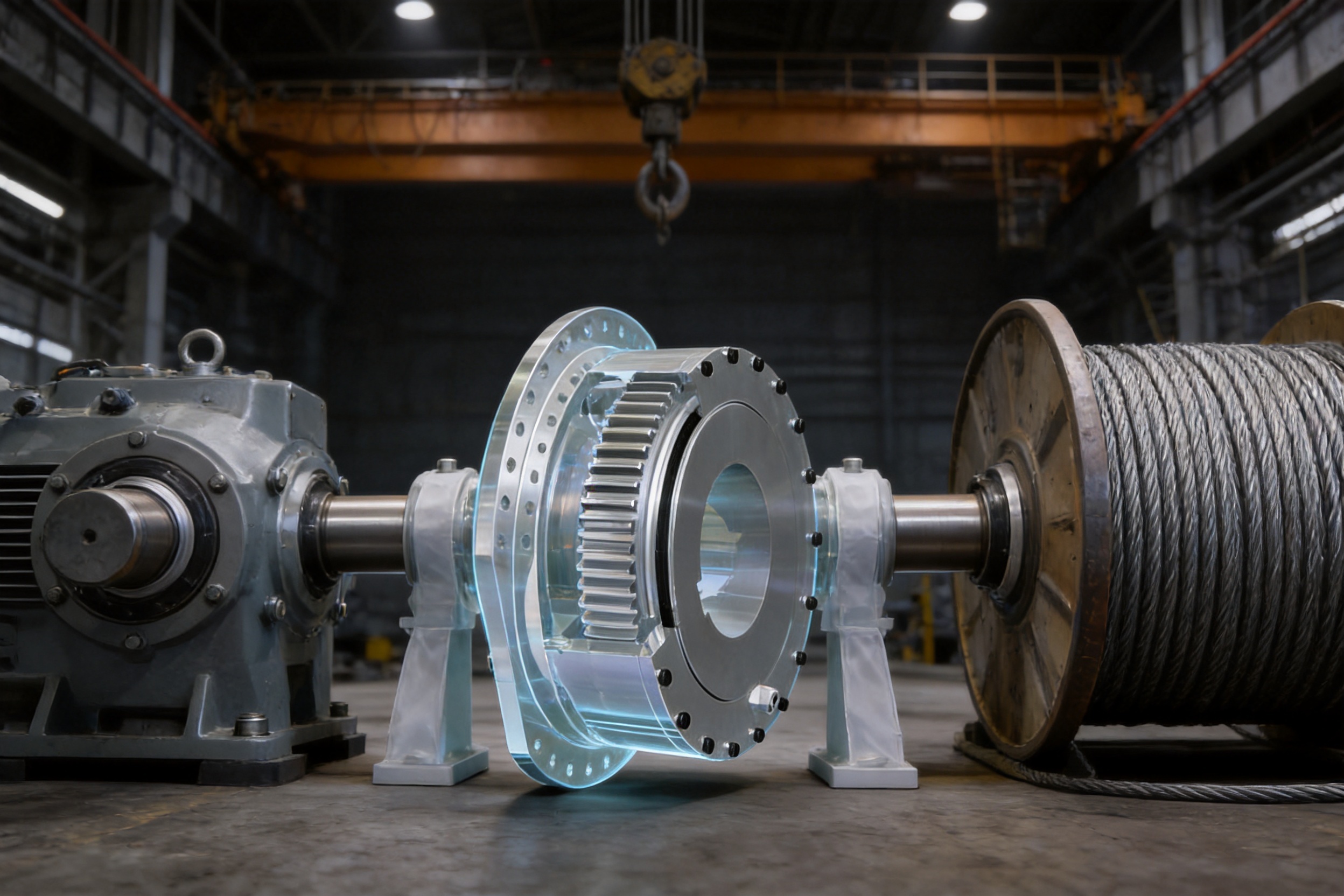
The crowned gear tooth is the defining design feature of the DC type coupling. Instead of relying on a simple straight tooth surface, the tooth is formed with a specially curved profile. This geometry is intended to improve the way the mating teeth contact one another as the coupling rotates and as the connected equipment experiences operating variation.
In a conventional straight-tooth coupling, misalignment or shaft deflection can cause the teeth to contact primarily near the tooth ends. This condition, commonly described as edge contact or tooth-end compression, can produce localized stress concentration. If repeated over many operating cycles, concentrated contact may accelerate tooth wear, increase noise, damage the lubricant film, and shorten the service life of the gear set.
The crowned profile allows the tooth contact area to remain more controlled when the connected components experience angular or radial changes. The curved tooth surface reduces the likelihood that the load will be concentrated sharply at an edge. As a result, the coupling can achieve more favorable contact conditions in demanding hoisting applications.
The benefits of the crowned tooth design include reduced tooth-end pressure, improved load distribution, lower operating noise, improved resistance to localized wear, and a longer expected tooth surface service life when the coupling is correctly selected, lubricated, installed, and maintained. These benefits are particularly valuable where the equipment starts and stops frequently or where the transmitted torque changes significantly during lifting.
The crowned tooth profile does not eliminate the need for proper alignment. It is a load-accommodation feature, not a replacement for accurate installation. Excessive misalignment, inadequate support, insufficient lubrication, overload, or incorrect torque selection may still cause premature damage. The greatest benefit is achieved when the gear design works together with accurate machining, suitable materials, correct assembly, and regular maintenance.
Torque Transmission and Radial-Load Support
The DC type coupling performs two related but distinct functions. The first is the transmission of rotational torque through the meshing external and internal gear teeth. The second is the support of radial loads through the spherical contact between the load-bearing ring and the flange internal gear ring.
Separating these functions within the coupling structure helps create a more appropriate load path for a crane drum drive. The gear teeth are primarily responsible for transferring rotational force. The spherical bearing structure is primarily responsible for supporting radial forces and accommodating operating alignment variation. This arrangement allows the coupling to serve the specific mechanical requirements of a drum-connected hoisting system.
Torque transmission capacity depends on factors such as gear size, tooth geometry, material strength, tooth width, rotational speed, duty cycle, lubrication, shock loading, and service conditions. The coupling should always be selected using the actual operating torque and appropriate service factors rather than rated motor power alone. Hoisting equipment can experience acceleration loads, sudden load changes, braking impacts, and repeated cycles that are more demanding than steady rotational machinery.
Radial-load capacity is equally important. The drum may generate substantial radial forces through rope tension, drum weight, structural deflection, and the position of the lifted load. These forces must be transferred through the appropriate internal support surfaces and into the machine structure. The spherical load-bearing ring helps manage this condition while allowing the coupling to accommodate limited operational variation.
Axial load remains outside the intended function of this coupling. The equipment designer must provide suitable components to absorb axial forces and must ensure that the coupling is installed without unintended axial restraint. Failure to distinguish radial, torque, and axial load paths can result in abnormal stress, excessive wear, or damage to connected equipment.
Advantages Compared with General-Purpose Couplings
Purpose-Built Hoisting Performance
A general-purpose flexible coupling may be suitable for motors, pumps, fans, conveyors, or other systems with relatively moderate radial loading. However, it may not provide the structural support required by a crane drum. The DC type coupling is designed around the operating conditions of hoisting transmission systems, where high torque and radial loading occur together.
Its specialized structure allows the product to connect a reducer and drum while providing an integrated radial-support function. This reduces the need to adapt a standard coupling to a duty for which it was not designed. A purpose-built solution can simplify equipment design and provide a more predictable performance basis.
Improved Tooth Contact
The crowned tooth profile provides a technical advantage over simple straight-tooth designs by reducing the risk of tooth-end compression and stress concentration. Better contact conditions can help reduce localized damage, noise, and uneven wear. This is particularly useful for cranes that operate through many repeated lifting cycles.
Integrated Self-Aligning Support
The spherical contact between the load-bearing ring and the flange internal gear ring allows the coupling to accommodate operating alignment variation while supporting radial loads. Many standard couplings provide flexibility but do not offer the same integrated radial bearing arrangement. The DC type design addresses both needs within one coordinated assembly.
Protection Through Enclosure and Sealing
The internal gear and spherical support surfaces are enclosed by end covers and sealing rings. This design helps protect the lubricant and working surfaces from external contamination. A protected working chamber can contribute to more stable lubrication and lower maintenance frequency, especially in industrial environments where dust, moisture, and debris are present.
Practical Maintenance Features
The lubrication oil port and oil drain port support routine servicing without requiring unnecessary disassembly. The positioning wear indicator provides a visible inspection reference. These features can help maintenance teams move from reactive repair toward planned inspection and preventive maintenance.
Efficient Use of Installation Space
By combining gear transmission and radial-load support in a compact coupling assembly, the DC type product can help reduce the need for separate adaptation components. This may simplify the mechanical arrangement between the reducer and the drum. Actual dimensional suitability must be confirmed against the equipment drawing, shaft dimensions, flange arrangement, and available installation space.
| Performance Requirement | DC Type Crowned-Gear Drum Coupling Response | Practical Benefit |
|---|---|---|
| High torque transmission | External crowned gear sleeve meshing with an internal gear ring | Reliable power transfer for reducer-to-drum drives |
| Radial loading | Spherical load-bearing ring and internal bearing surface | Dedicated support for radial forces generated by the drum system |
| Operating misalignment | Self-aligning spherical structure and crowned tooth geometry | Improved tolerance of controlled alignment variation |
| Tooth-end stress | Specially curved drum tooth profile | Reduced edge contact and more favorable load distribution |
| Lubrication maintenance | Dedicated oil port and oil drain port | More convenient lubricant replenishment and replacement |
| Contamination protection | End covers and sealing rings | Improved protection of internal working surfaces |
| Condition monitoring | Positioning wear indicator | More convenient visual inspection and preventive maintenance |
| Application focus | Hoisting, crane, drum, and heavy industrial transmission systems | Performance matched to demanding lifting equipment |
Manufacturing Strengths and Quality-Oriented Production
The performance of a crowned-gear drum coupling depends not only on its conceptual design but also on the precision and consistency of its manufacturing process. Gear tooth accuracy, spherical surface geometry, flange dimensions, sealing locations, and assembly tolerances all influence the final product. A coupling with a strong design concept must be produced under controlled conditions to deliver reliable field performance.
Zhenjiang Orienthold Machinery Co., Ltd. integrates design, production, and service. The company specializes in couplings and papermaking machinery and serves industries including transportation, metallurgy, chemical engineering, mining, construction, and hoisting. This industrial background supports an understanding of equipment that operates under demanding loads and continuous production requirements.
The company maintains strong technical capabilities, advanced equipment, and comprehensive inspection and testing methods. These resources are important for producing a coupling with multiple interacting components. The external gear sleeve, internal gear ring, load-bearing ring, end covers, seals, and connection flange must all meet their respective dimensional and functional requirements before the complete assembly can be released.
Design and Engineering Coordination
Manufacturing begins with the coordination of product design and application requirements. A drum coupling must be evaluated as part of the complete drive system rather than as an isolated component. Important inputs include rated and peak torque, reducer output speed, radial load, duty cycle, starting frequency, braking conditions, ambient environment, shaft arrangement, and drum connection dimensions.
Engineering coordination helps determine the appropriate coupling size, gear geometry, flange configuration, sealing arrangement, lubrication method, and inspection points. It also helps ensure that the coupling does not receive axial loads beyond its intended function. For custom applications, the company can use its design and production capabilities to address specific connection dimensions or equipment requirements.
Precision Gear Manufacturing
The external and internal gear components require controlled machining to produce accurate tooth form, pitch, concentricity, and surface quality. The crowned profile must be formed consistently across the tooth circumference so that the designed contact behavior is maintained during rotation.
Precision gear manufacturing also requires attention to the relationship between the tooth surface and the component’s central axis. Errors in concentricity or runout can create uneven contact, vibration, and localized loading. Controlled machining and inspection help reduce these risks and support stable engagement between the gear sleeve and internal gear ring.
For a heavy-duty coupling, the final gear quality is not judged only by visual appearance. Dimensional inspection, tooth-form verification, surface checks, and assembly checks are necessary to confirm that the product meets its intended functional requirements. The company’s comprehensive testing approach supports this quality-control process.
Machining of Spherical Bearing Surfaces
The outer spherical surface of the load-bearing ring and the corresponding internal bearing surface of the flange gear ring must work together accurately. Their geometry affects radial-load distribution, alignment behavior, friction, and wear. Uneven or inaccurate spherical surfaces may produce concentrated loading or restricted movement.
Controlled machining and inspection of these surfaces help ensure that the self-aligning support operates as intended. The spherical components must also be properly integrated with the gear and flange geometry so that the coupling can transmit torque while supporting radial forces without interference.
Assembly and Functional Inspection
Assembly quality is essential because the coupling contains multiple interacting parts. The gear sleeve, internal gear ring, load-bearing ring, covers, seals, indicator, and ports must be assembled in the correct sequence and with appropriate clearances. Improper assembly can cause friction, leakage, tooth interference, or abnormal wear even when individual parts meet their dimensional requirements.
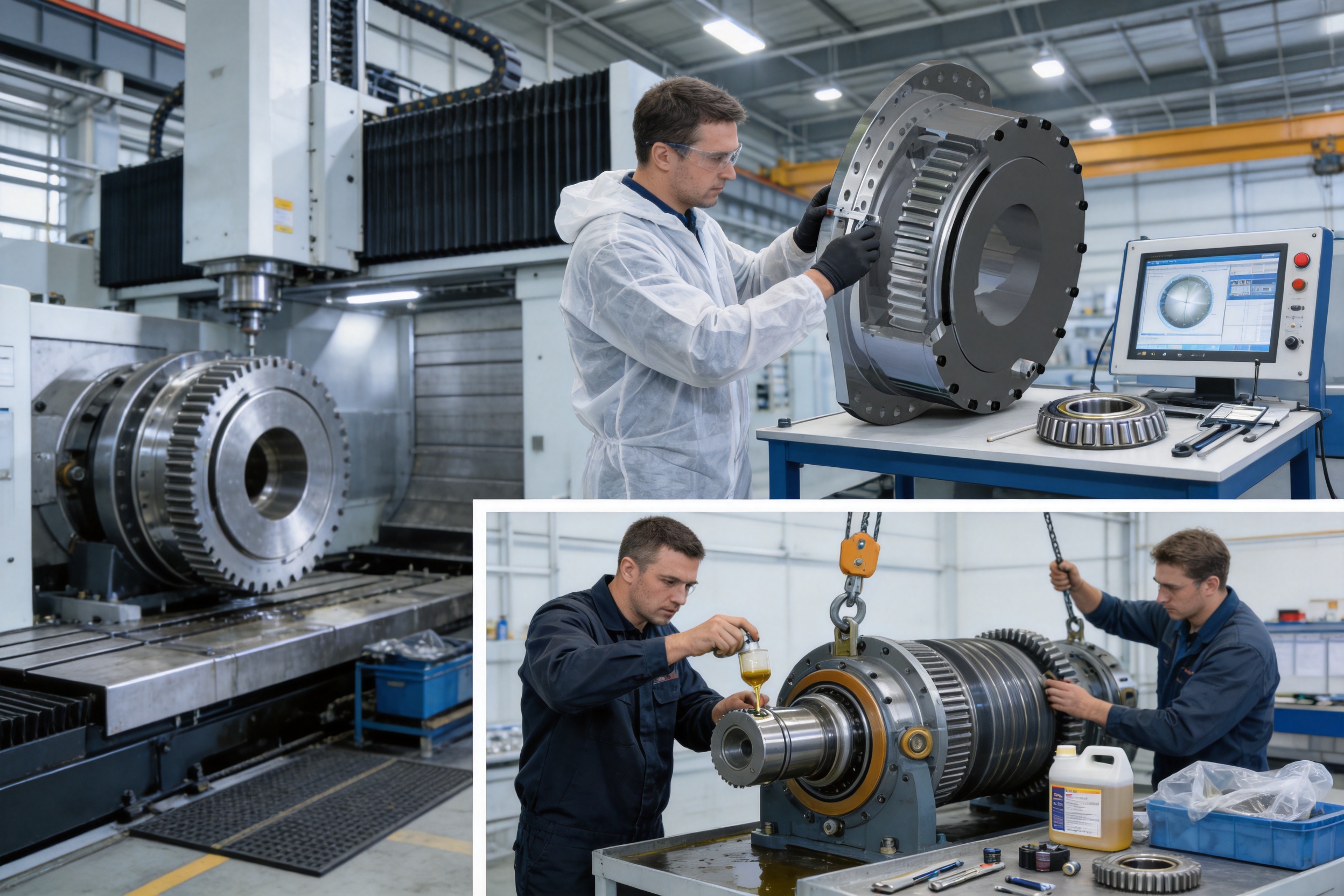
Functional inspection may include checking gear engagement, rotation smoothness, sealing condition, indicator position, flange alignment, and lubricant access. Inspection and testing equipment allow production personnel to verify product quality before shipment. A strict quality supervision system helps establish consistent manufacturing practices across production batches.
Standards and Quality Management
The company’s products comply with applicable national standards, while its papermaking machinery technology and quality have reached international levels. For coupling buyers, quality management is particularly important because the product is often installed in equipment where unexpected downtime can interrupt an entire production line.
Documented inspection procedures, traceable production control, and final quality checks help provide a more dependable supply process. Customers requiring special documentation, inspection records, or project-specific quality information should confirm the requirements during the quotation and technical review stages.
Materials, Lubrication, and Environmental Protection
The service life of a drum coupling is influenced by the interaction of material selection, tooth geometry, heat treatment or surface condition, lubrication, sealing, and operating load. The specific material grade and treatment should be determined according to the coupling size, torque, speed, environment, and applicable technical requirements.
Gear teeth must resist repeated contact stress, bending stress, impact loading, and wear. The load-bearing ring and spherical surfaces must maintain their shape and surface condition while supporting radial loads. Flanges and covers must provide sufficient structural strength and dimensional stability. Sealing components must remain effective over the expected temperature and environmental range.
Lubrication is essential for both the gear teeth and the spherical bearing surfaces. The lubricant reduces friction, limits wear, helps dissipate heat, and protects surfaces against corrosion. The correct lubricant type, quantity, replacement interval, and operating-temperature range should be established according to the manufacturer’s technical instructions and the actual working environment.
Under-lubrication can lead to metal-to-metal contact, increased temperature, accelerated tooth wear, noise, and possible seizure. Over-lubrication may create leakage, churning losses, seal stress, or contamination problems. Maintenance personnel should therefore avoid treating lubrication as a one-time installation task. It should be managed as part of a planned service program.
The oil port and drain port support this program by making lubricant replenishment and replacement more convenient. Before adding lubricant, the surrounding area should be cleaned to prevent foreign matter from entering the coupling. Used lubricant should be inspected for metallic particles, discoloration, water contamination, or unusual odor, as these may indicate abnormal wear or seal failure.
The end covers and sealing rings help protect the internal chamber, but the external condition of the seals should still be checked periodically. Cracks, hardening, deformation, leakage, or damage may allow contaminants to enter or lubricant to escape. Seal replacement should be carried out with suitable parts and proper installation tools to avoid damaging sealing surfaces.
Installation Recommendations
Correct installation is necessary to obtain the advantages of the crowned gear tooth and spherical support structure. Before installation, personnel should verify the coupling model, dimensions, shaft arrangement, flange connection, key or splined connection where applicable, and the required torque and radial-load capacity.
The reducer, drum, and coupling support structure should be inspected for damage, burrs, contamination, and dimensional defects. Mounting faces should be clean and free from raised material that could prevent accurate seating. Fasteners should be suitable for the application and tightened using an appropriate sequence and torque procedure.
The connected shafts should be checked for alignment within the allowable range. The coupling is designed to accommodate controlled operational variation, but excessive initial misalignment can create unnecessary tooth and bearing loads. Alignment should be checked after the reducer and drum are secured because structural movement may occur during tightening.
The coupling should be installed without forcing components into position through impact or excessive external load. Improper force can damage the gear teeth, spherical surfaces, seals, or flange. Assembly tools should apply force to suitable structural areas and should not transmit damaging loads through delicate sealing or tooth surfaces.
After assembly, the coupling should be rotated manually where practical to confirm smooth movement and the absence of abnormal interference. The sealing condition, lubricant level, oil port, drain port, wear indicator, and fasteners should be checked before commissioning.
Initial operation should be conducted under controlled conditions. Operators should observe noise, vibration, temperature, leakage, and movement at the inspection indicator. If abnormal conditions occur, the equipment should be stopped and the cause investigated before full-load operation begins.
Maintenance and Inspection Program
A planned maintenance program helps preserve the coupling’s performance and reduces the risk of unexpected downtime. The inspection interval should reflect the working cycle, load severity, operating environment, speed, and consequences of failure. Equipment used in continuous industrial production or critical lifting service may require more frequent inspections than equipment used intermittently.
Routine Visual Inspection
Routine inspection should include checking for lubricant leakage, damaged seals, loose fasteners, unusual displacement, corrosion, cracked covers, and contamination around the coupling. The positioning wear indicator should be observed and compared with the established reference condition.
Changes in the indicator position may suggest wear, movement, assembly problems, or abnormal loading. The indicator should not be viewed in isolation. Its condition should be considered together with noise, vibration, temperature, lubricant condition, and the visible state of the coupling.
Lubricant Inspection
Lubricant should be replenished according to the recommended service schedule and operating conditions. If the coupling works in a dusty, wet, hot, or chemically aggressive environment, the lubricant may require more frequent inspection or replacement.
Metal particles in the lubricant may indicate gear or spherical-surface wear. Water or other foreign material may suggest seal damage or condensation. Any unusual lubricant condition should lead to a more detailed inspection rather than simply adding fresh lubricant.
Gear Tooth Inspection
During planned shutdowns, the gear teeth should be inspected for pitting, scoring, spalling, cracking, unusual polishing, tooth-end wear, or uneven contact. The crowned tooth profile is intended to improve contact, but abnormal wear may still occur if the coupling is overloaded, misaligned, poorly lubricated, or exposed to contamination.
Uneven wear patterns can provide useful information about the operating condition. Wear concentrated at one side or one end of the teeth may indicate alignment problems or structural deflection. Severe pitting or cracking requires immediate technical evaluation.
Spherical Support Inspection
The load-bearing ring and corresponding spherical bearing surface should be examined for scoring, excessive clearance, galling, corrosion, or uneven contact. Since this area supports radial loads, deterioration can affect both coupling movement and the connected drum system.
Any inspection that requires opening the coupling should be carried out by trained personnel using appropriate procedures. Components should be protected from dirt during disassembly, and sealing surfaces should be checked before reassembly.
Application Industries
Crane and Hoisting Equipment
The primary application is crane and hoisting machinery. Overhead cranes, gantry cranes, bridge cranes, portal cranes, and other lifting systems may use reducer-to-drum transmissions that require high torque and radial-load support. The coupling is suited to this arrangement because it combines gear transmission with a spherical support structure.
Metallurgical Facilities
Steel mills and other metallurgical plants often use cranes and heavy material-handling equipment in hot, dusty, and demanding conditions. A protected coupling with suitable sealing and regular lubrication can support reliable service in these environments. Application-specific temperature, contamination, and maintenance conditions should be evaluated before selection.
Mining and Bulk Material Handling
Mining equipment and bulk-handling machinery may experience high shock loads, dust, vibration, and long operating cycles. A drum coupling designed for high torque and radial loading can be considered for appropriate hoisting and drum-drive applications. The selection should account for the severity of impact loading and the availability of maintenance access.
Construction Machinery
Construction hoists, lifting platforms, winches, and other construction equipment may require compact and durable reducer-to-drum connections. The DC type design can support these applications when its torque, radial-load, speed, environmental, and dimensional requirements are satisfied.
Transportation and Industrial Equipment
Transportation systems and industrial production lines may contain lifting or drum-driven mechanisms that operate under repeated duty cycles. The coupling’s integrated inspection and lubrication features can help maintenance teams manage these systems more efficiently.
Technical Selection Considerations
Choosing the correct coupling size requires more than comparing shaft diameters. The design team should evaluate rated torque, peak torque, service factor, rotational speed, radial load, operating cycle, starts per hour, braking method, drum size, reducer output, shaft extension, flange dimensions, ambient temperature, contamination, and available maintenance space.
Rated torque should be based on the actual operating condition, including acceleration and braking effects. Hoisting systems may experience dynamic loads that are not visible in a simple steady-state power calculation. The coupling should have an appropriate margin for these conditions without being unnecessarily oversized.
Rotational speed affects tooth contact, lubricant behavior, heat generation, and balance requirements. The coupling should be suitable for the maximum operating speed rather than only the average speed. If the equipment operates across a wide speed range, the full range should be reviewed during technical selection.
Radial load should be calculated from the drum weight, rope tension, drum arrangement, bearing spacing, and structural forces. The coupling should not be expected to absorb loads that should be carried by dedicated drum bearings or machine supports. A complete load analysis helps ensure that each component performs its intended function.
Environmental conditions also influence the selection. Outdoor cranes may encounter rain, humidity, temperature changes, and corrosion. Mining and metallurgical equipment may operate with dust, scale, particles, or elevated temperatures. The sealing, lubricant, surface protection, and maintenance plan should be matched to the environment.
For custom or replacement applications, customers should provide available drawings, shaft dimensions, flange details, reducer information, drum information, operating torque, speed, radial load, and photographs where appropriate. This information allows the manufacturer to review compatibility and recommend a suitable configuration.
Why Choose an Experienced Industrial Coupling Manufacturer
Purchasing a drum coupling from an experienced industrial manufacturer provides advantages beyond the physical product. The manufacturer can support technical selection, dimensional review, customization, production coordination, inspection, packaging, logistics, installation guidance, and maintenance communication.
Zhenjiang Orienthold Machinery Co., Ltd. combines product design, manufacturing, and service. Its product range includes drum gear couplings, diaphragm couplings, elastic sleeve pin couplings, cross universal couplings, plum elastic couplings, elastomeric pin couplings, elastomeric pin gear couplings, crane drum couplings, and tire couplings. This broad coupling portfolio allows the company to evaluate different transmission requirements and recommend a product category according to the application.
The company serves transportation, metallurgy, chemical engineering, mining, construction, and hoisting industries. Its experience across these sectors supports a practical understanding of heavy machinery, industrial maintenance, and project-based equipment supply.
Advanced equipment and comprehensive testing methods support the manufacturing of precision coupling components. A strict quality supervision system helps maintain consistency from incoming materials and machining through assembly and final inspection. The company also offers pre-sales consultation, customization, flexible logistics and payment options, and maintenance support.
For international customers, communication and technical coordination are especially important. Product drawings, inspection requirements, packaging instructions, delivery schedules, and spare-parts planning should be discussed before production. Clear technical documentation reduces the risk of installation problems and helps ensure that the coupling is integrated correctly into the customer’s equipment.
Service, Customization, and Supply Support
Different cranes and hoisting systems may require different flange dimensions, shaft connections, gear sizes, sealing arrangements, or inspection provisions. Customization may be necessary when replacing an existing coupling, adapting to a particular reducer, or fitting a newly designed drum assembly.
Customization should begin with an engineering review rather than a simple dimensional change. Any change to the flange, gear, bearing surface, seal, or housing can affect torque capacity, radial-load distribution, alignment behavior, and lubrication. The manufacturer should therefore evaluate the complete assembly and confirm the effect of the requested modification.
Production planning should include inspection points appropriate to the project. Customers may require dimensional reports, material documentation, assembly records, performance checks, or special packaging. These requirements should be confirmed before manufacturing begins so that the quality process reflects the project’s needs.
Reliable packaging is also important. Couplings are precision mechanical assemblies and should be protected against impact, moisture, corrosion, and contamination during transport and storage. The product should be stored in a dry, clean location and should not be exposed to unnecessary shock or prolonged environmental degradation before installation.
Maintenance support can include guidance on lubrication, inspection intervals, wear monitoring, spare seals, replacement components, and troubleshooting. A supplier that remains available after delivery can help customers reduce downtime and maintain the coupling in suitable operating condition.
Frequently Asked Questions
What is the main purpose of a DC type crowned-gear drum coupling?
Its main purpose is to connect a speed reducer with a drum in a hoisting or lifting transmission system. It transmits torque through meshing external and internal gear teeth while supporting radial loads through a spherical load-bearing structure.
Can this coupling transmit axial loads?
No. The DC type crowned-gear drum coupling is designed for torque transmission and radial-load support, not axial-load transmission. Axial forces should be managed by suitable bearings or structural components in the equipment.
What is the advantage of crowned or drum-shaped teeth?
The crowned tooth profile improves the contact condition between the external gear sleeve and internal gear ring. It helps reduce tooth-end compression and stress concentration, which can lower noise, reduce localized wear, and extend tooth surface service life when the coupling is correctly applied and maintained.
How does the coupling accommodate alignment variation?
The coupling uses both crowned gear teeth and a spherical support arrangement. The outer spherical surface of the load-bearing ring contacts the internal bearing surface of the flange internal gear ring, creating a self-aligning radial-support structure.
Is the coupling suitable for general industrial machinery?
It is primarily designed for hoisting and drum-driven systems. It may be suitable for other heavy industrial applications if the torque, speed, radial load, dimensions, environmental conditions, and duty cycle are within the product’s design requirements.
Why are the oil port and oil drain port important?
They make it easier to add lubricant and remove used lubricant during routine service. Proper lubrication protects the gear teeth and spherical bearing surfaces, reduces friction and wear, and supports stable operation.
What should be checked before selecting a coupling?
Users should check operating torque, peak or shock torque, speed, radial load, duty cycle, starting and braking conditions, shaft dimensions, flange dimensions, drum configuration, environmental conditions, temperature, contamination, and maintenance access.
How often should the coupling be inspected?
The interval depends on load severity, operating frequency, environment, speed, and equipment criticality. Routine visual checks should be combined with scheduled lubricant inspections, seal checks, wear-indicator observations, and detailed gear and spherical-surface inspections during planned shutdowns.
What may cause premature tooth wear?
Common causes include overload, excessive misalignment, insufficient or unsuitable lubrication, contamination, incorrect assembly, excessive radial loading, structural deflection, and repeated impact conditions beyond the selected service factor.
Can the product be customized?
Customization may be possible for connection dimensions, flange arrangements, shaft interfaces, sealing requirements, and other project-specific conditions. The requested changes should be reviewed by the manufacturer to confirm their effects on strength, alignment, lubrication, and service performance.
What information should be provided for a technical quotation?
Useful information includes equipment type, reducer model, motor power, output speed, rated and peak torque, drum dimensions, shaft size, flange drawing, radial load, duty cycle, operating environment, ambient temperature, installation space, and any special inspection or documentation requirements.
What makes a specialized drum coupling different from a standard flexible coupling?
A specialized drum coupling is designed to combine high-torque gear transmission with radial-load support for drum-connected hoisting equipment. A standard flexible coupling may provide misalignment compensation but may not be designed to carry the same radial forces or provide the same spherical support arrangement.
Conclusion
The DC type crowned-gear drum coupling is a purpose-built solution for demanding hoisting transmission systems. Its external crowned gear sleeve and internal gear ring provide an efficient torque-transmission path, while the spherical load-bearing ring and internal bearing surface support radial loads and accommodate controlled alignment variation. End covers, sealing rings, lubrication ports, a drain port, and a positioning wear indicator complete the product’s transmission and protection system.
The crowned tooth design provides a significant advantage over conventional straight-tooth arrangements by reducing tooth-end compression and stress concentration. This can contribute to lower noise, more balanced contact, reduced localized wear, and longer service life. The product is particularly appropriate for crane drums, reducers, hoists, metallurgical equipment, mining machinery, construction machinery, and other heavy industrial applications.
Reliable performance depends on more than product geometry. Correct selection, accurate installation, suitable lubrication, controlled loading, regular inspection, and proper maintenance are all essential. The coupling should be integrated into a complete mechanical design in which torque, radial, and axial loads are assigned to the appropriate components.
Zhenjiang Orienthold Machinery Co., Ltd. supports this product with integrated design, production, inspection, customization, logistics, and service capabilities. Its technical resources, advanced equipment, comprehensive testing methods, strict quality supervision, and experience in industrial machinery provide a strong foundation for supplying precision coupling products to customers worldwide.
For project-specific recommendations, customers can contact the manufacturer with application data and connection drawings. Technical consultation can help confirm product suitability, dimensions, operating limits, lubrication requirements, inspection provisions, and delivery arrangements before purchase.
References
1. Manufacturer-provided product information for the DC type crowned-gear drum coupling.
2. Manufacturer-provided company information for Zhenjiang Orienthold Machinery Co., Ltd.
3. General engineering principles for industrial gear couplings and flexible power-transmission equipment.
4. General maintenance practices for crane drums, hoisting transmissions, gear couplings, lubrication systems, and spherical bearing assemblies.
5. General principles of mechanical alignment, radial-load management, gear-tooth contact, and preventive maintenance in heavy industrial machinery.
Product: DC Type Crowned-Gear Drum Coupling
PREV: UL Type Tyre Coupling: Reliable Shock Absorption, Misalignment Compensation, and Industrial Drive ProtectionNEXT: LLA Type Tyre Coupling: Flexible, Reliable Power Transmission for Demanding Industrial Systems
Be the First to Know
For exclusive deals and latest offers, sign up by entering your email address below.
Related products
News
-
-
Consider a 250 kW crane hoist that begins to vibrate only when the load is lifted. The drum gear coupling is inspected ...
READ MORE -
Gear Coupling vs. Drum Gear Coupling: The Core Difference The main difference is that "gear coupling" is a broad catego...
READ MORE -
Two quotes land for the same replacement gear coupling: $1,850 from one shop and $2,600 from another. Both promise stan...
READ MORE -
China's coupling industry is at a critical historical juncture of transformation from scale expansion to quality and eff...
READ MORE -
Industrial Couplings: The Definitive Technical Encyclopedia – Classification, Sizing, Failure Prevention, and Lifecycle...
READ MORE


ABOUT US
PRODUCTS
INDUSTRIES
CONTACT US
- Phone: +86-18652865511
- Email: sales@ohmach.com
- Address: No.1, Minying Developing Zone, Zhenjiang, Jiangsu, China
Copyright Zhenjiang Orienthold Machinery Co., Ltd. All Rights Reserved.
 Custom Industrial Shaft Coupling Manufacturers