 English
 русский
 Português
 عربى
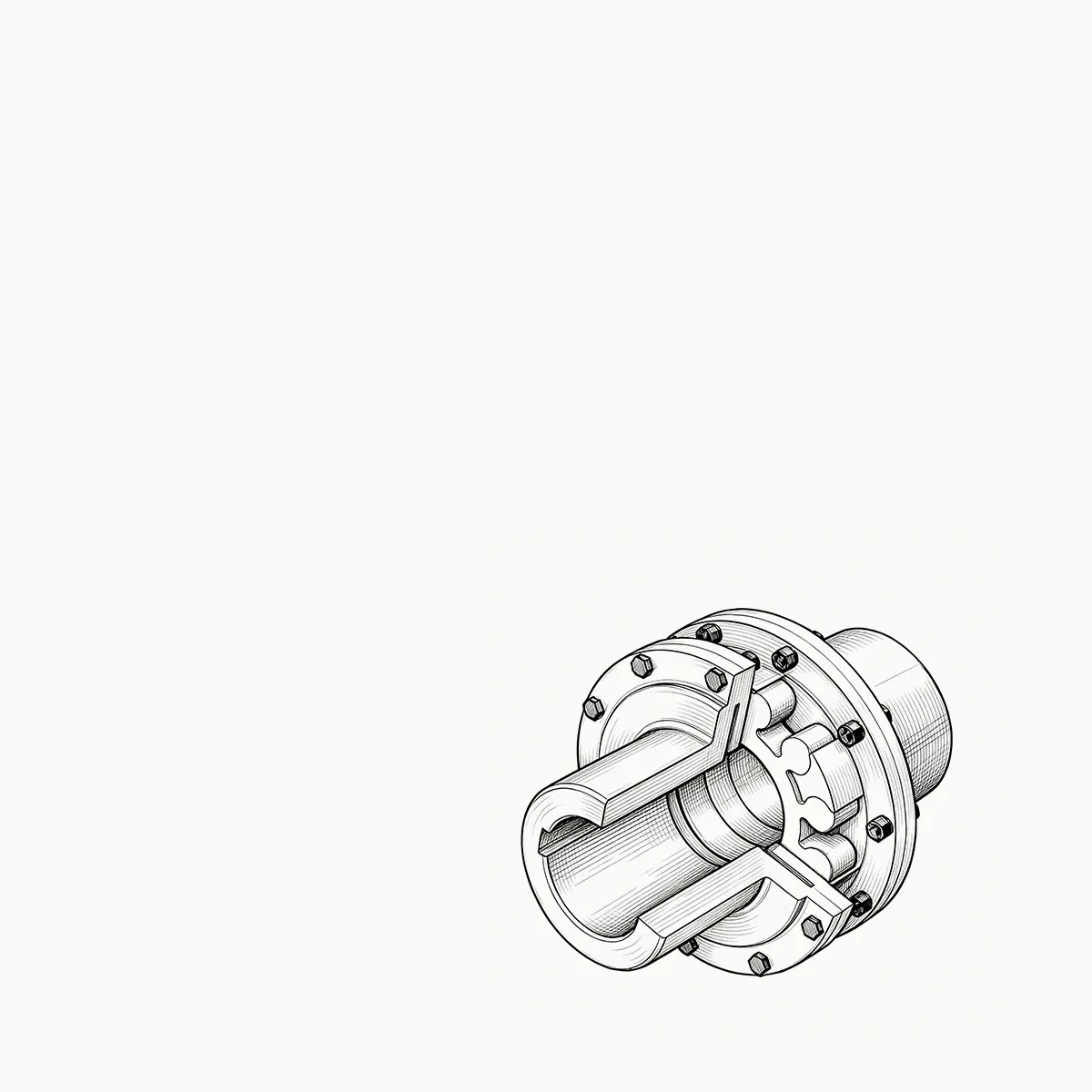
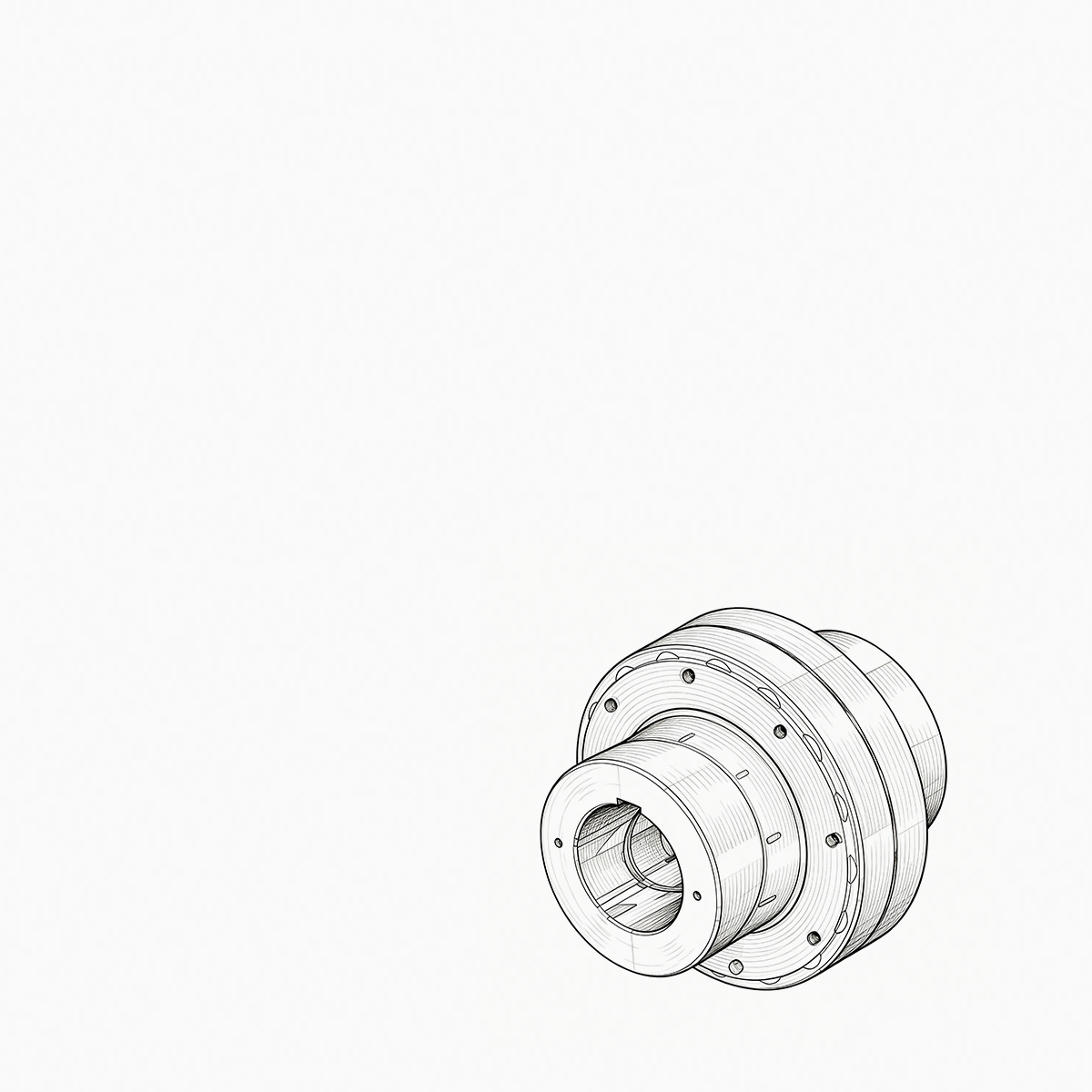
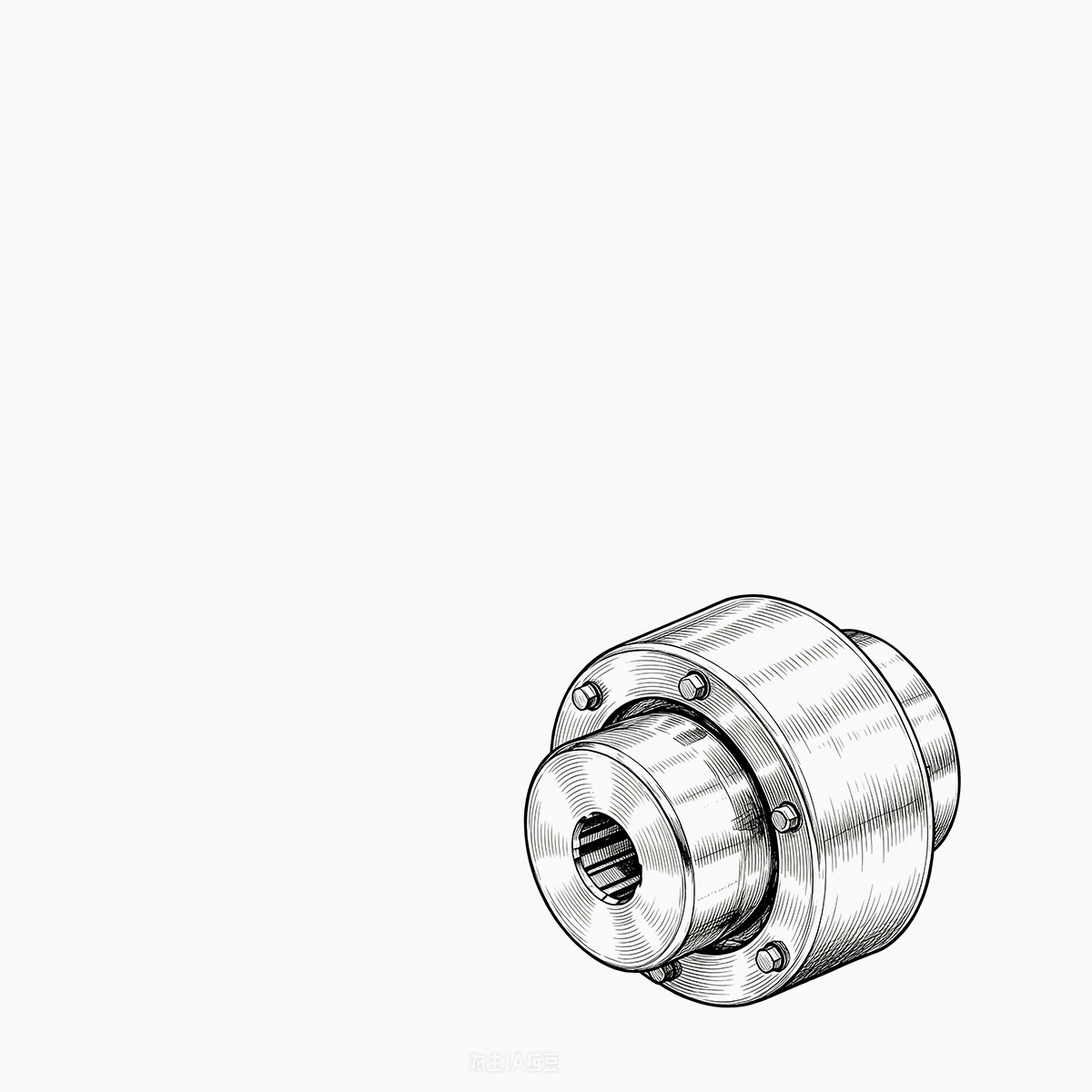
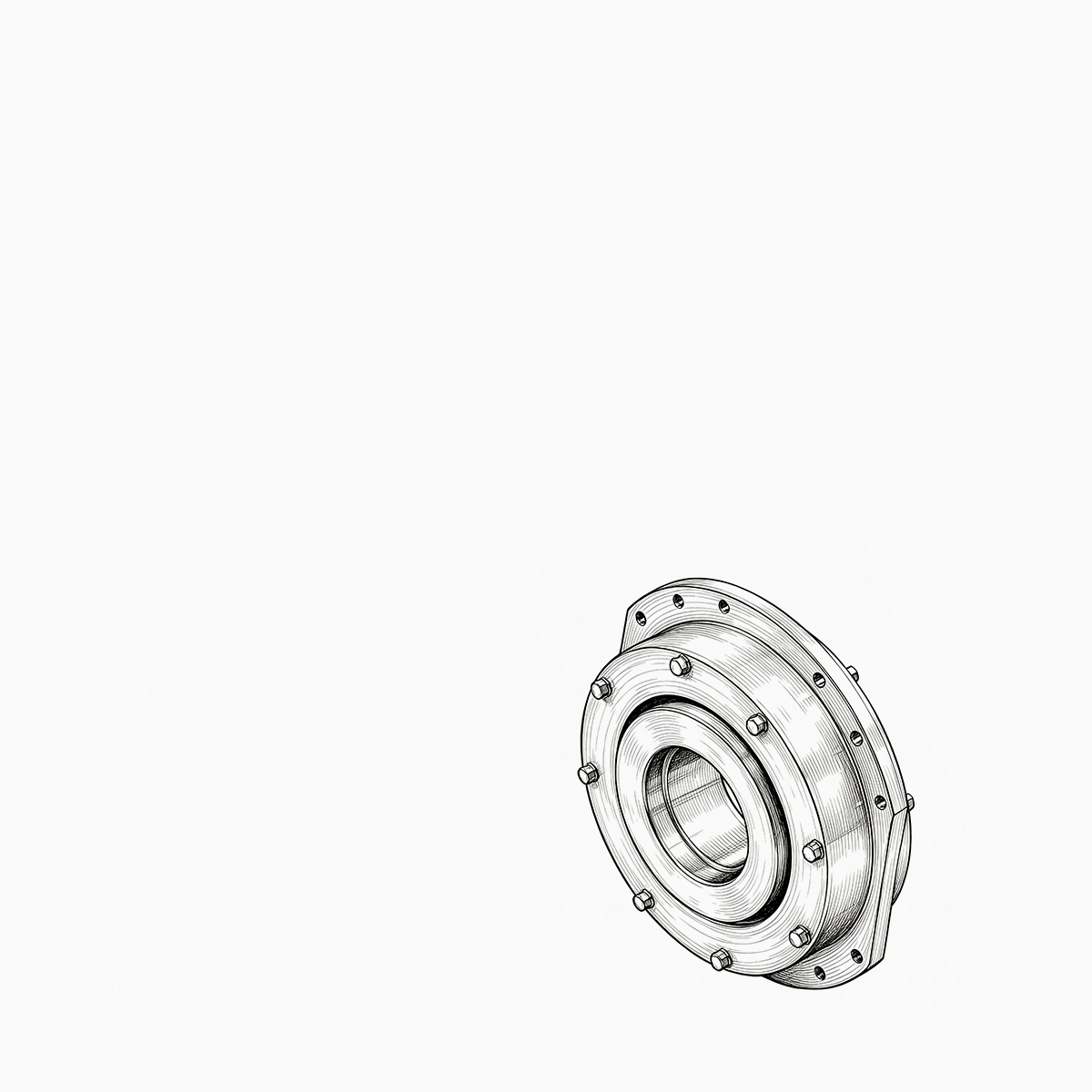

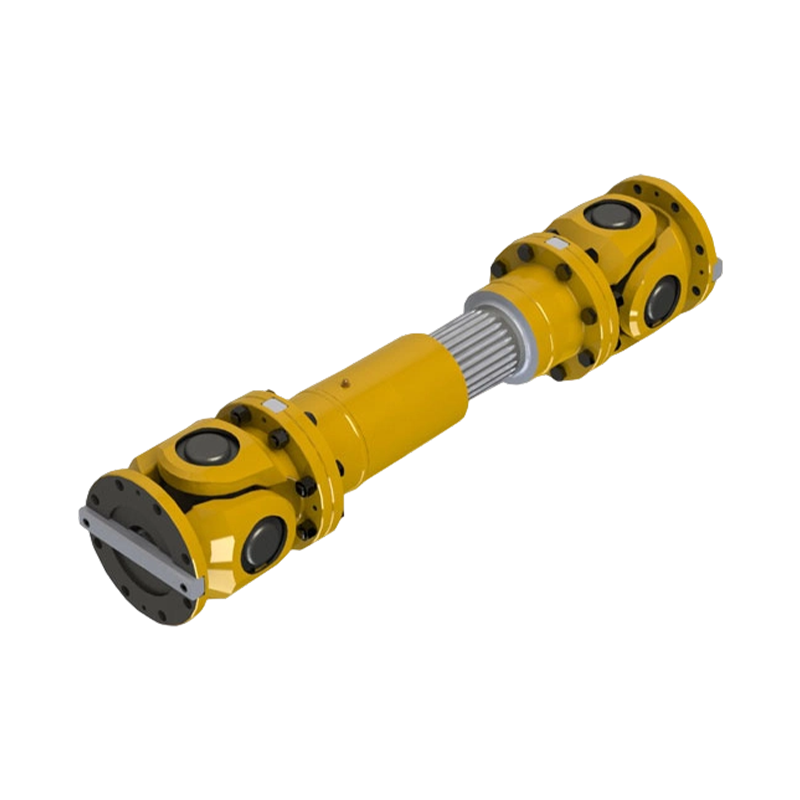
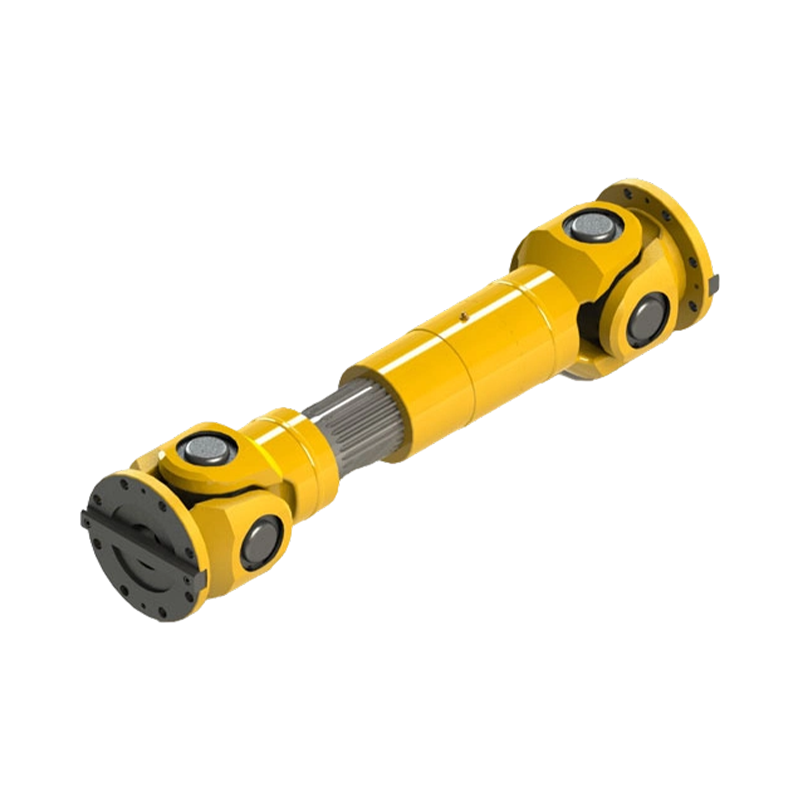
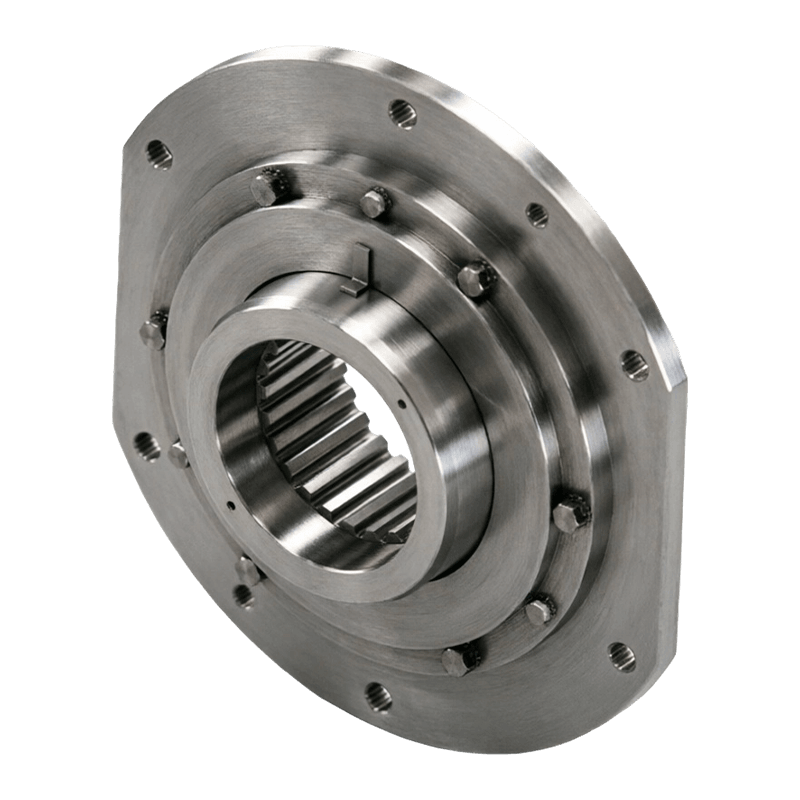
Consider a 250 kW crane hoist that begins to vibrate only when the load is lifted. The drum gear coupling is inspected ...
READ MORE
UL Type Tyre Coupling: Reliable Shock Absorption, Misalignment Compensation, and Industrial Drive Protection
Admin 2026-10-19Content
- 1 1. The Role of a Coupling in Industrial Transmission
- 2 2. Construction of the UL Type Tyre Coupling
- 3 3. Main Performance Advantages
- 4 4. Comparison with Other Coupling Types
- 5 5. Applications in Industrial Equipment
- 6 6. Manufacturing Strengths and Quality Control
- 7 7. Selection Guidelines for the UL Type Tyre Coupling
- 8 8. Installation and Commissioning Practices
- 9 9. Maintenance, Inspection, and Service Life
- 10 10. Reliability and Total Cost of Ownership
- 11 11. Why Work with an Experienced Industrial Supplier
- 12 12. Frequently Asked Questions
- 12.1 12.1 What is a UL type tyre coupling?
- 12.2 12.2 What types of misalignment can it compensate for?
- 12.3 12.3 Does the coupling require lubrication?
- 12.4 12.4 How much impact energy can it absorb?
- 12.5 12.5 Is it suitable for frequent starting and reversing?
- 12.6 12.6 Where is this coupling commonly used?
- 12.7 12.7 Can the tyre element be replaced?
- 12.8 12.8 Is the coupling maintenance-free?
- 12.9 12.9 What information is needed for product selection?
- 12.10 12.10 Why choose a manufacturer that provides customization?
- 13 13. Conclusion
- 14 References
- 15 Product: UL Type Tyre Coupling
Modern industrial equipment depends on reliable mechanical power transmission. Motors, gearboxes, drums, conveyors, pumps, hoists, rolling equipment, and other driven machines must transfer torque smoothly while coping with vibration, impact, shaft misalignment, frequent starts, and changes in rotation direction. A coupling positioned between the driving and driven shafts plays a critical role in this process. It must transmit torque efficiently while protecting connected equipment from loads that could otherwise shorten service life or cause unplanned downtime.
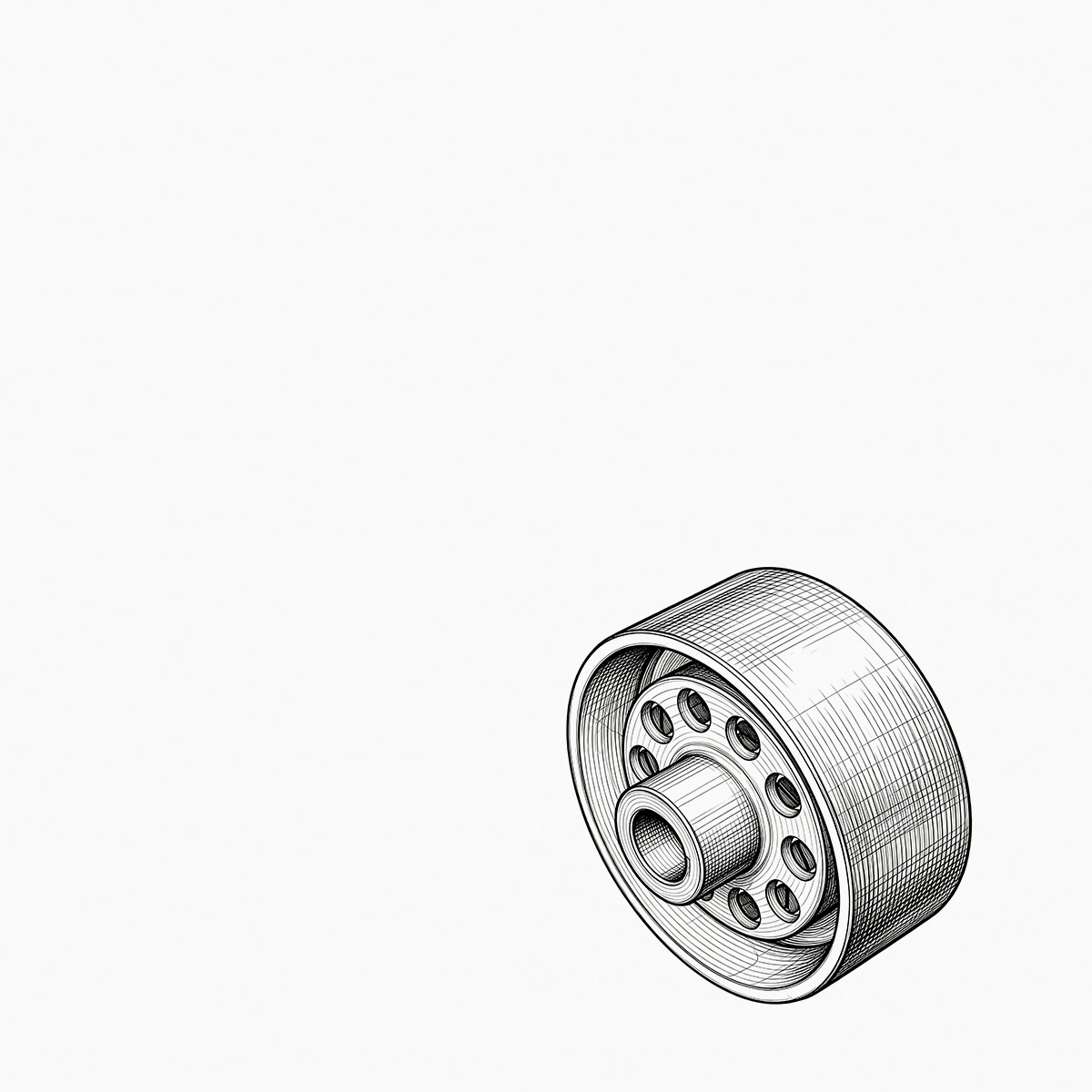
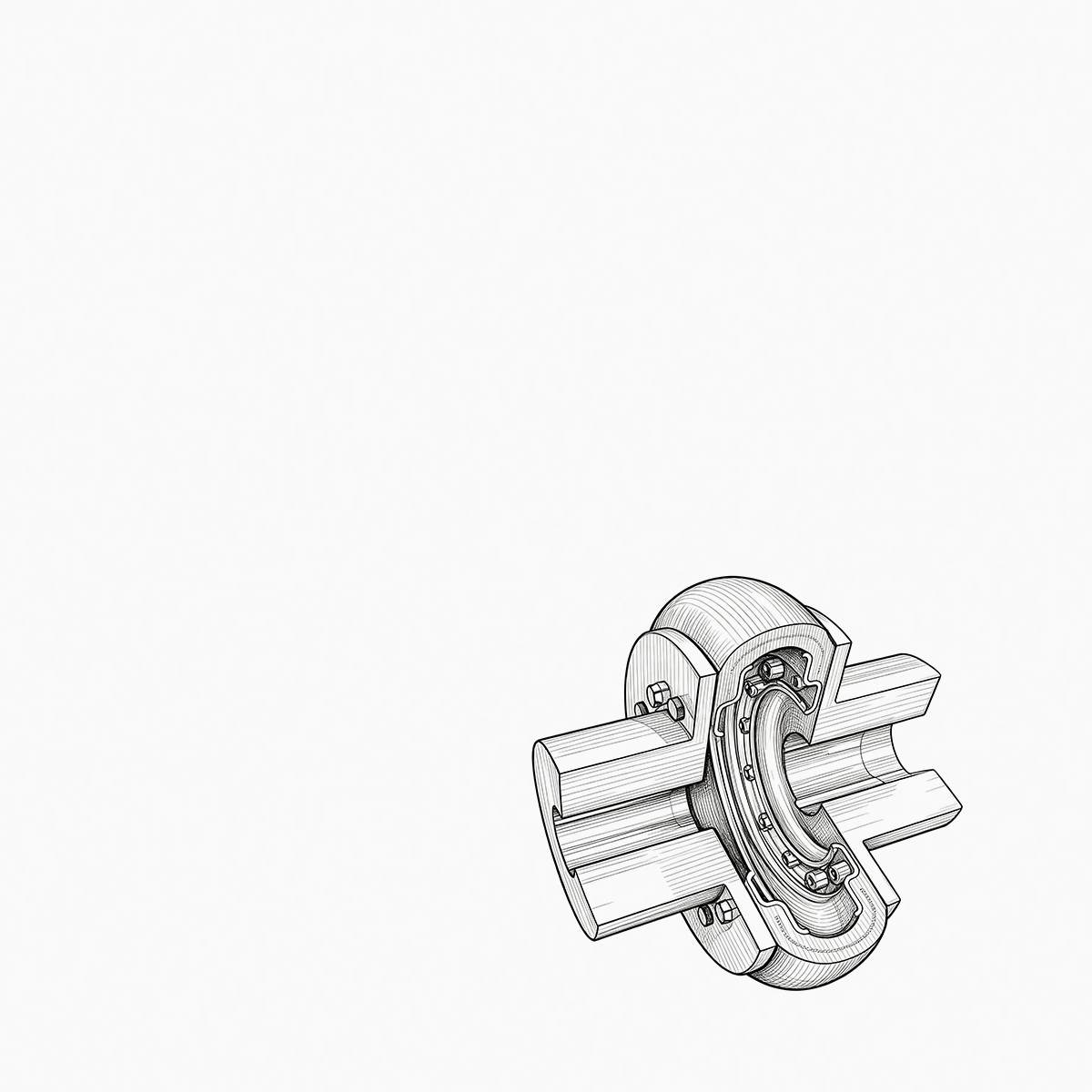
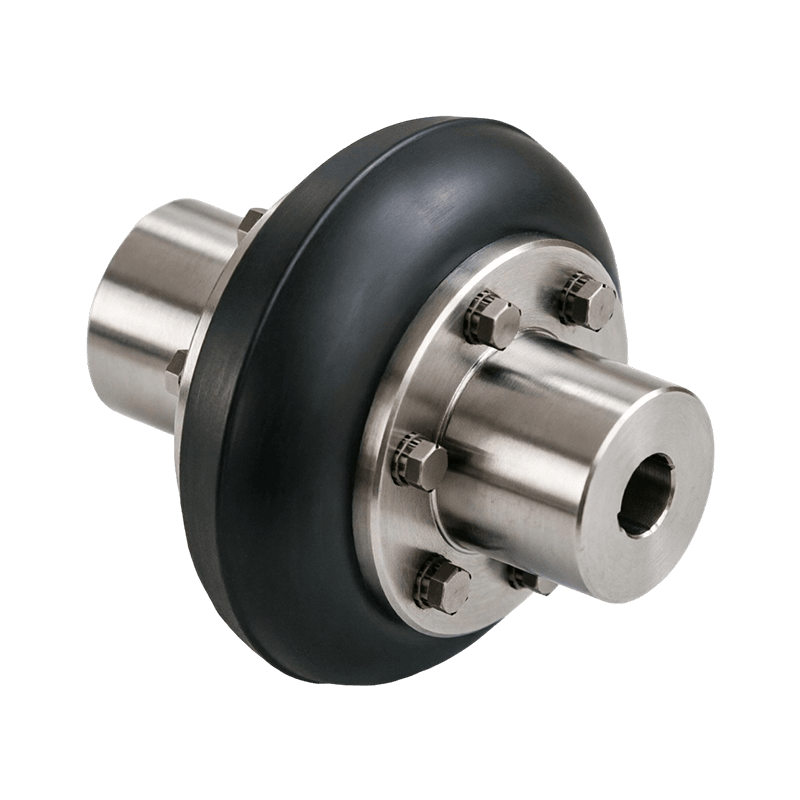
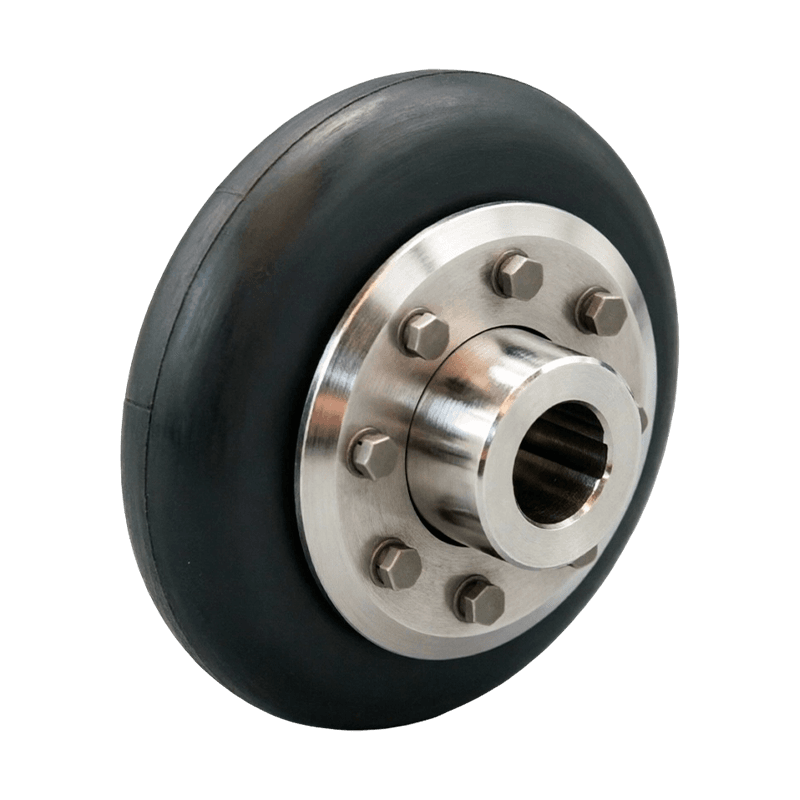
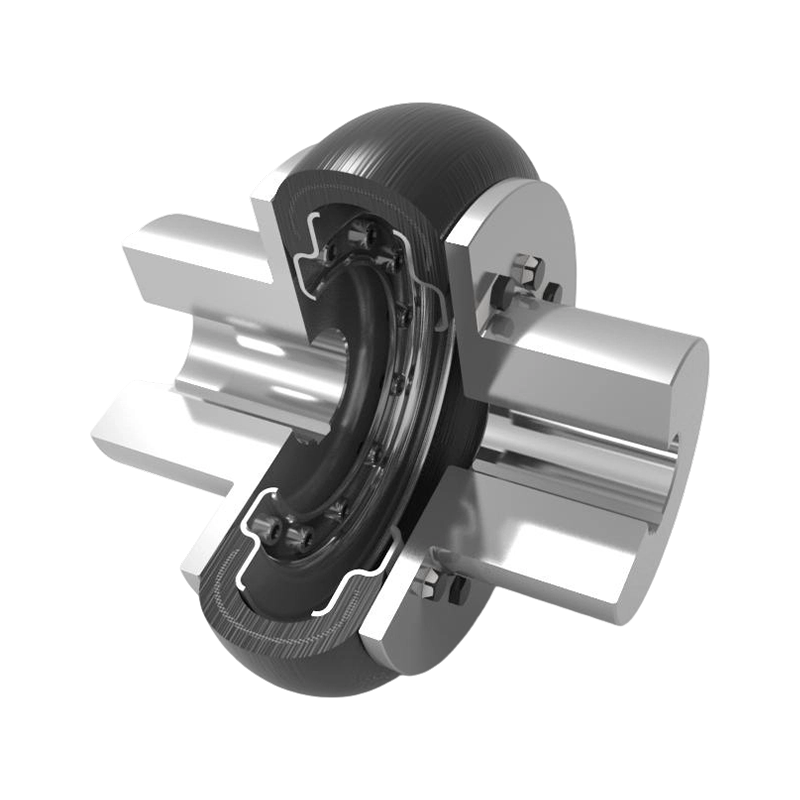
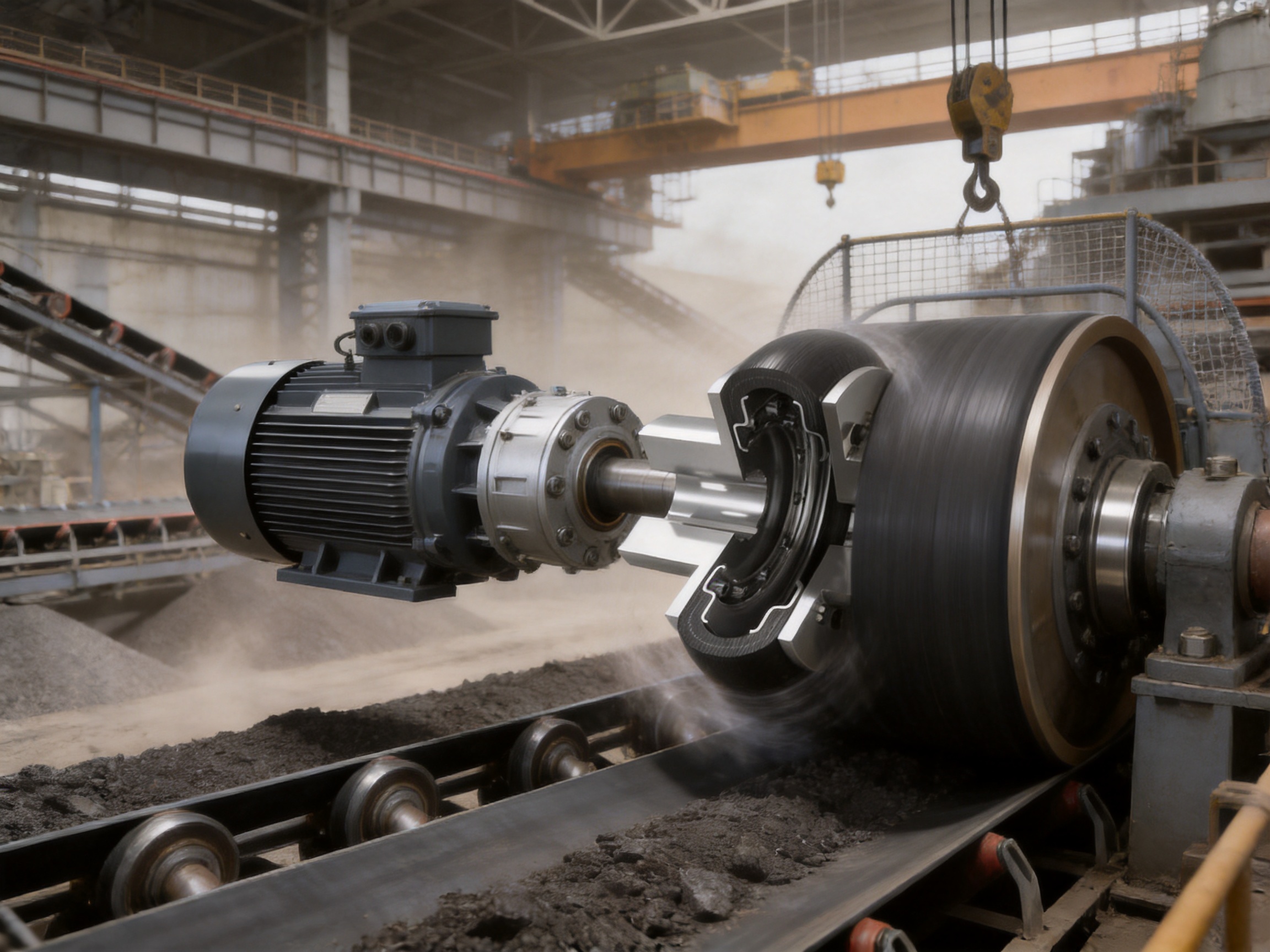
The UL type tyre coupling is an elastic coupling developed for demanding industrial transmission applications. Its principal elastic element is a rubber tyre body that is vulcanized and bonded to a metal connecting plate. Threaded holes in the plate allow the integrated tyre assembly to be bolted directly to two coupling halves. This construction combines flexible torque transmission with the ability to compensate for axial, radial, and angular shaft displacement.
Unlike rigid couplings, which require highly accurate shaft alignment, the UL type tyre coupling is designed to tolerate practical installation and operating deviations. Unlike some highly articulated coupling designs, it does not require lubrication during normal service. Its structure is comparatively simple, its maintenance requirements are limited, and its elastic tyre can absorb vibration and impact energy before those forces reach the motor, gearbox, bearings, and driven machine.
These characteristics make the coupling suitable for equipment that experiences frequent impact and vibration, variable forward and reverse rotation, and frequent starting and stopping. It is particularly relevant to industrial transportation systems, metallurgy, mining, construction, lifting and hoisting equipment, and other machinery in which dependable torque transmission and protection against shock loads are essential.
UL Type Tyre Coupling
1. The Role of a Coupling in Industrial Transmission
A coupling connects two shafts so that rotational power can pass from a driver to a driven machine. In a typical installation, an electric motor or engine supplies torque to a gearbox, drum, pump, conveyor, fan, or other component. The coupling links these components while accommodating the differences between them in position, speed, stiffness, and operating behavior.
A coupling is not merely a connector. During operation, the driving and driven shafts may not remain perfectly aligned. Thermal expansion, foundation movement, manufacturing tolerances, bearing clearance, installation errors, deflection under load, and structural vibration can all produce misalignment. At the same time, the machine may experience starting torque, sudden load changes, braking forces, reversing torque, or impact caused by material handling.
If these forces are transmitted directly through a rigid connection, the shafts and bearings may be subjected to excessive stress. The result can include accelerated bearing wear, shaft fatigue, gear damage, increased noise, loosened fasteners, and unexpected maintenance. A properly selected flexible coupling reduces these risks by allowing controlled relative movement and damping the transmission of shock.
The UL type tyre coupling fulfills this function through the elasticity of its rubber tyre. The tyre permits limited relative movement between the coupling halves while continuing to transmit torque. This balance between flexibility and strength allows the coupling to protect the transmission system without eliminating the positive mechanical connection required for industrial operation.
2. Construction of the UL Type Tyre Coupling
The design of the UL type tyre coupling centers on a flexible rubber tyre assembly. The rubber tyre is vulcanized and bonded to a metal connecting plate. Vulcanization creates a durable bonded interface between the rubber and metal, while the metal plate provides the threaded connection points needed for assembly. The result is an integrated elastic component rather than a loose collection of separate rubber blocks and hardware.
The tyre assembly is connected to two coupling halves by bolts. Each coupling half is mounted on one of the two shafts being connected. When the driver rotates, torque is transferred through one coupling half, the bolted tyre assembly, and the opposite coupling half to the driven shaft. The rubber element deforms within its designed operating range, absorbing vibration and allowing displacement compensation as torque is transmitted.
This arrangement offers a practical combination of structural simplicity and functional performance. The coupling has fewer complicated internal parts than many geared or highly articulated alternatives. Because the tyre is externally accessible, inspection and replacement can generally be performed without dismantling the entire connected machine. The bolted construction also supports efficient installation and disassembly during planned maintenance.
The metal connecting plate contributes to load distribution and connection stability. The vulcanized rubber provides elasticity, damping, and resilience. The coupling halves provide the shaft connection and transmit the applied torque. Each part has a clear role, and the cooperation of these parts enables the coupling to handle industrial loads while reducing the effect of vibration and impact.
2.1 Rubber Tyre as the Elastic Element
The rubber tyre is the key difference between this coupling and rigid shaft connectors. Rubber can deform under torque and recover its shape when the load changes, provided that the coupling remains within its specified operating conditions. This deformation provides torsional flexibility and helps isolate the driving machine from sudden variations in driven-machine resistance.
The tyre also contributes to noise reduction. Metal-to-metal transmission paths can transfer high-frequency vibration directly through the shaft line. The rubber element interrupts part of this path and dissipates a portion of the vibrational energy. Consequently, the connected equipment can operate with lower transmitted vibration and reduced mechanical noise compared with an equivalent rigid connection.
2.2 Bonded Metal Connection
The rubber is vulcanized and bonded to a metal connecting plate, creating an integrated unit with a stable interface. This is important because the coupling must repeatedly withstand torque reversal, starting loads, vibration, and environmental stress. A well-controlled bonded interface helps the rubber and metal work together rather than move independently under load.
The threaded holes in the metal plate simplify the connection to the coupling halves. Bolted assembly makes the coupling practical for industrial service because it allows the elastic unit to be secured firmly while also supporting removal when inspection or replacement is required.
2.3 Coupling Halves and Shaft Connection
The coupling halves connect to the driving and driven shafts. Depending on the equipment design, the shaft connection may use a key, interference fit, or another specified arrangement. Correct shaft preparation, proper fastening, and accurate installation remain important even though the tyre coupling compensates for a degree of misalignment.
Flexible compensation does not mean that alignment can be ignored. Excessive misalignment increases rubber deformation, raises reaction forces, and can reduce the service life of the tyre. The coupling should therefore be installed according to the selected model’s technical requirements and inspected after the connected equipment has reached its normal operating condition.
3. Main Performance Advantages
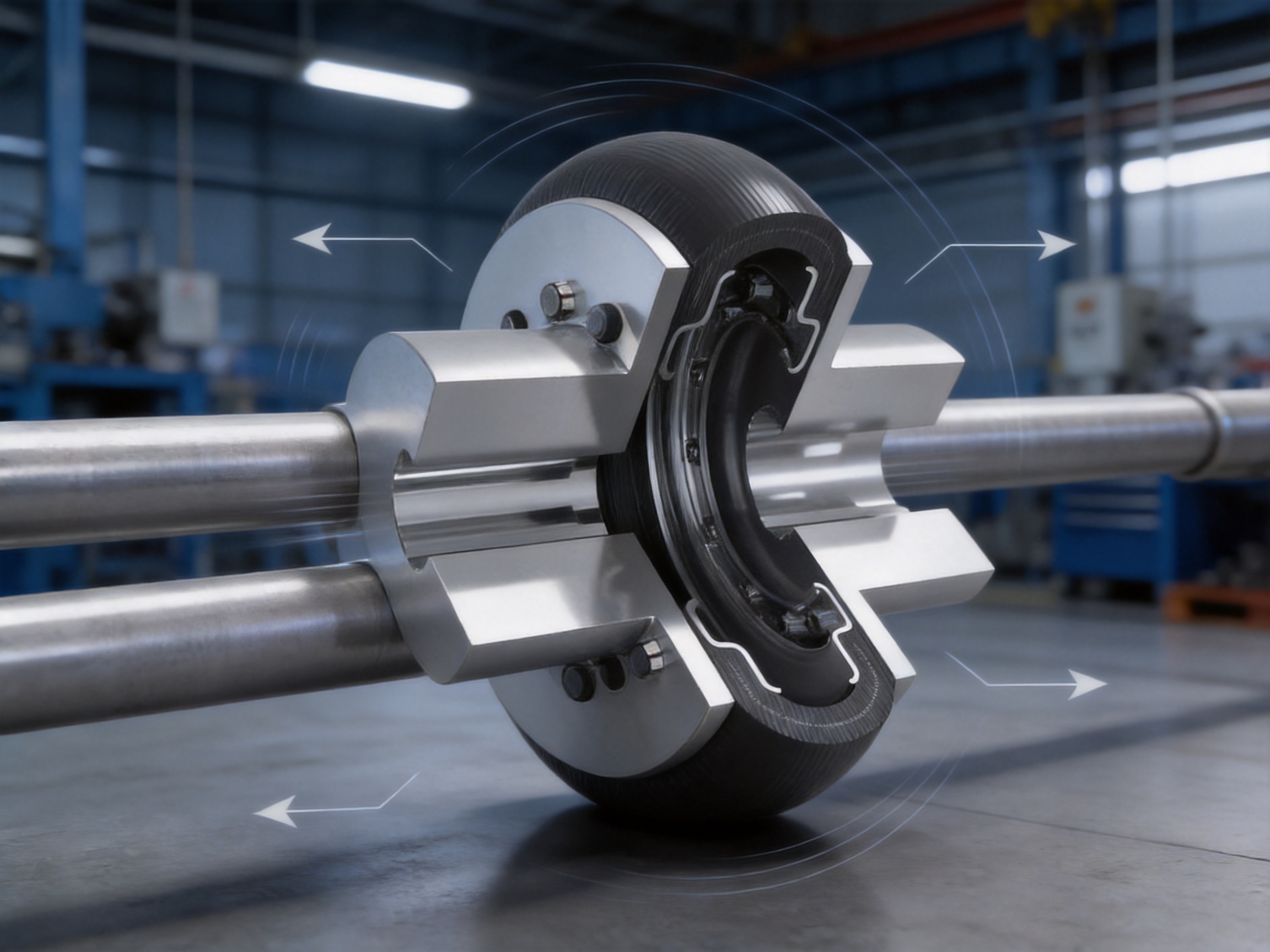
The UL type tyre coupling provides several advantages that are valuable in high-intensity industrial applications. These include shock absorption, vibration damping, multidirectional misalignment compensation, convenient maintenance, lubrication-free operation, and suitability for frequent starts and reversing cycles.
3.1 Shock Absorption and Impact Protection
Industrial machines often experience impact energy when a load is picked up, dropped, engaged, stopped, or suddenly changed. Hoisting mechanisms, conveyors, crushers, metallurgical machinery, and construction equipment are common examples. If impact energy passes directly through a rigid coupling, the motor shaft, gearbox teeth, bearings, and driven shaft can all experience a sharp load increase.
The elastic tyre absorbs part of this energy through controlled deformation. According to the supplied performance information, the UL type coupling can absorb up to 30% of impact energy under applicable test conditions. This capacity helps reduce the intensity of shock loads reaching the rest of the transmission system. It does not remove all impact, and the actual result depends on operating conditions, but it provides a valuable layer of mechanical protection.
Shock absorption can improve operating smoothness and help protect high-value components. Reduced impact may limit stress concentration at shaft shoulders, keyways, gear teeth, bearing seats, and other vulnerable locations. It can also reduce the risk of loosened connections and repeated fatigue caused by cyclic load changes.
3.2 Vibration and Noise Reduction
Vibration can originate from motor electromagnetic forces, gear meshing, unbalanced rotating parts, uneven loads, structural flexibility, or periodic process forces. A flexible tyre coupling helps isolate some of these disturbances by introducing an elastic and damping element into the shaft line.
Lower transmitted vibration benefits both the coupling and connected machinery. Bearings may experience lower dynamic loading, housings may produce less structure-borne noise, and operators may have a more comfortable working environment. In addition, reduced vibration can help maintain the accuracy of equipment that depends on stable rotation.
The coupling should not be treated as a substitute for balancing, proper bearing installation, or structural design. However, its damping function complements these measures and can improve the overall dynamic behavior of the transmission system.
3.3 Compensation in Three Directions
The UL type tyre coupling can compensate for axial, radial, and angular displacement simultaneously. This is a major advantage in practical machinery because real shaft systems rarely maintain perfect alignment throughout their entire service life.
Axial compensation allows relative movement along the shaft axis. The stated axial compensation capacity can reach 5 millimeters, subject to the applicable model and operating conditions. Axial movement may occur because of thermal expansion, bearing movement, assembly tolerances, or changes in machine position.
Radial compensation accommodates parallel offset between the two shaft centerlines. The allowable radial deviation is stated as not more than 2 millimeters. Correct alignment should still be established during installation, but the coupling can accommodate a limited offset without requiring the shafts to be perfectly collinear under every operating condition.
Angular compensation allows the connected shaft centerlines to operate with a limited angle between them. The coupling can accommodate angular deflection within 1 degree according to the supplied product information. Angular displacement may result from mounting conditions, frame deflection, foundation settlement, or changes in equipment loading.
These displacement values should be treated as engineering selection parameters rather than targets for routine installation. The closer the alignment is to the recommended condition, the lower the deformation and reaction forces will generally be. Compensation capacity provides operating tolerance and protection; it should not be used to justify avoidable alignment errors.
| Performance characteristic | UL type tyre coupling feature | Practical benefit |
|---|---|---|
| Elastic element | Vulcanized rubber tyre bonded to a metal connecting plate | Provides flexible torque transmission and vibration damping |
| Impact absorption | Up to 30% of impact energy under stated test conditions | Helps reduce shock transferred to shafts, bearings, and gearboxes |
| Axial compensation | Up to 5 mm | Accommodates limited axial movement and thermal effects |
| Radial compensation | Allowable deviation not exceeding 2 mm | Provides tolerance for parallel shaft offset |
| Angular compensation | Within 1 degree | Accommodates limited angular misalignment |
| Lubrication requirement | No routine lubrication required | Reduces servicing work and contamination risk |
| Connection method | Bolted connection to two coupling halves | Supports convenient installation, inspection, and replacement |
3.4 Lubrication-Free Operation
Many industrial couplings require grease or oil to protect internal sliding or meshing surfaces. Lubrication can create additional maintenance tasks, especially in dusty, wet, elevated, or difficult-to-access locations. Leakage may contaminate products, attract dust, or require environmental controls.
The UL type tyre coupling does not require routine lubrication for its elastic tyre function. This simplifies maintenance planning and reduces the number of consumables required at the equipment site. It is especially useful where the coupling is installed in a location that is difficult to reach or where lubricant contamination would be undesirable.
Lubrication-free operation does not eliminate inspection. Bolts, shaft connections, rubber condition, alignment, and surrounding equipment should still be checked according to the maintenance plan. The advantage is that service attention can focus on condition monitoring rather than periodic grease application.
3.5 Convenient Assembly and Disassembly
The bolted tyre structure supports practical maintenance. When the tyre element reaches the end of its useful life or shows damage, the assembly can be inspected and replaced without necessarily removing the motor, gearbox, or driven machine. This can shorten maintenance time and reduce the risk of disturbing the alignment of adjacent equipment.
Easy assembly is also valuable during initial installation. A straightforward connection reduces the opportunity for assembly mistakes and makes it easier for maintenance personnel to verify bolt installation, coupling condition, and shaft positioning. For machinery used in continuous production, every reduction in planned maintenance time can contribute to greater equipment availability.
4. Comparison with Other Coupling Types
Every coupling type has a suitable application range. The UL type tyre coupling should be selected because its combination of elasticity, compensation, shock absorption, and maintenance convenience matches the operating conditions. The following comparisons explain where its design offers advantages over common alternatives.
4.1 Compared with Rigid Couplings
Rigid couplings provide a firm shaft connection and can be effective when the shafts are accurately aligned and the system does not experience meaningful displacement or impact. Their limitation is that they transmit most shaft movement and shock directly to the connected machinery.
The UL type tyre coupling is more forgiving of installation and operating variation. It can compensate for axial, radial, and angular displacement while absorbing part of the impact energy. This makes it more appropriate for equipment with foundation movement, thermal change, reversing operation, or frequent starts.
A rigid coupling may still be preferable for applications requiring an absolutely fixed shaft relationship and minimal elastic wind-up. Selection should therefore consider torque accuracy, torsional stiffness, speed, misalignment, and load behavior rather than relying on flexibility alone.
4.2 Compared with Geared Couplings
Geared couplings transmit high torque through gear teeth and can provide substantial torque density. However, their gear meshes generally require lubrication and periodic inspection. Tooth wear, lubricant condition, contamination, and sealing performance can affect service life.
The UL type tyre coupling uses a rubber tyre rather than an internal gear mesh. It therefore avoids routine lubrication and offers inherent damping. Its simple exterior construction can make inspection and replacement more convenient. It is particularly attractive where shock absorption and maintenance simplicity are more important than the very high torque density of a geared design.
Geared couplings may remain appropriate for some high-speed or high-torque installations. The correct choice depends on rated torque, peak torque, speed, environmental conditions, available space, and required torsional behavior.
4.3 Compared with Pin and Bush Couplings
Pin and bush couplings use flexible bushes and pins to transmit torque. They can offer good general-purpose performance and are widely used in machinery. The UL type tyre coupling, however, uses a continuous tyre-shaped elastic body that provides a broad flexible interface between the coupling halves.
This continuous elastic element can deliver effective vibration damping and multidirectional compensation. It also provides a compact and accessible arrangement for applications where repeated shock and reversing loads are important. The suitability of either design depends on the required torque, speed, installation space, and maintenance preferences.
4.4 Compared with Disc and Diaphragm Couplings
Disc and diaphragm couplings are often selected for high-speed, precise, and low-backlash applications. They can accommodate certain forms of misalignment while providing high torsional stiffness. Their performance is valuable in turbines, precision drives, and specialized equipment.
The UL type tyre coupling is oriented toward industrial duty where damping and impact absorption are central requirements. Its rubber element is more effective at cushioning shock than a highly rigid metallic membrane arrangement. For cranes, conveyors, material-handling equipment, and machinery with frequent starts and reversing, the tyre design can offer a more practical balance between flexibility and ruggedness.
4.5 Compared with Other Tyre Couplings
When compared with other tyre couplings, product quality depends on more than the general concept of a rubber element. The bonding process, rubber consistency, metal plate accuracy, bolt-hole positioning, coupling-half machining, inspection procedures, and technical support all influence actual performance.
The UL type design emphasizes an integrated vulcanized and bonded tyre assembly, direct bolted connection, and compensation in multiple directions. A reliable supplier should also be able to support model selection, dimensional confirmation, application review, manufacturing control, and after-sales service. These factors can distinguish a dependable industrial coupling from a visually similar but less consistently manufactured alternative.
5. Applications in Industrial Equipment
The UL type tyre coupling is suited to equipment that operates under variable loads, impact, vibration, and frequent changes in rotational direction. Its application range includes transportation, metallurgy, mining, construction, and hoisting industries, as well as other industrial machinery requiring flexible and protected torque transmission.
5.1 Cranes and Hoisting Equipment
Cranes and hoists frequently start and stop under load. Lifting, lowering, trolley travel, and drum rotation can produce sudden torque changes. The load may also swing, engage abruptly, or create a reversing demand during positioning.
A tyre coupling can absorb part of these transient forces and reduce the shock transferred to the motor, reducer, drum shaft, and brake-related components. Its ability to compensate for alignment changes is useful in large steel structures that may deflect under load. The crane drum coupling application is particularly relevant where the connection must remain reliable under repeated duty cycles.
5.2 Conveyors and Transportation Systems
Conveyors often operate for long periods and may transport materials with uneven distribution. Starting a loaded conveyor can create high acceleration torque, while blockages or sudden material accumulation can generate impact. Reversing conveyors may also impose repeated torque changes.
The UL type tyre coupling helps cushion these events and may reduce vibration through the conveyor drive train. Its lubrication-free characteristic is useful in dusty environments where grease can collect abrasive particles. Regular visual inspection remains important because material buildup, temperature, and contamination can affect the rubber element.
5.3 Metallurgical Machinery
Metallurgical equipment can combine high loads, elevated ambient temperatures, vibration, and severe duty cycles. Rolling mills, transfer systems, material-handling machinery, and auxiliary drives may experience repeated impact and changes in resistance.
A properly selected tyre coupling contributes to the protection of connected shafts and gearboxes. Its elastic behavior can help manage variable torque while its simple structure supports maintenance in a demanding production environment. The application engineer should confirm temperature limits, speed, torque, guarding, and the compatibility of the tyre material with the surroundings.
5.4 Mining Equipment
Mining machinery commonly operates in dusty, high-load conditions. Conveyors, crushers, feeders, hoists, and transfer equipment may experience shock loads caused by uneven material, oversize rocks, or sudden obstruction. Access to equipment may be limited, making low-maintenance components valuable.
The UL type tyre coupling offers a practical combination of impact absorption, displacement compensation, and no routine lubrication. Proper guarding and inspection are essential because abrasive dust can accumulate around rotating parts, while heavy shock loads require careful torque and service-factor selection.
5.5 Construction Machinery
Construction machinery is frequently moved, repositioned, and exposed to changing loads. Equipment may experience frame deflection, uneven foundations, and repeated starting or reversing. The tyre coupling’s ability to tolerate limited misalignment can improve the reliability of auxiliary drives, lifting mechanisms, and material-handling systems.
Installation quality remains especially important in mobile or semi-mobile equipment. Bolts should be tightened according to the applicable technical requirements, shafts should be checked for correct seating, and the coupling should be protected from accidental contact with tools, debris, or other moving components.
5.6 General Industrial Drives
In addition to heavy industries, the coupling can be applied to general industrial equipment where shock absorption and vibration isolation are beneficial. Potential examples include pumps with fluctuating loads, fans with variable operating conditions, mixers, drum drives, and specialized production machinery.
Each application must be evaluated individually. The correct coupling size depends on transmitted torque, motor power, speed, duty cycle, starting frequency, ambient conditions, shaft dimensions, and misalignment. Product selection should be supported by technical data rather than by shaft diameter alone.
6. Manufacturing Strengths and Quality Control
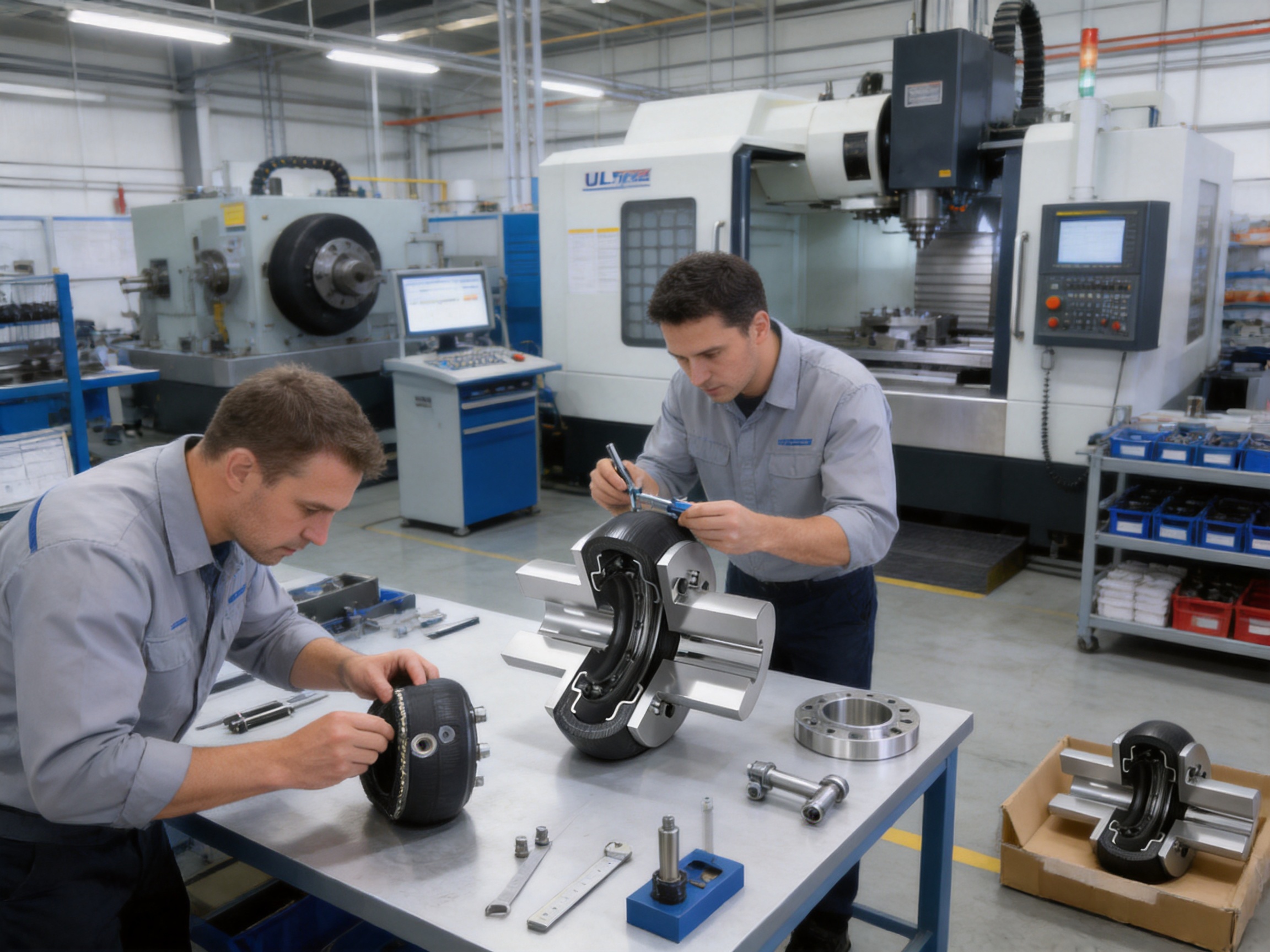
The performance of an elastic coupling depends heavily on manufacturing consistency. A coupling may have a sound design, but variations in rubber properties, bonding quality, machining accuracy, or assembly can affect service life. Zhenjiang Orienthold Machinery Co., Ltd. integrates design, production, testing, and service to provide industrial coupling solutions for demanding applications.
The company is a medium-sized enterprise specializing in couplings and papermaking machinery. Its product range serves transportation, metallurgy, chemical engineering, mining, construction, and hoisting industries. This industrial focus provides experience in equipment that requires reliable power transmission, durable components, and application-specific engineering support.
6.1 Integrated Design and Production
Integrated design and production allow technical considerations to be addressed before manufacturing begins. Engineers can review the relationship between coupling geometry, rubber flexibility, bolt arrangement, shaft dimensions, operating speed, and expected load behavior. This supports more appropriate product selection and helps reduce incompatibility between the coupling and the connected machine.
For custom or nonstandard applications, the supplier can evaluate customer drawings, operating data, installation limitations, and environmental requirements. A customized approach is valuable when the coupling must fit an existing drive train, replace an obsolete product, or meet special shaft and flange dimensions.
6.2 Rubber and Bonding Process Control
The tyre is the core functional element, so rubber preparation and bonding quality are critical. The vulcanization process must produce a stable bond between the rubber and metal plate. Uniformity of rubber composition, curing conditions, bonding surface preparation, and dimensional control all influence the finished component.
Consistent production helps ensure that the tyre responds predictably under torque and misalignment. It also reduces the risk of uneven deformation, premature separation, cracking, or localized stress. A professional manufacturing process should include inspection of the bonded interface and verification that the finished tyre meets the intended dimensional and appearance requirements.
6.3 Machining and Assembly Accuracy
The coupling halves and metal connecting components must be manufactured accurately so that they can be assembled correctly and rotate concentrically. Hole position, flange dimensions, shaft bores, keyways, surface finish, and balance-related features should be controlled according to the product specification.
Assembly procedures should verify that bolts, plates, and coupling halves fit together without unwanted interference. Correct assembly helps maintain the intended load path and prevents local stress concentration. It also makes future maintenance more predictable.
6.4 Testing and Inspection
Orienthold Machinery operates with a quality supervision system and comprehensive inspection and testing equipment. Testing helps verify that manufactured products conform to design and national standards. Depending on the product and order requirements, inspection may include dimensional verification, material checks, visual examination, bonding assessment, assembly confirmation, and performance-related testing.
A complete quality system is particularly important for industrial couplings because failures can affect not only the coupling itself but also the motor, gearbox, bearings, shafts, and production schedule. Consistent inspection provides customers with greater confidence that the supplied coupling will perform as intended when installed and operated within its specified conditions.
6.5 Compliance and Customer Support
The company states that its products comply with national standards and that its manufacturing technology and quality management support international-level applications. Compliance is supported by documentation, inspection records, technical communication, and traceable production practices.
Customer support extends from pre-sales consultation to customization, logistics, payment coordination, maintenance assistance, and after-sales service. This one-stop approach is useful when customers need help selecting a coupling, confirming dimensions, arranging replacement parts, or planning an installation.
7. Selection Guidelines for the UL Type Tyre Coupling
Correct selection is essential to obtain the expected service life and performance. A coupling should not be selected solely by matching the motor shaft diameter. The complete operating profile must be considered.
7.1 Determine the Required Torque
The transmitted torque should be calculated from motor power and operating speed, with appropriate consideration of efficiency and duty cycle. Starting torque, braking torque, peak load, reversing torque, and impact should also be evaluated. Heavy-duty applications generally require a service factor that reflects the severity and frequency of these loads.
If the equipment experiences frequent starts, sudden loading, or repeated direction changes, the coupling should be selected for the resulting peak and cyclic loads rather than only the average running torque. Under-sizing may cause excessive tyre deformation, bolt stress, heating, or premature failure.
7.2 Confirm Speed and Dynamic Requirements
Operating speed affects centrifugal forces, balance requirements, and the dynamic behavior of the rubber tyre. The selected model must be suitable for the actual rotational speed, including any overspeed or transient condition specified by the equipment designer.
For high-speed applications, balance quality and installation accuracy become increasingly important. Any unusual speed range, cyclic resonance, or torsional vibration concern should be discussed with the manufacturer before ordering.
7.3 Evaluate Misalignment
Measure or estimate axial, radial, and angular displacement under both stationary and operating conditions. The stated UL type compensation values are up to 5 millimeters axially, no more than 2 millimeters radially, and within 1 degree angularly. These values provide useful design guidance, but actual allowable limits may depend on speed, torque, temperature, duty cycle, and selected size.
Alignment should be corrected as far as practical before relying on the coupling’s flexibility. Excessive displacement increases elastic strain and reaction forces. Good alignment improves tyre life, reduces vibration, and supports stable operation of the entire shaft line.
7.4 Check Environmental Conditions
Temperature, humidity, oil exposure, chemical contact, ultraviolet radiation, dust, and water can affect rubber performance. The customer should provide the operating environment so that the appropriate tyre material and protective arrangement can be confirmed.
In mining and construction, abrasive dust and debris may accumulate around the coupling. In chemical or processing plants, vapors or liquids may contact the elastomer. In outdoor installations, weather exposure and temperature cycling should be considered. Protective guards should allow safe operation while providing sufficient access for inspection.
7.5 Verify Physical Dimensions
Important dimensions include shaft diameters, bore lengths, keyway details, coupling outside diameter, overall length, bolt-circle dimensions, available radial clearance, and axial installation space. The coupling must also be compatible with the existing guard and maintenance access.
Customers should provide shaft drawings or complete dimensional information when requesting a replacement or customized coupling. This reduces the risk of receiving a product that meets the torque requirement but cannot be installed without additional modifications.
8. Installation and Commissioning Practices
Proper installation allows the UL type tyre coupling to perform within its intended design range. Before assembly, inspect the shafts, keyways, coupling halves, tyre element, connecting plate, bolts, and mounting surfaces. Remove burrs, dirt, corrosion, and foreign material that could prevent correct seating.
Check that the shafts are aligned within the recommended limits. The driving and driven machines should be supported securely, and any soft foot or foundation problem should be corrected before final alignment. Although the tyre can compensate for limited displacement, it should not be used to compensate for a distorted base or an incorrectly positioned machine.
Install the coupling halves on the appropriate shafts using the specified fit and fastening method. Position the tyre assembly correctly and tighten the bolts in a controlled sequence. Fasteners should be tightened to the applicable specification, and the connection should be checked for even seating and adequate clearance.
After installation, rotate the shaft line manually if possible to identify interference or abnormal resistance. Confirm that guards are correctly installed before operation. During commissioning, observe vibration, noise, temperature, starting behavior, and the response during acceleration and stopping. Any unusual condition should be investigated before placing the equipment into continuous service.
9. Maintenance, Inspection, and Service Life
Although the UL type tyre coupling requires no routine lubrication, regular inspection remains necessary. Maintenance personnel should check the rubber tyre for cracks, cuts, swelling, hardening, abrasion, separation from the metal plate, and other signs of deterioration. The surrounding area should be kept free from material buildup that could contact the rotating coupling.
Bolts and coupling connections should be checked for looseness, corrosion, or damage. Shaft movement, unusual vibration, and changes in operating noise may indicate misalignment or deterioration. If the equipment has experienced an abnormal overload, collision, jam, or severe reverse torque event, the coupling should be inspected before operation resumes.
Rubber is a working material that can age due to temperature, ozone, chemicals, repeated deformation, and environmental exposure. Service life therefore depends on more than operating hours. A tyre that appears acceptable externally should still be replaced if measured performance, inspection history, or manufacturer guidance indicates that it has reached the end of its safe service period.
Replacement planning can reduce unplanned downtime. Keeping a suitable spare tyre assembly and required fasteners in inventory may be worthwhile for critical equipment. Because the design permits convenient disassembly, planned replacement can often be scheduled during routine shutdowns.
10. Reliability and Total Cost of Ownership
The purchase price of a coupling is only one part of its total cost. Downtime, replacement labor, damage to connected equipment, lubrication materials, inspection time, and emergency logistics can have a larger financial impact. A coupling that protects the transmission and simplifies maintenance may provide greater value over its operating life.
The UL type tyre coupling contributes to total cost control in several ways. Its elastic body can reduce shock transmitted to expensive components. Its multidirectional compensation can reduce sensitivity to ordinary installation and operating movement. Its lubrication-free structure reduces routine service requirements. Its bolted construction supports practical replacement rather than requiring extensive machine disassembly.
These benefits are strongest when the coupling is correctly selected, installed, guarded, and maintained. A flexible coupling cannot compensate for a severely overloaded drive, inadequate shaft design, poor foundation, or incorrect fastener installation. Total reliability is achieved through the combination of a suitable product and disciplined engineering practice.
11. Why Work with an Experienced Industrial Supplier
Industrial coupling procurement often involves more than ordering a standard part. Customers may need to match an existing installation, adapt to limited space, replace a coupling from another manufacturer, or confirm performance under unusual duty conditions. An experienced supplier can help translate machine requirements into an appropriate coupling specification.
Zhenjiang Orienthold Machinery Co., Ltd. provides coupling products and related industrial machinery through an integrated design, production, and service operation. Its experience in transportation, metallurgy, chemical engineering, mining, construction, and hoisting applications supports communication with customers who operate complex equipment.
The company offers pre-sales consultation, customization support, flexible logistics and payment options, and maintenance assistance. This service structure can be useful for overseas customers and industrial distributors that require consistent communication from technical inquiry through delivery and after-sales support.
Strong technical capabilities, advanced equipment, and comprehensive testing methods are important advantages when supplying safety-relevant transmission components. Customers can benefit from discussing operating data before purchase rather than attempting to adapt an unsuitable coupling after delivery.
12. Frequently Asked Questions
12.1 What is a UL type tyre coupling?
A UL type tyre coupling is an elastic industrial coupling that uses a rubber tyre as its main flexible element. The tyre is vulcanized and bonded to a metal connecting plate with threaded holes and is attached to two coupling halves by bolts. It transmits torque while absorbing vibration, cushioning impact, and compensating for limited shaft displacement.
12.2 What types of misalignment can it compensate for?
It can compensate for axial, radial, and angular displacement simultaneously. The supplied product information states that axial compensation can reach 5 millimeters, radial allowable deviation is not more than 2 millimeters, and angular deflection within 1 degree can be accommodated. Actual limits should be confirmed for the selected model and operating conditions.
12.3 Does the coupling require lubrication?
No routine lubrication is required for the rubber tyre coupling. This reduces maintenance work and avoids the need to manage grease or oil around the flexible element. Inspection of the tyre, bolts, shafts, and alignment is still necessary.
12.4 How much impact energy can it absorb?
The stated performance information indicates that the coupling can absorb up to 30% of impact energy under applicable test conditions. Actual impact absorption depends on coupling size, torque, speed, temperature, load pattern, alignment, and the characteristics of the connected equipment.
12.5 Is it suitable for frequent starting and reversing?
Yes. The elastic tyre is intended for industrial applications involving frequent starting, variable forward and reverse rotation, vibration, and impact. The coupling must nevertheless be selected according to peak torque, starting torque, reversing frequency, and service factor.
12.6 Where is this coupling commonly used?
Typical applications include crane drum drives, hoisting equipment, conveyors, transportation machinery, metallurgical equipment, mining machinery, construction equipment, and other industrial drives requiring shock absorption and multidirectional displacement compensation.
12.7 Can the tyre element be replaced?
The bolted construction supports convenient disassembly and replacement of the elastic assembly. Replacement procedures should follow the applicable product instructions, including inspection of coupling halves, bolt condition, shaft fit, alignment, and guarding.
12.8 Is the coupling maintenance-free?
It is lubrication-free, but it is not maintenance-free. Operators should inspect the tyre for damage or aging, verify bolt tightness, monitor vibration and noise, and check alignment after unusual loads or equipment movement.
12.9 What information is needed for product selection?
Useful information includes motor power, operating speed, rated and peak torque, starting frequency, reversing conditions, shaft diameters, shaft spacing, keyway details, expected misalignment, ambient temperature, chemical exposure, and the type of driven equipment. Drawings and photographs of the existing installation can also support accurate selection.
12.10 Why choose a manufacturer that provides customization?
Customization can help when standard dimensions do not match an existing machine or when the application has unusual torque, space, environmental, or connection requirements. An integrated manufacturer can review the application, confirm the design, produce the required components, and provide technical support through installation and service.
13. Conclusion
The UL type tyre coupling is a practical solution for industrial transmission systems that must manage impact, vibration, shaft displacement, frequent starts, and reversing operation. Its vulcanized rubber tyre, bonded metal connecting plate, and bolted coupling-half construction provide a combination of flexibility, damping, torque transmission, and maintenance convenience.
Its ability to compensate for axial, radial, and angular displacement reduces the sensitivity of the shaft line to normal installation and operating movement. Its reported capacity to absorb up to 30% of impact energy helps protect motors, gearboxes, shafts, bearings, and driven equipment from sudden load changes. The absence of routine lubrication and the accessibility of the bolted structure further improve its suitability for demanding industrial environments.
Compared with rigid couplings, the UL type design offers greater tolerance and shock protection. Compared with geared couplings, it avoids routine lubrication and provides stronger elastic damping. Compared with highly rigid precision couplings, it is better suited to applications where impact cushioning and vibration isolation are more important than maximum torsional stiffness.
The performance of any coupling ultimately depends on correct selection, manufacturing quality, installation, and maintenance. Zhenjiang Orienthold Machinery Co., Ltd. supports these requirements through coupling design, production, inspection, customization, and service. With its focus on industrial applications and quality supervision, the company provides a useful source for customers seeking dependable coupling solutions for transportation, metallurgy, mining, construction, hoisting, and related machinery.
For equipment that requires smooth torque transmission, reduced vibration, protection from shock loads, and practical maintenance, the UL type tyre coupling offers a balanced and durable engineering choice.
References
1. Industrial Coupling Design Principles, technical reference material on flexible couplings, torque transmission, damping, and shaft misalignment.
2. Rubber Engineering and Elastomer Selection, reference material covering vulcanization, bonded rubber components, aging, and environmental resistance.
3. Mechanical Power Transmission Handbook, guidance on torque calculation, service factors, shaft alignment, and coupling selection.
4. Industrial Machinery Maintenance Practices, reference material on coupling inspection, fastener verification, vibration monitoring, and replacement planning.
5. Manufacturer-provided UL Type Tyre Coupling Product Information, including construction details, displacement compensation data, impact absorption information, and application guidance.
6. Manufacturer-provided Company Information for Zhenjiang Orienthold Machinery Co., Ltd., including manufacturing capabilities, quality supervision, testing resources, application industries, customization, and service support.
Product: UL Type Tyre Coupling
PREV: WZL Type Drum Coupling for Hoisting: Design, Performance, Manufacturing Quality, and Application GuideNEXT: DC Type Crowned-Gear Drum Coupling for Heavy-Duty Hoisting Systems
Be the First to Know
For exclusive deals and latest offers, sign up by entering your email address below.
Related products
News
-
-
China's coupling industry is at a critical historical juncture of transformation from scale expansion to quality and eff...
READ MORE -
Two quotes land for the same replacement gear coupling: $1,850 from one shop and $2,600 from another. Both promise stan...
READ MORE -
A mill drive rarely fails without warning. It knocks at speed, throws a smear of dark grease around the sleeve flange, ...
READ MORE -
Industrial Couplings: The Definitive Technical Encyclopedia – Classification, Sizing, Failure Prevention, and Lifecycle...
READ MORE -
During a routine vibration survey on a high-speed compressor train, engineers found a 4.5 mm/s velocity spike at the mo...
READ MORE


ABOUT US
PRODUCTS
INDUSTRIES
CONTACT US
- Phone: +86-18652865511
- Email: sales@ohmach.com
- Address: No.1, Minying Developing Zone, Zhenjiang, Jiangsu, China
Copyright Zhenjiang Orienthold Machinery Co., Ltd. All Rights Reserved.
 Custom Industrial Shaft Coupling Manufacturers